Power Quality: The Hidden Challenge in Modern Industries
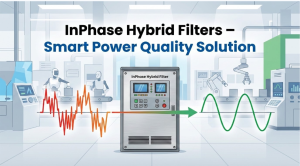
InPhase Hybrid Filters are becoming an essential power quality solution for industries facing harmonic distortion, poor power factor, voltage instability, and rising energy costs. By combining active and passive filtering technologies, InPhase Hybrid Filters help improve system efficiency, reliability, and compliance with power quality standards.
Every modern industry today relies on clean, stable, and efficient electrical power. Yet, the reality is far from perfect. Harmonic distortions, voltage instability, and reactive power demand are constant companions of industrial power systems. Left unchecked, these issues cause energy losses, equipment failures, reduced productivity, and unnecessary utility penalties.
For a facility manager or plant engineer, the challenge is two-fold: ensuring uninterrupted production and reducing operating costs. This is where InPhase Hybrid Filters step in — providing a proven, future-ready solution that blends advanced technology with practical reliability.
What Are Hybrid Filters?
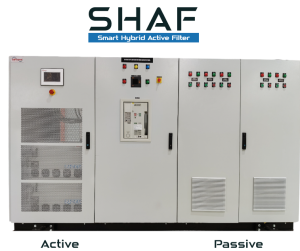
A Hybrid Filter is a power quality solution that combines two technologies:
Passive Filtering – Uses tuned circuits (inductors, capacitors, resistors) to absorb and reduce specific harmonic frequencies while providing reactive power compensation.
Active Filtering – Uses advanced electronics and control algorithms to detect and dynamically cancel harmonics and unbalanced loads in real time.
By merging these two, hybrid filters deliver the bulk handling capacity of passive filters with the precision and adaptability of active filters. This dual approach makes them highly effective in today’s complex industrial environments.
Why Do We Need Hybrid Filters? Industries increasingly use nonlinear loads such as Variable Frequency Drives (VFDs), furnaces, UPS systems, and rectifiers. While these devices improve efficiency and process control, they also generate harmonics and reactive power demand.
Uncontrolled harmonics can:
-
- Overheat transformers, cables, and motors.
-
- Cause protective devices to malfunction.
-
- Lead to frequent downtime of sensitive equipment.
-
- Attract penalties for non-compliance with grid standards.
Hybrid filters are essential because they directly address these problems, ensuring smooth operations and financial savings.
Where Are Hybrid Filters Used? The application of InPhase Hybrid Filters spans across industries and sectors where reliable power quality is critical:
Industrial Applications
-
- Steel Plants: Managing heavy harmonic load from electric arc furnaces and rolling mills.
-
- Cement Factories: Stabilizing large motors, kilns, and grinding units.
-
- Textile and Printing Units: Protecting spinning machines and variable drives from distortion.
-
- Pharmaceutical Plants: Ensuring uninterrupted operation of sensitive manufacturing and lab equipment.
Commercial Applications
-
- IT Parks and Data Centers: Protecting servers and networking equipment from voltage fluctuations and harmonics.
-
- Hospitals: Safeguarding life-saving medical equipment such as MRI and CT scanners.
-
- Large Office Complexes: Ensuring stable power for lighting, lifts, HVAC, and IT systems.
Utility and Infrastructure Applications
-
- Power Distribution Networks: Reducing grid instability caused by nonlinear consumer loads.
-
- Airports and Metro Systems: Supporting continuous operations with reliable, distortion-free power.
Technical Strength of InPhase Hybrid Filters
-
- Reactive Power Compensation: Up to 2 MVAR, scalable for diverse load profiles.
-
- Harmonic Mitigation: Effective suppression up to the 50th order harmonics.
-
- Response Time: Less than 10 milliseconds for dynamic load changes.
-
- System Efficiency: Greater than 98%, minimizing losses.
-
- Operating Voltage: 415V ±10%, suitable for standard industrial grids.
-
- Cooling: Intelligent air-cooling mechanism for reliable performance.
-
- Communication: Modbus RTU / TCP-IP / Ethernet ready for remote monitoring.
-
- Compliance: Designed to meet IEEE 519, IEC 61000, and CEA norms.
Advantages of InPhase Hybrid Filters
-
- Energy Savings: By improving power factor and reducing harmonic losses, industries can save significantly on electricity bills.
-
- Extended Equipment Life: Motors, drives, and sensitive electronics operate cooler and last longer under stable power conditions.
-
- Reduced Downtime: Real-time adaptive control ensures continuous operation, avoiding costly production interruptions.
-
- Regulatory Compliance: Built-in adherence to global standards helps industries avoid fines.
-
- Future-Ready Design: Modular and scalable architecture allows expansion as operations grow.
Case Example: Manufacturing Facility in Bangalore A mid-sized manufacturing plant faced severe harmonic distortion due to multiple VFD-driven machines, resulting in frequent tripping and higher electricity bills. After installing a 1 MVAR InPhase Hybrid Filter:
-
- 12% reduction in total electrical losses.
-
- 25% improvement in uptime of critical machines.
-
- Zero penalties from the utility provider due to IEEE-519 compliance.
Frequently Asked Questions (FAQ)
-
- Q1: How do hybrid filters differ from traditional filters?
A: Hybrid filters combine passive and active technologies, ensuring comprehensive power quality management.
- Q1: How do hybrid filters differ from traditional filters?
-
- Q2: What kind of loads require hybrid filters?
A: Facilities with nonlinear loads like VFDs, UPS systems, or rectifiers.
- Q2: What kind of loads require hybrid filters?
-
- Q3: How soon can industries recover their investment?
A: Typically within a year through energy savings, reduced downtime, and penalty avoidance.
- Q3: How soon can industries recover their investment?
-
- Q4: Are hybrid filters easy to maintain?
A: Yes, modular design, intelligent cooling, and connectivity features simplify maintenance.
- Q4: Are hybrid filters easy to maintain?
InPhase Hybrid Filters are strategic enablers for industrial growth, blending passive robustness with active precision to ensure efficiency, compliance, and reliability. Industries aiming to reduce costs, improve equipment life, and secure uninterrupted operations will find InPhase Hybrid Filters a future-ready solution.
Connect with the InPhase technical team to explore the right hybrid filter configuration for your facility. Industries often follow IEEE 519 guidelines for harmonic control and power quality management. Learn more from the IEEE Standards Association.
For harmonic standards, refer to the IEEE research: IEEE Harmonic Analysis Study Additional research on power quality can be found here: IEEE Power Quality Research Paper InPhase Power Technologies