Reactive Power Compensation in Transmission System is one of the most effective ways to improve power quality, maintain voltage stability, reduce transmission losses, and increase the efficiency of modern industrial electrical networks. As industries adopt automation, robotics, and high-power equipment, the need for Reactive Power Compensation in Transmission System continues to grow.“The Biggest Threat to Your Electrical System Isn’t a Power Outage—It’s Poor Power Quality.”
Every industry relies on a stable and efficient power supply. Yet, an invisible electrical issue can increase energy costs, cause voltage fluctuations, overload equipment, and reduce productivity.
That issue is reactive power.
The solution? Reactive Power Compensation in Transmission System helps eliminate these challenges by improving power factor, stabilizing voltage, reducing energy losses, and enhancing overall system reliability.
What is Reactive Power?
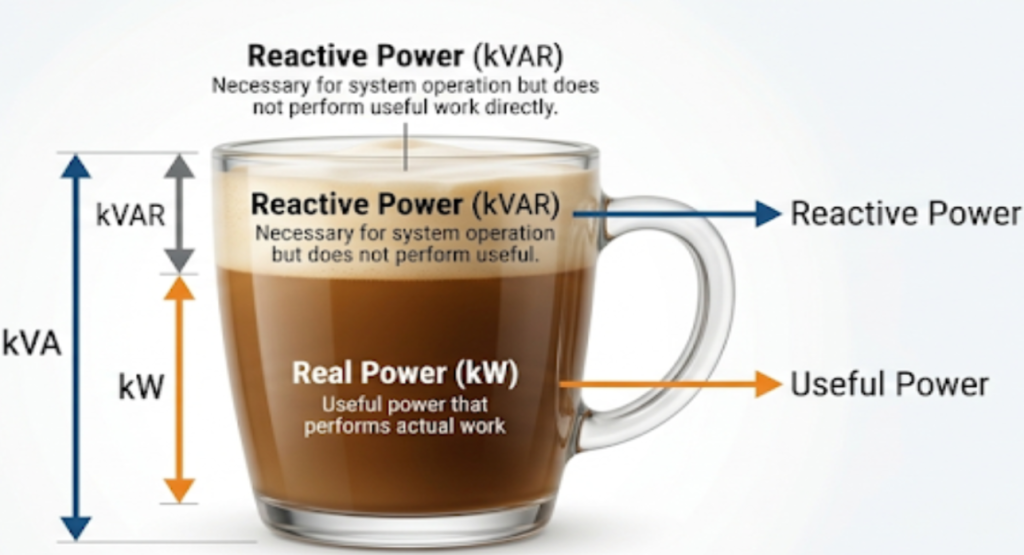
Reactive Power is electrical power that helps equipment operate but does not perform any useful work itself. While it is necessary for devices like motors and transformers, excessive reactive power can increase electrical losses and reduce overall system efficiency.
Why is Reactive Power Compensation in Transmission System Important?
A transmission system carries electricity over long distances.
As electricity travels through transmission lines and reaches industrial facilities, reactive power is continuously generated and absorbed by various electrical components.Voltage instabilityhttps://ieeexplore.ieee.org/document/4840208
Higher transmission losses
Increased current flow
Reduced system efficiency
Transformer overheating
Power factor penalties
Reduced equipment lifespan
Frequent production interruptions
Even though industries purchase sufficient electricity, poor reactive power management causes unnecessary energy wastage. Is Your Industry Facing These Problems?
Many industries unknowingly suffer from poor reactive power management.
Common warning signs include:
✔ Low power factor penalties
✔ Frequent voltage fluctuations
✔ Transformer overloading
✔ Motor overheating
✔ Higher electricity bills
✔ Reduced production efficiency
✔ Frequent tripping of electrical equipment
Existing Reactive Power Compensation Solutions
For decades, industries have relied on traditional compensation methods.
Capacitor Banks
Capacitor banks provide fixed reactive power compensation.
Advantages
- Low initial investment
- Simple installation
Limitations
- Slow response
- Fixed compensation
- Cannot handle rapidly changing loads
- Over-compensation risks
- Reduced performance during fluctuating demand
Automatic Power Factor Correction (APFC)
APFC panels automatically switch capacitor banks.
Although better than fixed capacitors, they still suffer from:
- Mechanical switching delays
- Limited accuracy
- Reduced life due to frequent switching
- Poor performance with highly dynamic loads
Challenges with Conventional Reactive Power Compensation
Traditional capacitor banks and APFC panels were designed for relatively stable electrical loads. However, today’s industries use Variable Frequency Drives (VFDs), robotics, CNC machines, renewable energy systems, and automated production lines that create rapidly changing reactive power demands. Conventional systems cannot respond quickly enough to these fluctuations, resulting in voltage instability, poor power factor, and reduced efficiency. This is why many industries are replacing conventional methods with Reactive Power Compensation in Transmission System using intelligent Static Var Generator (SVG) technology that provides accurate, real-time compensation.
The Modern Solution: InPhase Static Var Generator (SVG)
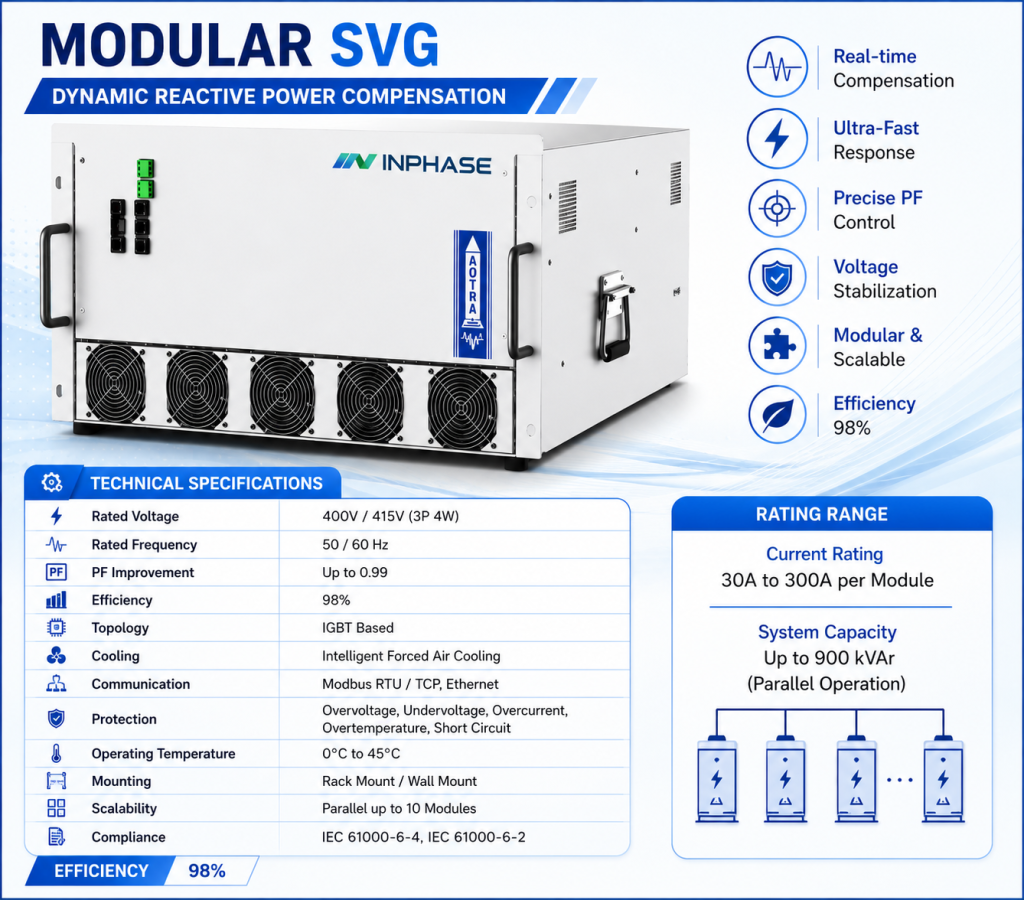
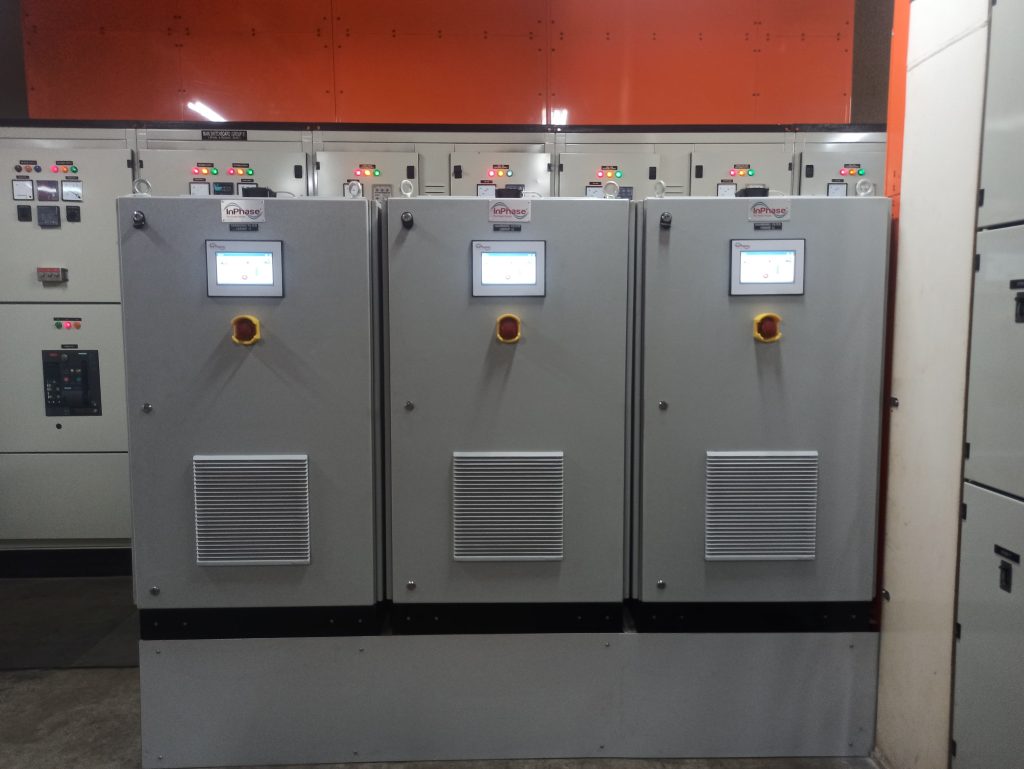
Modern industries need faster and more accurate reactive power compensation than traditional systems can provide. InPhase SVG responds in real time to changing load conditions, helping industries maintain near-unity power factor, improve power quality, reduce energy losses, and eliminate power factor penalties.https://inphase.in/
Key Features :
- Advanced Power Quality Management
- Intelligent Operation Modes
- Smart Integration
- Industrial Grade Reliability
Specifications :
- Efficiency : 98%
- Topology : 3-Level IGBT
- Harmonic Range : Up to 13th order harmonics
- Control Basis : Closed loop operation