
Active Harmonic Filter Case Study examples provide valuable insights into how industries can overcome power quality challenges and improve operational efficiency. Harmonic distortion is one of the most common issues in modern industrial facilities, particularly those using variable frequency drives (VFDs), UPS systems, welding machines, and automated production equipment.
This Active Harmonic Filter Case Study highlights how a manufacturing facility in Bangalore successfully reduced harmonic distortion, improved voltage stability, protected critical equipment, and achieved measurable energy savings through the implementation of InPhase Active Harmonic Filters.
Active Harmonic Filter Case Study: Background
The manufacturing facility operated multiple CNC machines, VFD-controlled motors, compressors, and automated production systems. Over time, the plant began experiencing serious power quality issues that affected production reliability and maintenance costs.
Key Challenges Faced
The facility reported:
-
Total Harmonic Distortion (THD) exceeding 18%
-
Frequent motor overheating
-
Transformer temperature rise
-
Unexpected production interruptions
-
Increased maintenance costs
-
Reduced equipment lifespan
-
Voltage instability during peak operations
These challenges significantly affected productivity and operational efficiency.
Active Harmonic Filter Case Study: Power Quality Assessment
Before implementing a solution, a detailed power quality audit was conducted by the InPhase engineering team.
Findings
The assessment revealed:
-
Current THD levels of approximately 18%
-
Significant 5th and 7th harmonic components
-
Excessive heating in transformers and cables
-
Reduced power factor performance
-
Increased energy losses within the electrical distribution network
Based on the findings, the facility required a dynamic harmonic mitigation solution capable of adapting to changing load conditions.
Active Harmonic Filter Case Study: The InPhase Solution
Following a comprehensive analysis, InPhase recommended the installation of Active Harmonic Filters specifically designed for the facility’s load profile.
Solution Implemented
The project included:
-
Installation of InPhase Active Harmonic Filters
-
Real-time harmonic monitoring
-
Dynamic harmonic compensation
-
System performance verification
-
Post-installation power quality measurements
The selected solution was designed to maintain harmonic levels within IEEE 519 recommended limits.
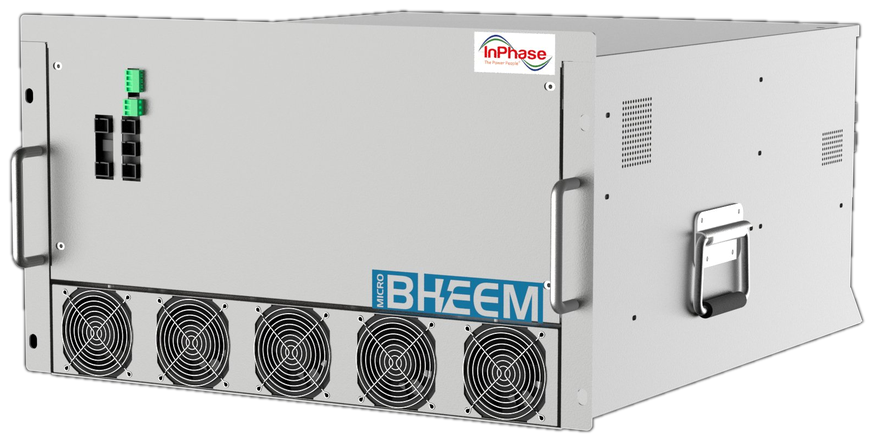
How the Active Harmonic Filter Works
Active Harmonic Filters continuously monitor the electrical system and identify harmonic currents generated by non-linear loads.
The filter then:
-
Detects harmonic frequencies.
-
Calculates compensation requirements.
-
Injects equal and opposite currents.
-
Cancels harmonic distortion in real time.
-
Maintains clean current waveforms.
This process significantly improves overall power quality.
Active Harmonic Filter Case Study: Results Achieved
Following installation and commissioning, the facility experienced immediate improvements.
1. THD Reduced Below 5%
One of the most significant outcomes of this Active Harmonic Filter Case Study was the reduction of Total Harmonic Distortion from 18% to below 5%.
Benefits included:
-
Compliance with IEEE 519 recommendations
-
Reduced harmonic stress on equipment
-
Improved system efficiency
2. Improved Voltage Stability
The Active Harmonic Filter stabilized voltage conditions across the facility.
This resulted in:
-
Consistent equipment performance
-
Reduced voltage fluctuations
-
Improved production reliability
3. Extended Equipment Life
Because harmonic currents were significantly reduced, electrical assets experienced lower thermal stress.
Affected equipment included:
-
Motors
-
Transformers
-
Capacitor banks
-
Power cables
-
Control systems
This Active Harmonic Filter Case Study demonstrated how harmonic mitigation contributes directly to longer equipment life.
4. Energy Savings Achieved
Lower harmonic distortion reduced electrical losses throughout the power distribution system.
The facility reported:
-
Improved energy efficiency
-
Reduced operating costs
-
Better utilization of electrical infrastructure
5. Increased Production Reliability
Production interruptions caused by power quality issues were dramatically reduced.
The facility benefited from:
-
Less downtime
-
Higher productivity
-
Reduced maintenance interventions
-
Improved operational reliability
Active Harmonic Filter Case Study: Business Benefits
Beyond technical improvements, the project delivered measurable business value.
Financial Benefits
-
Lower maintenance expenses
-
Reduced equipment replacement costs
-
Improved production uptime
-
Better energy efficiency
Operational Benefits
-
Enhanced power quality
-
Improved process stability
-
Better equipment performance
-
Reduced operational risks
This Active Harmonic Filter Case Study highlights how power quality investments can generate both technical and financial returns.
Industries That Can Benefit from Similar Solutions
The results achieved in this Active Harmonic Filter Case Study are relevant to many industries, including:
Manufacturing Plants
Facilities with VFDs, robotics, and automation systems.
Data Centers
Organizations requiring stable and reliable power for IT infrastructure.
Hospitals
Critical healthcare facilities where power quality directly impacts patient care.
Commercial Buildings
Large facilities seeking improved energy efficiency and reduced operating costs.
Process Industries
Cement, steel, chemical, and pharmaceutical facilities with significant non-linear loads.
Industries often follow the IEEE 519 standard to control harmonic distortion and maintain better power quality. Learn more about the standard from the IEEE Standards Association: IEEE STANDARDS
Why Choose InPhase Active Harmonic Filters?
InPhase Power Technologies specializes in advanced power quality solutions designed for industrial and commercial applications.
Our solutions offer:
-
Real-time harmonic compensation
-
Fast response times
-
IEEE 519 compliance support
-
Modular architecture
-
High efficiency
-
Reliable performance
-
Comprehensive engineering support
Every installation is customized to meet the specific requirements of the facility.
Conclusion
This Active Harmonic Filter Case Study demonstrates how harmonic mitigation can transform industrial power systems. By reducing THD from 18% to below 5%, stabilizing voltage, extending equipment life, and improving energy efficiency, InPhase Active Harmonic Filters delivered measurable and sustainable results.
For industries experiencing harmonic distortion, voltage instability, or equipment reliability issues, implementing an Active Harmonic Filter can provide significant operational and financial benefits.
Contact InPhase Power Technologies today to schedule a power quality assessment and discover how Active Harmonic Filters can improve the performance of your electrical system.