
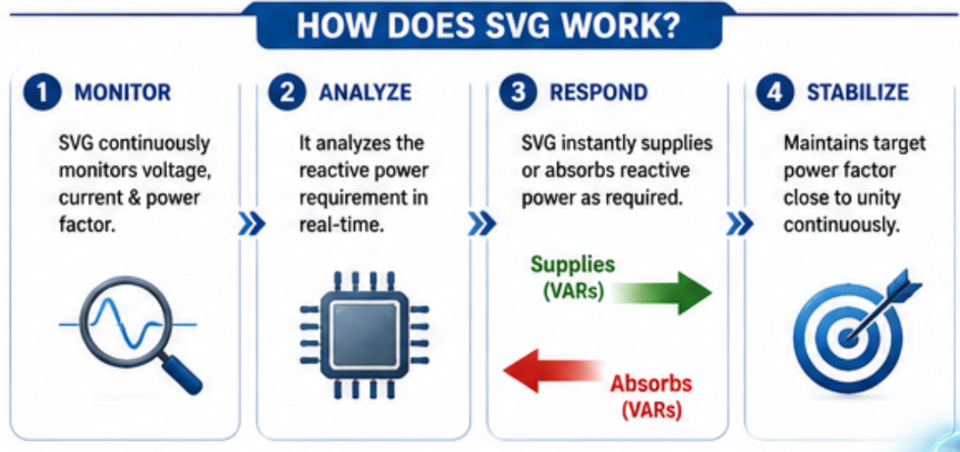
Static VAR Generator (SVG) technology is transforming the way industries manage reactive power compensation, voltage stability, and power quality. As industrial facilities increasingly rely on automation, variable frequency drives (VFDs), renewable energy systems, and sensitive electronic equipment, maintaining a stable electrical network has become more challenging than ever. Static VAR Generator (SVG) solutions provide real-time reactive power compensation, helping industries improve power factor, reduce energy losses, avoid utility penalties, and achieve superior grid stability.
Industries today are more power-hungry and complex than ever. With rising automation, drives, and electronic loads, power systems face increasing stress from reactive power demand and harmonics. This directly impacts efficiency, increases losses, and may attract penalties from utilities. Traditional reactive power compensation methods like capacitor banks and SVCs often fall short in today’s dynamic environment.
Static VAR Generator (SVG) solutions provide instant reactive power compensation for rapidly changing industrial loads.
One major advantage of Static VAR Generator (SVG) technology is its ability to maintain near-unity power factor under dynamic operating conditions. This is where the Static VAR Generator (SVG) steps in a modern solution providing real-time, precise, and dynamic reactive power compensation.
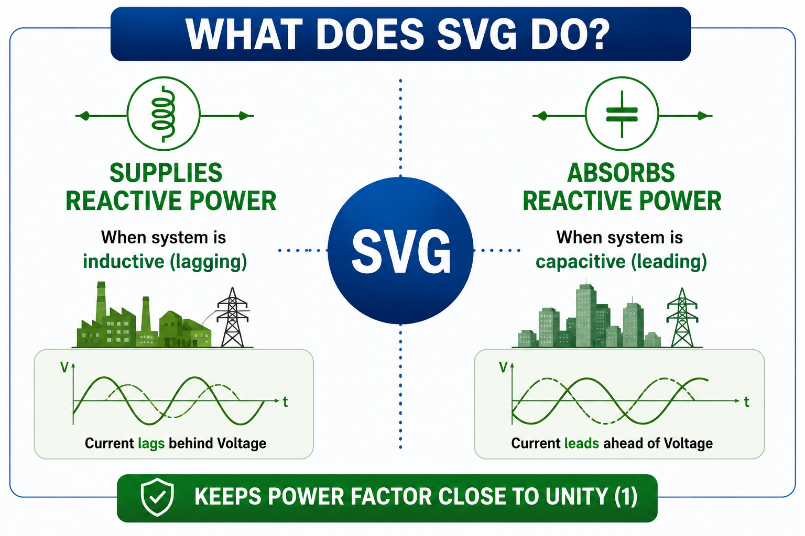
What is a Static VAR Generator (SVG)?
A Static VAR Generator (SVG) is a power electronic-based device that injects or absorbs reactive power into the electrical grid to maintain the desired power factor, improve voltage stability, and enhance overall power quality. Unlike conventional capacitor banks, which provide reactive power compensation in fixed or stepped stages, a Static VAR Generator (SVG) offers continuous and dynamic compensation based on the instantaneous requirements of the electrical system. Fully digital and capable of responding within a fraction of a cycle, Static VAR Generators (SVGs) are well suited for modern industries with rapidly changing and non-linear loads.
Static VAR Generator (SVG) operate using advanced voltage source converter (VSC) technology with high-speed digital controllers that continuously monitor system parameters such as voltage, current, and power factor. Based on real-time measurements, the controller determines the required amount of reactive power and commands the converter to either generate or absorb reactive current. This fast and accurate response helps maintain voltage stability, improves the overall power factor, and minimizes unnecessary energy losses in the electrical distribution network.
One of the key advantages of Static VAR Generator (SVG) is their ability to provide effective compensation under varying load conditions. Industrial facilities equipped with variable frequency drives (VFDs), welding machines, electric arc furnaces, CNC machines, elevators, cranes, and renewable energy systems often experience rapid fluctuations in reactive power demand. A Static VAR Generator (SVG) can respond almost instantly to these variations, ensuring stable electrical system performance without the delay associated with conventional compensation methods.
In addition to improving power factor, Static VAR Generator (SVG) contribute to better utilization of electrical infrastructure by reducing transformer loading, minimizing cable losses, and improving voltage regulation across the network. They also help industries comply with utility power quality requirements while reducing the likelihood of penalties associated with poor power factor. Their compact design, intelligent control features, low maintenance requirements, and compatibility with modern automation systems make Static VAR Generator (SVG) a reliable and future-ready solution for achieving efficient, stable, and sustainable power management in industrial and commercial electrical networks.
Think of an Static VAR Generator (SVG) as the “guardian of grid quality” silently monitoring, adjusting, and ensuring your electrical system runs at its best. Industries often follow the IEEE 519 standard to control harmonic distortion and maintain better power quality. Learn more about the standard from the IEEE Standards Association: IEEE STANDARDS
Why Reactive Power Compensation Matters
Reactive power doesn’t perform useful work, but it is essential for motors and transformers. Excessive reactive demand can lead to:
-
- Poor power factor and higher utility bills
-
- Voltage instability
-
- Overloading of transformers and cables
-
- Grid code violations and penalties
-
- Reduced equipment lifespan
Industries like steel, cement, textiles, IT parks, hospitals, and data centers experience direct operational and financial impacts from reactive power mismanagement.
Conventional Solutions: Their Limitations
-
- Capacitor banks or APFC panels: inexpensive but slow and prone to resonance issues
-
- Static VAR Compensators (SVCs): better but slower due to thyristor-controlled elements
Both fail under rapidly fluctuating loads as seen in arc furnaces, rolling mills, robotics, or VFD-driven systems.
Why Static VAR Generator (SVG) is the Game-Changer
Static VAR Generator (SVG) overcome these limitations with:
-
- Dynamic response (<10 ms): instantly compensates reactive power changes
-
- Bidirectional support: injects or absorbs VARs as needed
-
- Precise control: maintains power factor near unity at all times
-
- Harmonic mitigation: reduces distortion from nonlinear loads
-
- Compact and modular design: easy to scale and integrate
-
- 24/7 reliability: built for continuous industrial duty
Applications of Static VAR Generator (SVG)
-
- Steel & Metal Processing Plants: Manage flicker, heavy load fluctuations, and harmonics
-
- Cement Industry: Stabilize grinding mills, crushers, and rotary kilns
-
- Hospitals & Data Centers: Ensure uninterrupted power quality for critical systems
-
- Renewable Integration: Maintain grid stability in solar and wind farms
-
- IT Parks & Commercial Buildings: Improve efficiency and reduce electricity costs
Static VAR Generator (SVG) vs. Conventional Solutions
| Feature | Capacitor Banks | SVC | SVG |
|---|---|---|---|
| Response Time | Seconds | 100–200 ms | <10 ms |
| Harmonic Mitigation | ❌ No | ⚠️ Limited | ✅ Yes |
| Scalability | Low | Medium | High |
| Reliability | Moderate | Good | Excellent |
| Cost Efficiency | Low Upfront Cost | Medium | High ROI Over Lifecycle |
Benefits for Businesses
-
- Reduced energy bills through improved power factor
-
- Avoid utility penalties
-
- Extend equipment life by reducing stress
-
- Stable operations with minimal downtime
-
- Contribute to sustainability by reducing energy wastage
Conclusion
As industries evolve, power management must evolve too. SVGs are essential for sustainable, reliable, and cost-efficient operations.
Many industries are replacing conventional capacitor banks with Static VAR Generator (SVG) systems to improve power quality, enhance voltage stability, and achieve better overall system reliability. Unlike traditional capacitor banks, which provide fixed or step-based reactive power compensation, SVGs offer fast, continuous, and dynamic compensation. This enables them to respond instantly to changing load conditions, ensuring a stable power factor and reducing voltage fluctuations even in highly dynamic industrial environments.
The growing adoption of automation, renewable energy integration, electric vehicle charging infrastructure, and power electronic-based equipment has significantly increased the demand for intelligent reactive power compensation solutions. Industries such as manufacturing, data centers, commercial buildings, hospitals, steel plants, cement industries, and renewable energy installations require solutions that can adapt to rapidly changing electrical loads while maintaining high power quality standards. SVGs address these challenges effectively by delivering precise reactive power compensation without the risk of overcompensation or resonance commonly associated with conventional capacitor banks.
In addition to improving power factor, SVGs contribute to lower energy losses, enhanced equipment performance, and extended service life of transformers, cables, and switchgear. Improved voltage regulation also minimizes process interruptions, helping industries maintain higher productivity and operational efficiency. Furthermore, SVG systems assist organizations in meeting utility regulations and power quality standards while reducing the risk of penalties associated with poor power factor.
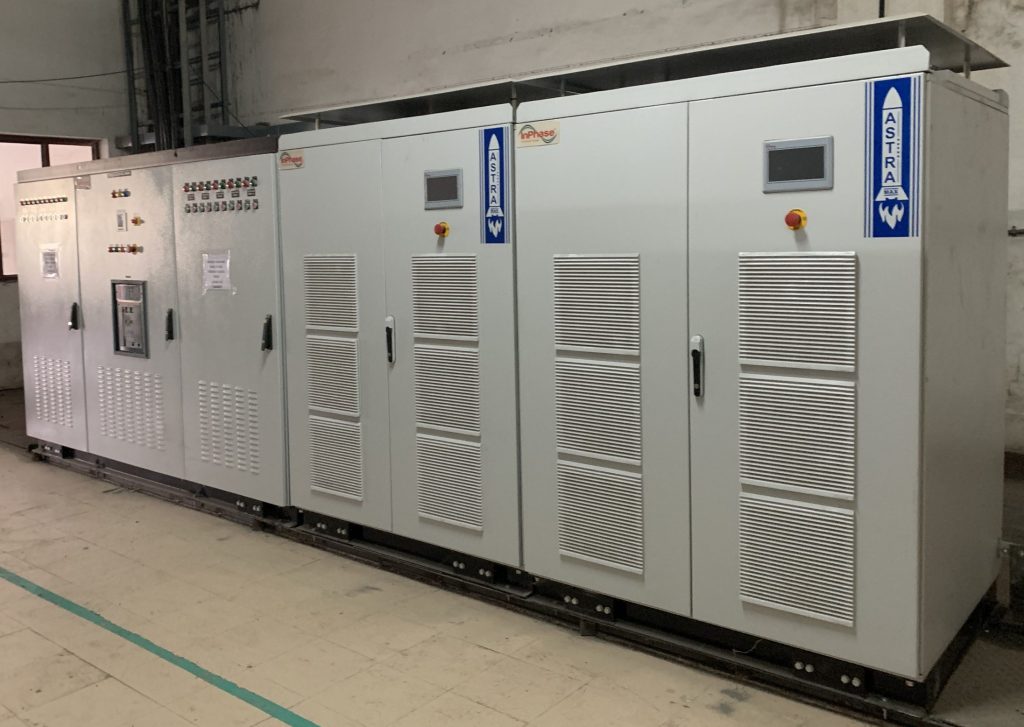
InPhase SVG solutions combine cutting-edge technology with proven reliability, offering more than equipment they provide efficiency, compliance, and future readiness. Designed for demanding industrial applications, these solutions deliver fast response, precise reactive power compensation, intelligent control, and seamless integration with existing electrical infrastructure. By enhancing power quality, reducing operational costs, and supporting sustainable energy practices, InPhase SVG solutions help industries build resilient electrical systems capable of meeting today’s requirements while remaining prepared for future technological advancements.
Learn more about our Static VAR Generator solutions at InPhase Power Technologies.