
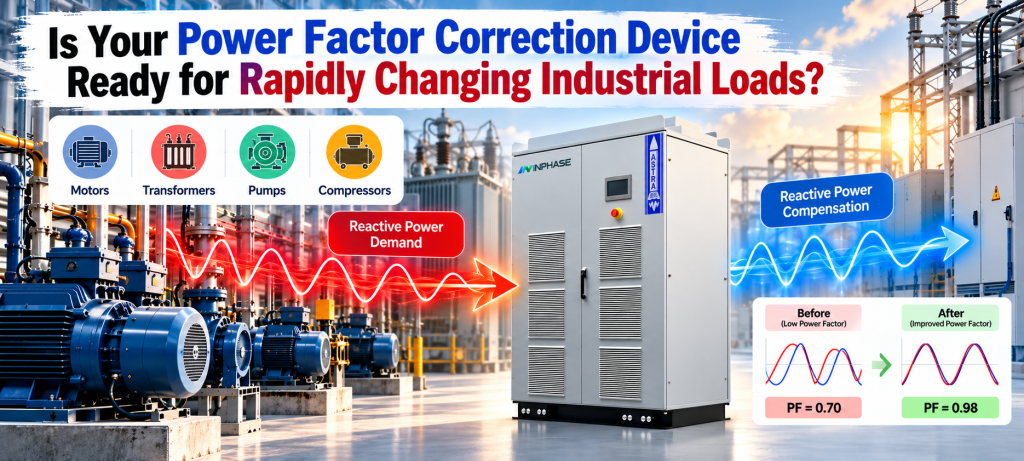
Industrial electrical systems rarely operate under constant load conditions. Motors start and stop, compressors cycle, production lines change operating speeds, and heavy machinery introduces fluctuating reactive power demand. These variations can affect power factor, increase current demand, and create challenges for electrical system performance.
A suitable power factor correction device helps manage reactive power and improve the utilisation of electrical infrastructure. However, when industrial loads change rapidly, conventional correction methods may not always respond quickly enough.
So, how do you choose a solution that matches your industry’s operating conditions? Let’s explore the different technologies available and understand where dynamic reactive power compensation can make a difference.
What Is a Power Factor Correction Device?
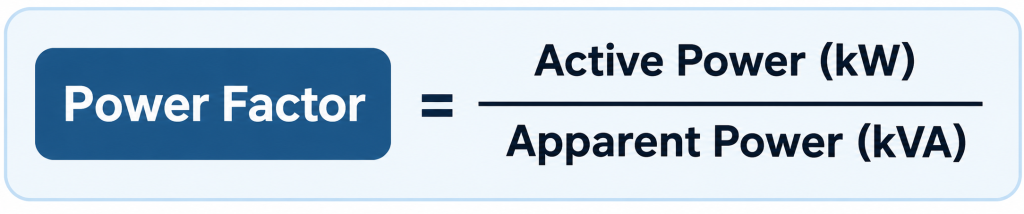
A power factor correction device is equipment designed to improve the power factor of an electrical installation by compensating for reactive power. Power factor indicates how effectively an electrical system uses apparent power to deliver useful active power. It is calculated as:
In industrial facilities, electrical equipment such as motors, transformers, pumps, and compressors relies on reactive power to establish the magnetic fields required for operation. This reactive power increases the total current drawn from the electrical supply without directly contributing to useful mechanical output. When reactive power demand becomes excessive, the power factor can decrease. A properly selected power factor correction device helps address this issue by supplying the required reactive power locally, thereby reducing the reactive power drawn from the upstream network.
Choosing the right power factor correction device is important for managing reactive power demand, while a suitable power factor correction device can help improve electrical system utilisation. Depending on the installation, a power factor correction device may be selected according to load characteristics, and the appropriate power factor correction device should match the system’s compensation requirements. A correctly sized power factor correction device can support the desired power factor, while an effective power factor correction device helps manage reactive power flow. Selecting a suitable power factor correction device also requires understanding the operating conditions, ensuring that the chosen power factor correction device meets the facility’s electrical requirements.
Why Is Power Factor Correction Important in Industries?
Poor power factor can affect electrical installations in several ways.
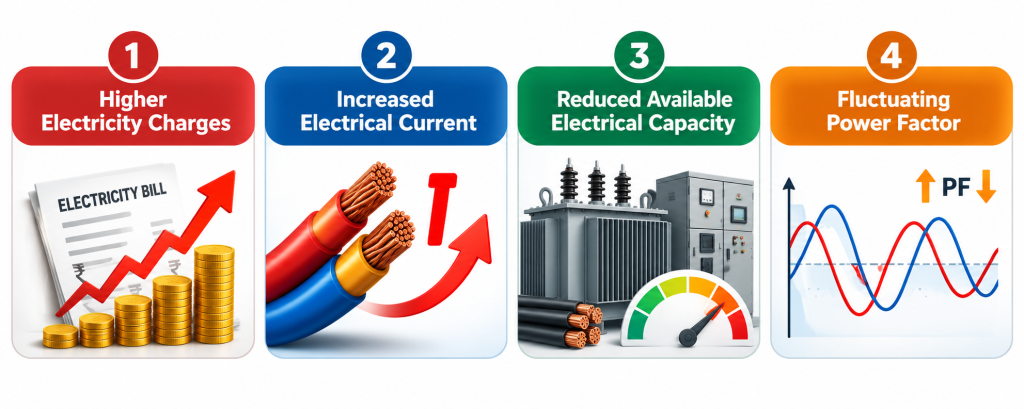
Poor power factor can lead to higher electricity charges, increased electrical current, and reduced available capacity in transformers, cables, and other electrical equipment. In industries with frequently changing loads, fluctuating power factor can further affect electrical system performance. Installing a suitable power factor correction device helps manage reactive power demand, reduce unnecessary current flow, improve the utilisation of existing electrical infrastructure, and maintain the desired power factor under varying operating conditions.
Why Conventional Capacitor Banks May Not Be Enough
Capacitor banks remain a practical and widely used option for many industrial installations. However, their performance depends on the characteristics of the connected loads. Consider a manufacturing facility where large motors, welding equipment, or variable speed machinery are frequently switched on and off.
The reactive power requirement may change faster than a conventional capacitor switching system can respond. During these transitions, the power factor can temporarily move away from the target value. Switching steps also mean that compensation is available in discrete increments rather than being continuously adjustable.
In addition, capacitor installations must be carefully assessed when harmonic distortion is present. Under certain conditions, resonance can increase harmonic currents and place additional stress on electrical equipment. This does not mean capacitor banks are unsuitable. It means that the compensation technology should be selected according to actual operating requirements.
How Does a Static VAR Generator Improve Power Factor?
An SVG dynamically adjusts its reactive current output according to the electrical system’s requirements.
Its operating principle can be understood through four stages.
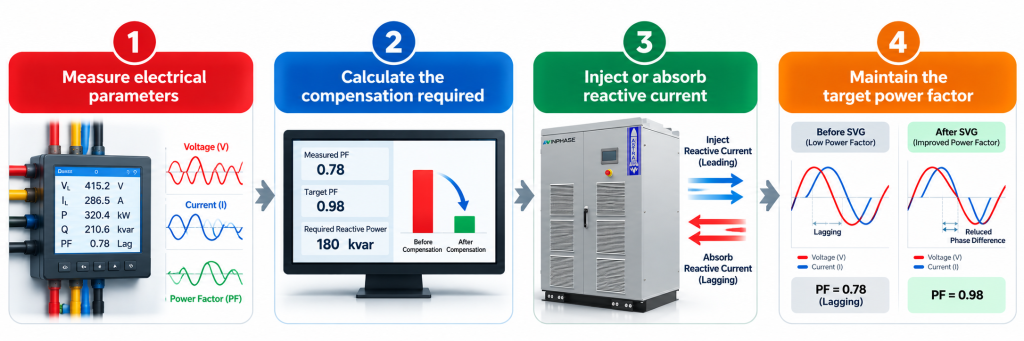
Step 1: Measure electrical parameters
The system monitors electrical quantities such as voltage and current to determine the reactive power requirement.
Step 2: Calculate the compensation required
The controller evaluates the difference between the existing operating condition and the desired compensation target.
Step 3: Inject or absorb reactive current
Power-electronic converters regulate the current exchanged with the electrical network to supply or absorb reactive power as required.
Step 4: Maintain the target power factor
The SVG continuously adjusts its output within its rated operating range as the load changes.
This dynamic operation makes SVG technology suitable for facilities where reactive power demand changes frequently and rapid compensation is important.
Modern industrial facilities also need to consider power quality along with reactive energy management. Nonlinear loads such as variable frequency drives and power electronic equipment can introduce harmonic distortion into the electrical system. IEEE 519 provides guidelines for harmonic control in electric power systems and establishes voltage and current distortion goals at the point of common coupling (PCC).
How to Select the Right Power Factor Correction Device
Before installing a correction system, evaluate the following factors.
Load variation: Determine whether reactive power demand is stable, gradually changing, or rapidly fluctuating.
Required power factor: Establish the target according to the installation’s operating requirements and applicable electricity tariff.
Compensation capacity: Calculate the reactive power compensation required under representative operating conditions.
Harmonic distortion: Measure harmonic levels and assess whether detuned capacitor banks, filtering, or other mitigation measures are necessary.
Response time: Consider how quickly the equipment must respond to changing reactive power demand.
System compatibility: Verify voltage rating, protection, installation conditions, communication requirements, and maintenance needs.
A detailed power quality assessment helps determine whether fixed capacitors, an APFC panel, an SVG, or a combination of technologies is the most appropriate choice.
Meet Changing Reactive Power Demands with InPhase SVG Solutions
When industrial loads change rapidly, power factor correction requires a solution that can adapt to varying reactive power demand.
The InPhase Static VAR Generator (SVG) is designed for dynamic reactive power compensation in industrial electrical systems. By rapidly adjusting reactive power output, SVG technology can help facilities manage fluctuating power factor and improve the utilisation of their electrical infrastructure.
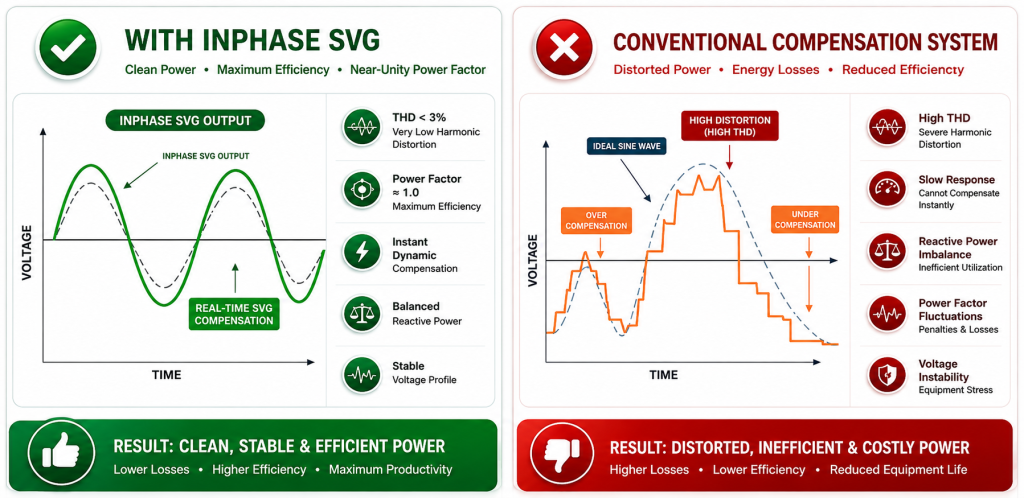
The comparison above shows how a conventional compensation system may experience over compensation, under compensation, power factor fluctuations, slower response, and reactive power imbalance when the load changes frequently. These limitations can make it difficult to maintain the desired power factor consistently.
The InPhase SVG addresses these challenges through fast and continuously adjustable reactive power compensation. With three-level IGBT technology, a response time of less than 0.1 ms, power factor greater than 0.99, and efficiency greater than 98%, the SVG can respond dynamically to changing load conditions. Unlike conventional capacitor-step switching, it continuously adjusts compensation according to the reactive power requirement, helping maintain a more stable power factor and reduce unnecessary electrical losses.
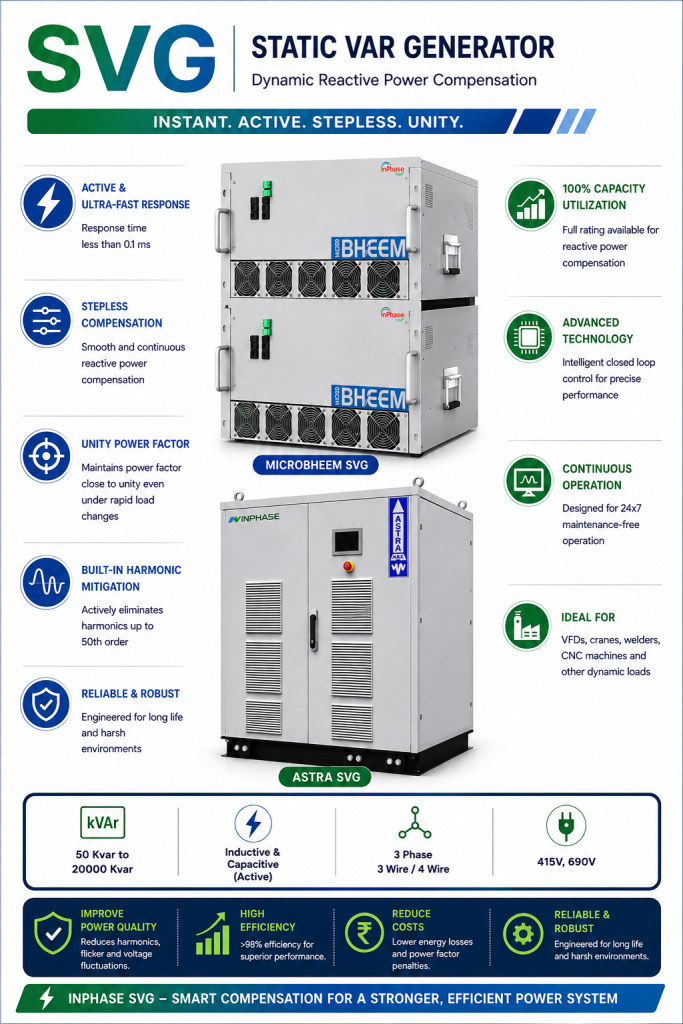
Explore InPhase Static VAR Generator solutions to learn more about dynamic reactive power compensation for industrial applications.