
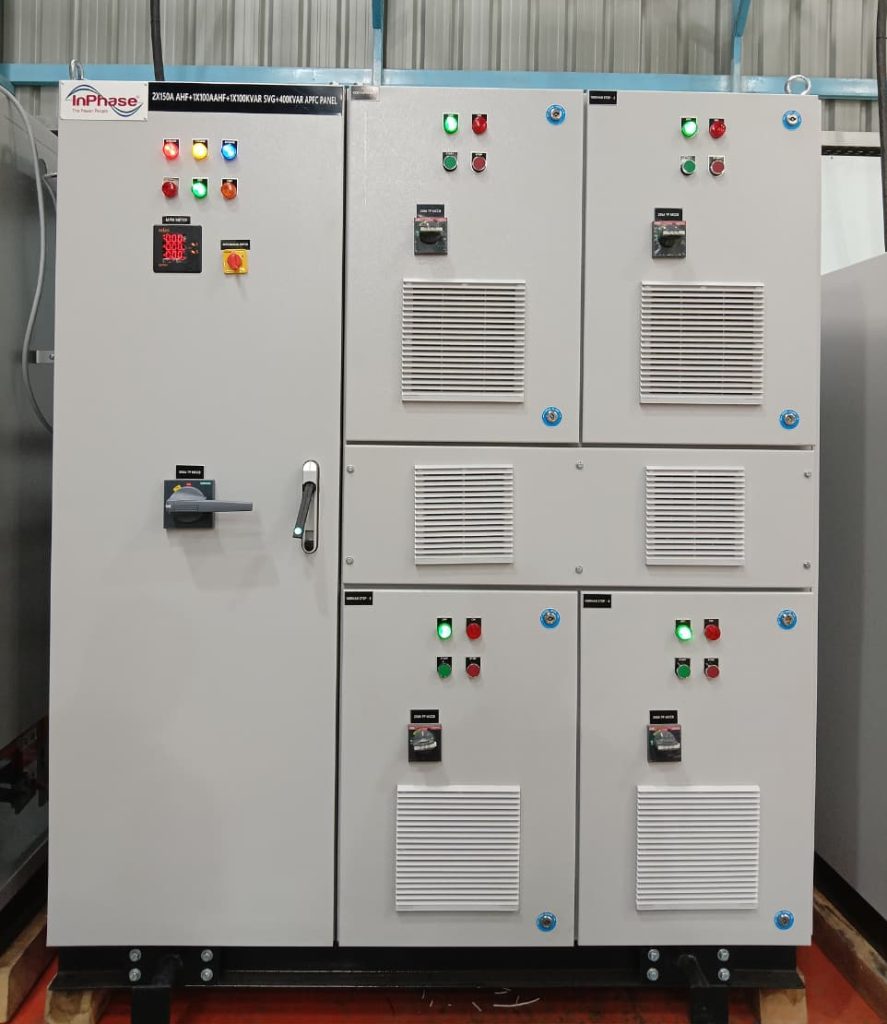
PFC Capacitors play a vital role in improving power factor and reducing reactive power demand in industrial electrical systems. However, many industries are finding that their capacitor banks are failing much earlier than expected. As the use of VFDs, automation systems, UPS units, and other non-linear loads continues to increase, harmonic distortion within electrical networks has become a major challenge for traditional capacitor-based power factor correction systems.
Smart Hybrid Active Filter (SHAF) is transforming how industries address capacitor bank failures caused by harmonics by combining the benefits of traditional power factor correction with advanced harmonic filtering capabilities. But why are capacitor banks failing earlier than expected in modern industrial facilities, and how can SHAF help solve this challenge?
The answer often lies in harmonic distortion. As industries adopt more VFDs, automated machinery, and power electronic equipment, electrical networks are becoming increasingly polluted with harmonics. These harmonics create excessive stress within capacitor banks, leading to overheating, reduced service life, frequent failures, and higher maintenance costs. As a result, ensuring the long-term reliability of power factor correction systems(PFC Panel) has become a growing challenge for industries pursuing greater efficiency and automation.
Why Are Capacitor Banks Facing Greater Stress Today?
Modern industrial facilities rely heavily on non-linear loads that draw current in a non-sinusoidal manner. This generates harmonics that circulate throughout the electrical network, affecting power quality and increasing the electrical stress on connected equipment, particularly PFC Capacitors and capacitor banks used for power factor correction.
Common sources of harmonics include Variable Frequency Drives (VFDs), uninterruptible power supplies (UPS), robotic systems, CNC machines, switch-mode power supplies, welding equipment, and automated production lines. As industries continue to embrace automation and digital manufacturing technologies, the number of harmonic-generating devices connected to electrical systems continues to grow. While these technologies improve productivity and operational efficiency, they also create significant challenges for PFC Capacitors, which are highly sensitive to harmonic distortion.
When harmonics are present in an electrical system, they distort the normal sinusoidal waveform of current and voltage. This distortion can create additional losses throughout the power distribution network, resulting in increased energy consumption and reduced system efficiency. Transformers, cables, motors, and switchgear may experience higher operating temperatures due to harmonic currents. However, PFC Capacitors are often among the most affected components because they can attract and amplify harmonic currents under certain operating conditions.
Excessive harmonics can cause PFC Capacitors to overheat, resulting in accelerated aging, insulation deterioration, reduced efficiency, and shortened service life. Harmonic distortion can also create resonance conditions between PFC Capacitors and the electrical network, further increasing electrical stress and the likelihood of premature capacitor bank failures. As harmonic levels increase, the performance and reliability of PFC Capacitors can decline significantly.
In addition to impacting PFC Capacitors, excessive harmonics can cause nuisance tripping of protective devices, inaccurate metering, communication interference, and unexpected process disruptions. These issues can lead to costly downtime, increased maintenance expenses, and reduced operational reliability.
As a result, protecting PFC Capacitors from harmonic-related damage has become a critical priority for modern industries. Effective harmonic mitigation not only improves power quality but also extends the life of PFC Capacitors, enhances power factor correction performance, reduces maintenance costs, and supports the long-term reliability of the entire electrical infrastructure.
When capacitor banks operate in harmonic-rich environments, they may experience:
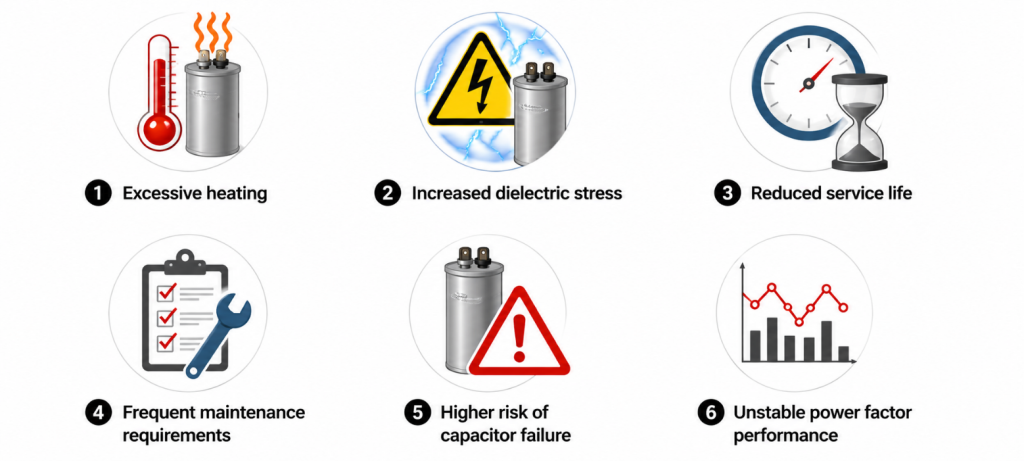
As industrial automation continues to expand, these challenges are becoming more common across manufacturing plants, process industries, commercial facilities, and infrastructure projects. The increasing use of VFDs, robotics, PLCs, and other power electronic equipment is driving higher harmonic levels, placing greater stress on PFC Capacitors and capacitor banks and making effective power quality management more important than ever.
Modern industrial facilities depend on highly automated processes that require stable and reliable electrical power. While automation improves productivity, accuracy, and operational efficiency, it also increases the concentration of non-linear loads connected to the electrical network. These loads generate harmonic currents that distort the electrical waveform and create additional challenges for power distribution systems. As harmonic distortion increases, the performance and reliability of PFC Capacitors can be significantly affected.
In many facilities, PFC Capacitors are expected to operate continuously under demanding electrical conditions. However, excessive harmonics can cause PFC Capacitors to experience higher operating temperatures, increased dielectric stress, and accelerated aging. Over time, this can result in reduced capacitor performance, shortened service life, and unexpected failures that impact overall system reliability. The growing presence of harmonic-generating equipment has therefore increased the need to protect PFC Capacitors from harmful electrical conditions.
Another challenge is the changing nature of industrial loads. Production schedules, automated machinery, and process equipment frequently operate under varying load conditions throughout the day. These fluctuations can cause harmonic levels to change continuously, creating additional stress on PFC Capacitors and conventional power factor correction systems. As a result, industries are seeking solutions that can maintain stable performance while protecting PFC Capacitors under dynamic operating conditions.
The financial impact of capacitor bank failures can also be significant. Premature failure of PFC Capacitors can lead to increased maintenance costs, replacement expenses, reduced energy efficiency, and unplanned production interruptions. Consequently, industries are placing greater emphasis on improving the reliability and lifespan of PFC Capacitors while maintaining effective power factor correction.
To address these evolving challenges, capacitor technology continues to advance with features designed to improve reliability and performance. Modern PFC Capacitors are being developed with enhanced dielectric materials, improved thermal management, higher current-handling capability, advanced safety mechanisms, and stronger protection against electrical stress. These innovations help PFC Capacitors operate more effectively in demanding industrial environments while supporting better power factor correction performance. However, as harmonic levels continue to rise in modern facilities, advanced harmonic mitigation solutions are increasingly being used alongside PFC Capacitors to ensure long-term reliability, optimal performance, and improved power quality.
Emerging Trends in Power Factor Correction (PFC) Capacitors
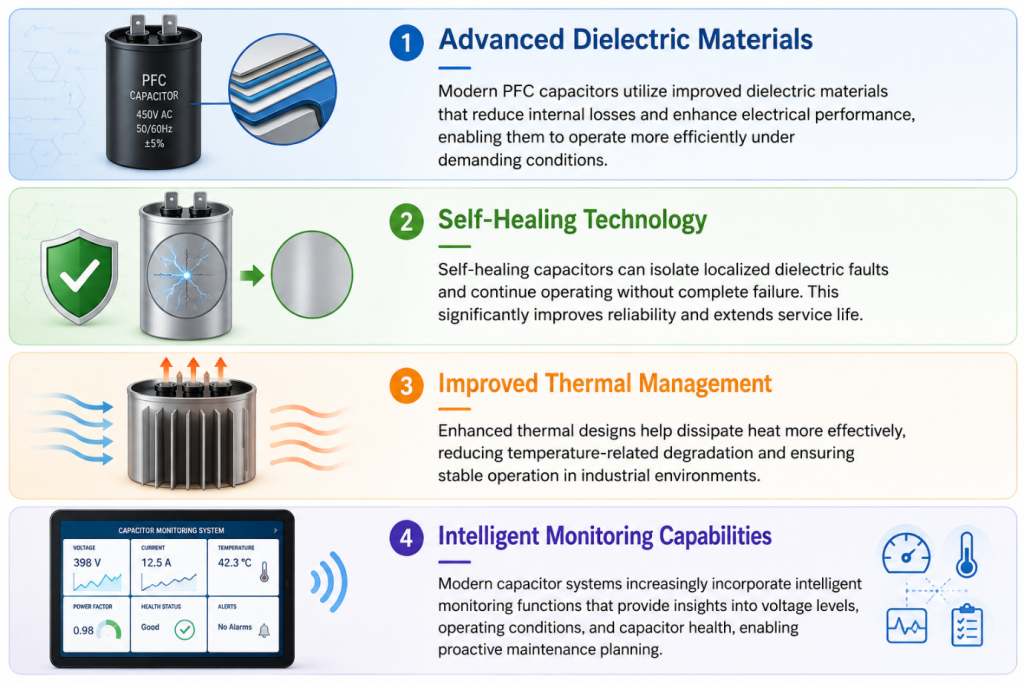
While PFC Capacitors have advanced significantly in terms of design, efficiency, and reliability, harmonic distortion remains a major challenge for modern power factor correction systems. As industries increasingly adopt non-linear loads such as VFDs, UPS systems, and automation equipment, PFC Capacitors are exposed to higher levels of harmonic stress than ever before.
PFC Capacitors can still experience overheating and accelerated aging due to harmonics. Excessive harmonic currents create additional thermal stress within PFC Capacitors, reducing their performance and increasing the risk of premature failure.
Reduced efficiency and shortened life of PFC Capacitors remain common risks. Even high-quality PFC Capacitors can suffer from continuous harmonic exposure, leading to lower efficiency, decreased reactive power compensation capability, and a significantly shorter service life.
Frequent electrical stress on PFC Capacitors can increase maintenance requirements. Harmonics place continuous stress on PFC Capacitors and capacitor banks, resulting in more frequent inspections, repairs, replacements, and higher maintenance costs.
PFC Capacitors remain one of the most widely used solutions for improving power factor and reducing reactive power demand in industrial electrical systems. By supplying reactive power locally, PFC Capacitors help improve system efficiency, reduce utility penalties, and optimize the utilization of electrical infrastructure. For decades, industries have relied on PFC Capacitors as a cost-effective method of maintaining acceptable power factor levels.
However, the operating environment for PFC Capacitors has changed significantly. Modern facilities now use large numbers of non-linear loads that generate harmonic currents, creating conditions that traditional PFC Capacitors were not originally designed to handle. As harmonic levels increase, PFC Capacitors can become exposed to excessive electrical and thermal stress, affecting both performance and reliability.
One of the most common challenges associated with PFC Capacitors is overheating. Harmonic currents flowing through PFC Capacitors generate additional heat, which can accelerate dielectric deterioration and reduce the operational life of PFC Capacitors. Even high-quality PFC Capacitors may experience premature aging when subjected to continuous harmonic distortion.
In many industrial facilities, repeated harmonic exposure can lead to swelling, reduced capacitance, insulation degradation, and eventual failure of PFC Capacitors. As a result, maintenance teams often face increased inspection requirements, more frequent replacement cycles, and higher operating costs associated with maintaining PFC Capacitors.
Another significant concern is resonance. Under certain network conditions, PFC Capacitors can interact with system inductance and create resonance phenomena that amplify harmonic currents. This can place even greater stress on PFC Capacitors, increasing the likelihood of capacitor bank failures and unplanned downtime. Protecting PFC Capacitors from these harmful effects has become an essential requirement for modern power systems.
Maintaining the long-term health and performance of PFC Capacitors therefore requires not only power factor correction but also effective harmonic control. Industries are increasingly recognizing that safeguarding PFC Capacitors is critical for achieving reliable power quality, maximizing equipment life, and ensuring stable electrical system operation.
Without proper harmonic mitigation, PFC Capacitors may struggle to deliver the expected power factor correction performance. As a result, industries are increasingly looking beyond conventional PFC Capacitors and adopting advanced solutions such as Smart Hybrid Active Filters (SHAF) to protect PFC Capacitors, improve power quality, and ensure long-term electrical system reliability.
How Smart Hybrid Active Filter Supports Modern Power Factor Correction Systems?
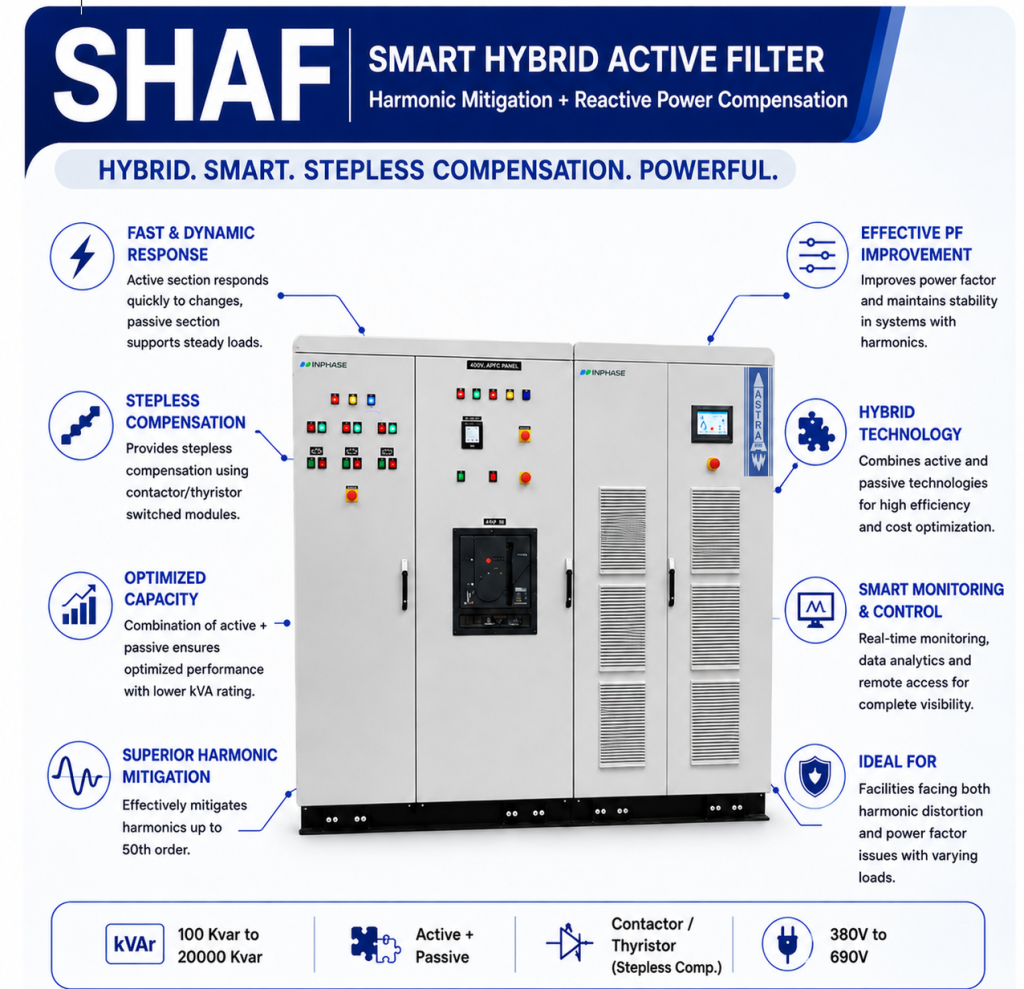
Modern electrical systems are increasingly affected by non-linear loads that generate harmonics and cause poor power factor. Traditional solutions like APFC and TSC systems have limitations in performance, response time, and reliability, especially in environments with rapidly changing load conditions. Smart Hybrid Active Filter combines active and passive technologies to deliver fast, dynamic, and efficient power factor correction along with harmonic mitigation, ensuring superior power quality, longer equipment life, and improved system reliability.
Industries often follow the IEEE 519 standard to limit harmonic distortion and maintain reliable power quality. Smart Hybrid Active Filter is designed to support compliance with IEEE 519 by dynamically mitigating harmonics and maintaining optimal electrical system performance. Learn more about the standard from the IEEE Standards Association .
Unlike conventional capacitor-based compensation systems, Smart Hybrid Active Filter continuously monitors electrical parameters and instantly responds to changes in load conditions. This enables precise reactive power compensation while simultaneously reducing current and voltage harmonics throughout the network. As a result, industries can achieve stable voltage levels, lower system losses, and improved overall energy efficiency.
The growing use of variable frequency drives (VFDs), robotics, automation systems, UPS units, and other power electronic equipment has significantly increased harmonic levels in industrial facilities. These harmonics can lead to overheating of transformers, capacitor banks, cables, and motors, causing premature equipment failures and increased maintenance costs. Smart Hybrid Active Filter effectively addresses these challenges by filtering harmful harmonics before they can impact critical equipment.
By improving power factor and reducing harmonic distortion at the same time, Smart Hybrid Active Filter helps industries avoid utility penalties, enhance equipment performance, increase system capacity, and extend the lifespan of electrical assets. This makes Smart Hybrid Active Filter a future-ready solution for modern industries seeking reliable, efficient, and standards-compliant power quality management.
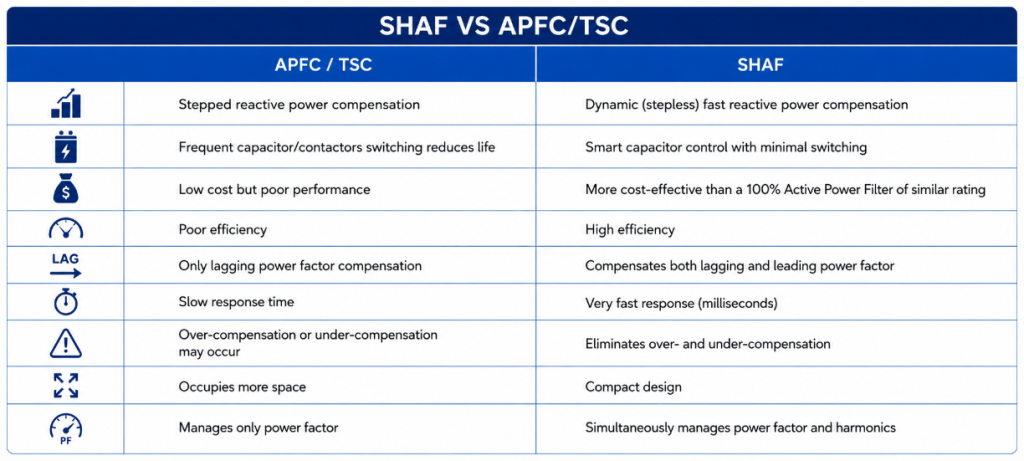
Both APFC/TSC systems and Smart Hybrid Active Filters (SHAF) are used to improve power factor, but they differ significantly in performance and functionality. APFC/TSC systems provide stepped reactive power compensation by switching capacitor banks ON and OFF based on load requirements. While they offer a relatively low initial cost, frequent switching of capacitors and contactors can reduce component life, leading to higher maintenance requirements over time. APFC systems also compensate only for lagging power factor and may experience over-compensation or under-compensation during rapidly changing load conditions. Their response time is comparatively slow, and they primarily focus on power factor correction without addressing harmonics.
In contrast, SHAF provides dynamic, stepless reactive power compensation with a response time measured in milliseconds. It intelligently controls capacitors with minimal switching, improving reliability and extending equipment life. SHAF can compensate for both lagging and leading power factor while eliminating over- and under-compensation issues. Additionally, SHAF offers a compact design, higher efficiency, and the unique ability to simultaneously manage power factor and harmonic distortion, making it a more advanced and effective solution for modern industrial power quality requirements.
Why Choose InPhase Power Technologies?
At InPhase Power Technologies Pvt. Ltd., we understand that modern power quality challenges require solutions that go beyond conventional capacitor-based correction. Our Smart Hybrid Active Filter (SHAF) solutions are designed to protect capacitor banks, mitigate harmonics, and provide dynamic reactive power compensation for today’s complex industrial environments.
By combining intelligent control, advanced filtering technology, and reliable compensation performance, InPhase Smart Hybrid Active Filter solutions help industries improve power quality, extend equipment life, and achieve greater operational efficiency.
As industrial facilities continue to adopt automation, Variable Frequency Drives (VFDs), robotics, UPS systems, and other power electronic equipment, maintaining stable power quality has become increasingly challenging. These non-linear loads generate harmonics that can negatively impact transformers, motors, cables, switchgear, and particularly PFC Capacitors. Excessive harmonic distortion can lead to overheating, increased electrical losses, reduced equipment life, and frequent maintenance requirements. Traditional power factor correction systems often struggle to perform effectively under such conditions, making advanced harmonic mitigation essential for reliable operation.
The InPhase Smart Hybrid Active Filter (SHAF) is specifically engineered to address these challenges by combining the advantages of active harmonic filtering and reactive power compensation in a single integrated solution. Unlike conventional systems that react only to fixed operating conditions, SHAF continuously monitors the electrical network and dynamically adapts to changing load requirements in real time. This enables consistent harmonic mitigation and power factor correction even in facilities with highly fluctuating electrical loads.
One of the major benefits of SHAF is its ability to protect PFC Capacitors and capacitor banks from the damaging effects of harmonics. By reducing harmonic currents before they reach capacitor banks, SHAF minimizes overheating, prevents resonance-related issues, and helps extend the operational life of PFC Capacitors. This not only improves system reliability but also reduces maintenance costs and replacement expenses associated with capacitor bank failures.
In addition to harmonic mitigation, SHAF provides fast and accurate reactive power compensation, helping facilities maintain a high power factor under varying load conditions. Improved power factor reduces utility penalties, lowers electrical losses, enhances transformer capacity utilization, and contributes to overall energy efficiency. These benefits can result in significant cost savings over the lifetime of the system.
The intelligent monitoring and control capabilities integrated into SHAF provide valuable insights into electrical system performance. Real-time data, harmonic analysis, power factor monitoring, and system diagnostics allow facility managers and maintenance teams to make informed decisions and proactively address potential power quality issues before they impact operations.
InPhase SHAF solutions are designed to support compliance with industry-recognized power quality standards such as IEEE 519. By maintaining harmonic distortion within recommended limits, SHAF helps industries improve equipment reliability, reduce operational risks, and support long-term electrical system health.
With extensive experience in power quality engineering, InPhase Power Technologies delivers more than just products. We provide application expertise, system analysis, commissioning support, and dedicated after-sales service to ensure every solution performs optimally throughout its lifecycle. Our commitment to innovation, reliability, and customer success enables industries across multiple sectors to overcome power quality challenges with confidence.
By investing in InPhase Smart Hybrid Active Filter solutions, industries can move beyond the limitations of traditional capacitor-based systems and adopt a future-ready approach to harmonic mitigation, PFC Capacitor protection, power factor improvement, and electrical system reliability. The result is a safer, more efficient, and more resilient power distribution network capable of supporting modern industrial operations for years to come.
Learn more about our Smart Hybrid Active Filter solutions at InPhase Power Technologies.