
Power Factor Correction and Energy Consumption are closely connected in every industrial electrical system. When power factor remains low, facilities consume more current, experience higher electrical losses, face increased utility costs, and reduce the efficiency of critical equipment. Understanding the relationship between Power Factor Correction and Energy Consumption helps industries identify hidden energy waste and implement solutions that improve overall operational efficiency.
Poor power factor is one of the most overlooked causes of high energy consumption in industrial facilities. It forces electrical systems to draw excess current, increasing power losses, reducing equipment efficiency, and driving up electricity costs.
With modern loads such as VFDs, CNC machines, robotics, and automation systems, effective Power Factor Correction is no longer optional—it’s essential for improving energy efficiency and reducing operating costs.
This is where InPhase Static VAR Generators (SVGs) deliver a smarter solution. By providing real-time reactive power compensation, InPhase SVGs help industries achieve near-unity power factor, reduce electrical losses, improve power quality, and maximize energy savings.
In this blog, we’ll uncover the hidden connection between Power Factor Correction and Energy Consumption and explain how the right solution can turn wasted energy into measurable savings.
What Is Power Factor Correction?
In every electrical system:
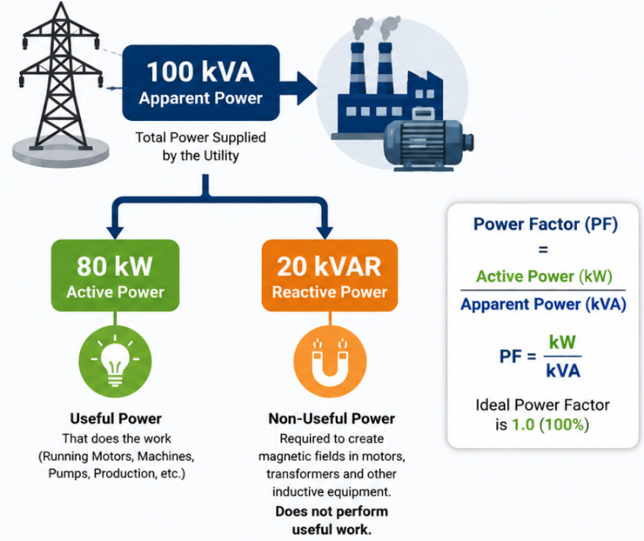
- Active Power (kW) performs useful work.
- Reactive Power (kVAR) does not perform useful work.
- Apparent Power (kVA) is the total power supplied.
Power Factor measures how effectively electricity is being used.
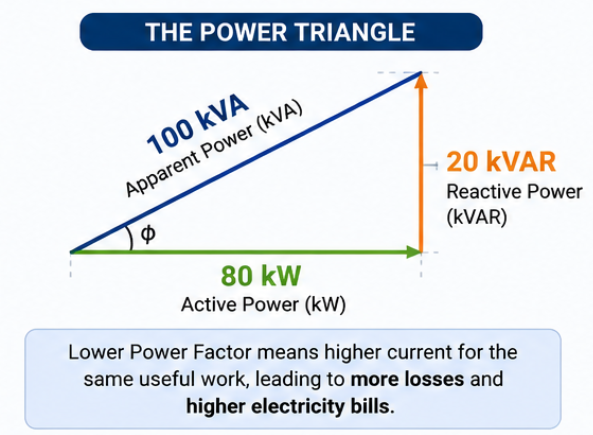
Power Factor = kW ÷ kVA
A Power Factor of 1.0 means every unit of supplied power is being used efficiently.
A lower Power Factor means more electrical energy is required to achieve the same output The relationship between Power Factor Correction and Energy Consumption is often overlooked, yet it plays a critical role in determining the overall efficiency of an industrial electrical system. https://ieeexplore.ieee.org/document/6536169
This is why Power Factor Correction is critical for reducing energy consumption.

Many industrial facilities focus on reducing electricity bills without fully understanding the relationship between Power Factor Correction and Energy Consumption. When a facility operates with a poor power factor, more current is required to deliver the same useful power output. This additional current increases electrical losses throughout the network and results in higher operating costs. Understanding the connection between Power Factor Correction and Energy Consumption allows industries to identify hidden inefficiencies and implement solutions that improve overall electrical performance while reducing energy waste.
Organizations that prioritize Power Factor Correction and Energy Consumption management can gain significant advantages, including lower electricity bills, improved equipment performance, reduced electrical losses, and better utilization of existing infrastructure. These benefits not only improve profitability but also support sustainability initiatives by reducing unnecessary energy waste.
Why Poor Power Factor Increases Energy Consumption
Understanding the connection between Power Factor Correction and Energy Consumption helps facility managers identify hidden inefficiencies. As reactive power increases, additional current flows through cables, transformers, and switchgear, causing unnecessary energy losses. Proper Power Factor Correction minimizes these losses and ensures that Energy Consumption remains as low as possible.Understanding the connection between Power Factor Correction and Energy Consumption helps facility managers identify hidden electrical losses and implement effective energy-saving strategies.
Poor Power Factor doesn’t just cause penalties. It increases current throughout the entire electrical network.
The relationship is simple:
Lower Power Factor = Higher Current = Higher Losses = Higher Costs
This is exactly why Power Factor Correction is considered a foundational energy-saving solution.
Poor power factor is one of the leading causes of unnecessary electrical losses in industrial facilities. Understanding the relationship between Power Factor Correction and Energy Consumption is essential for organizations seeking to improve efficiency and reduce operating costs.
The Hidden Costs of Poor Power Factor Nobody Talks About
Improving Power Factor Correction and Energy Consumption performance can significantly reduce distribution losses and improve the utilization of existing electrical infrastructure.Many industries focus only on electricity tariffs and equipment efficiency, but the relationship between Power Factor Correction and Energy Consumption is equally important. Improving power factor reduces current flow throughout the electrical network, minimizes distribution losses, and allows electrical assets to operate more efficiently, r
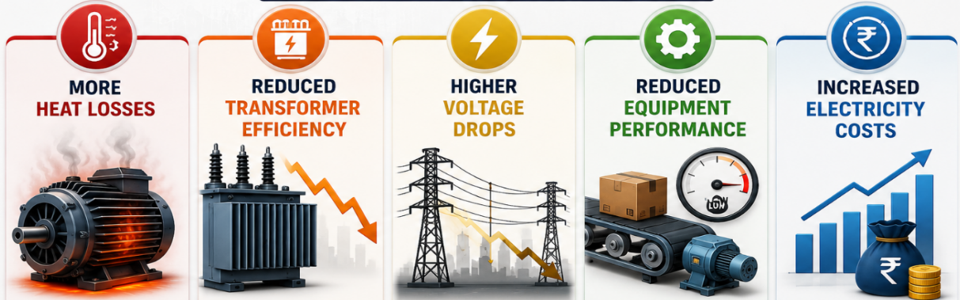
Increased Distribution Losses : Electrical losses follow the I²R principle .A small increase in current can dramatically increase energy losses.
Reduced Transformer Capacity : Transformers become occupied carrying reactive power instead of useful power.
Equipment Stress : Motors, transformers, and switchgear operate under additional stress.
Expansion Challenges : Poor Power Factor often limits electrical system capacity before production capacity.
Higher Electricity Bills : Many utilities penalize industries operating below acceptable Power Factor limits.
Signs Your Facility Needs Better Power Factor Correction
Many industrial facilities are unaware that poor power factor is increasing their operating costs. The following warning signs often indicate the need for improved reactive power compensation:
- Frequent power factor penalties on electricity bills.
- Transformers operating close to capacity despite stable production levels.
- Excessive heating in cables, switchgear, and transformers.
By identifying these warning signs early, industries can implement appropriate power factor correction solutions and improve overall electrical efficiency.
How Power Factor Correction and Energy Consumption Impact Industrial Profitability
The connection between Power Factor Correction and Energy Consumption has a direct impact on industrial profitability. When power factor remains low, electrical systems must draw more current to deliver the same amount of useful power. This increased current leads to higher distribution losses, greater equipment stress, reduced system efficiency, and increased electricity costs.
By implementing effective Power Factor Correction, industries can significantly reduce unnecessary energy losses and improve the utilization of existing electrical infrastructure. Lower current flow reduces heat generation in cables and transformers, extends equipment lifespan, and minimizes maintenance requirements. As a result, facilities can operate more efficiently while lowering overall operating expenses.
In addition, optimized Power Factor Correction helps businesses avoid utility penalties associated with poor power factor and frees up valuable transformer and distribution capacity. This allows industries to support future expansion without investing in costly electrical upgrades. By reducing Energy Consumption and improving power quality, Power Factor Correction becomes a strategic tool for enhancing profitability, increasing operational reliability, and achieving long-term energy savings.
Why Traditional APFC Panels Are No Longer Enough ?
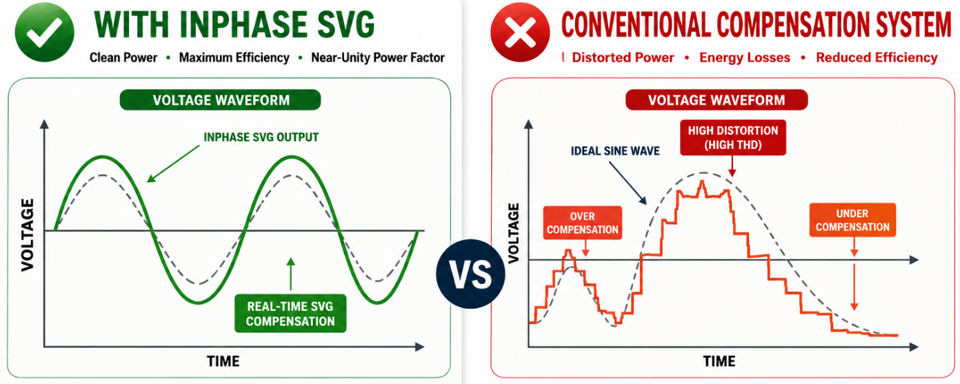
Modern facilities rely on VFDs, CNC machines, robotics, and automated systems that create rapidly changing reactive power demands. Traditional APFC panels often struggle to respond quickly, resulting in inefficient power factor correction.
The real question is: Is your APFC panel keeping up with your modern electrical loads?
As energy costs continue to rise, industries need faster, smarter, and more precise power factor correction solutions that can respond instantly to changing conditions. This is why more businesses are moving beyond traditional APFC technology and adopting advanced solutions such as Static VAR Generators (SVGs) for real-time reactive power compensation and maximum energy efficiency.
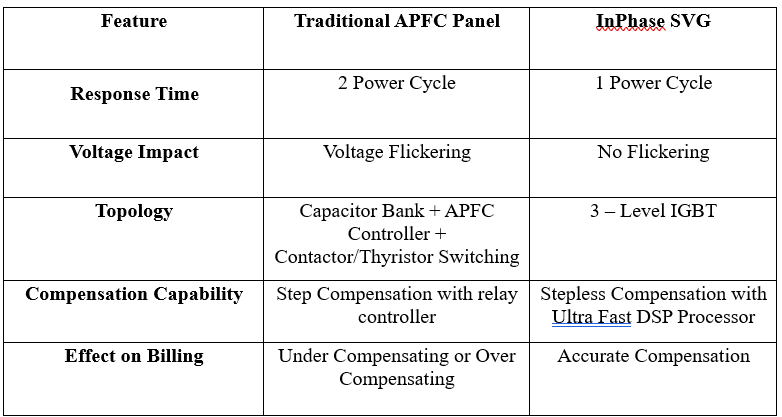
Modern industrial facilities operate with highly dynamic loads such as variable frequency drives (VFDs), CNC machines, robotics, welding equipment, and automated production systems. These loads create rapidly changing reactive power demands that traditional APFC panels often struggle to compensate for accurately. As a result, industries may experience under-compensation or over-compensation, leading to reduced efficiency and inconsistent power factor performance.The relationship between Power Factor Correction and Energy Consumption becomes increasingly important in such environments. Traditional APFC panels rely on capacitor banks that switch in fixed steps, making them less effective when load conditions change frequently. This delayed response can result in unnecessary reactive power flow, increased system losses, and higher energy consumption.
To effectively manage Power Factor Correction and Energy Consumption, industries require solutions that can respond instantly to changing load conditions. Advanced technologies such as Static VAR Generators (SVGs) provide real-time reactive power compensation with stepless operation, ensuring accurate power factor correction at all times. This helps reduce electrical losses, improve voltage stability, optimize infrastructure utilization, and achieve greater energy efficiency compared to traditional APFC systems.
How InPhase SVG Delivers Smarter Power Factor Correction
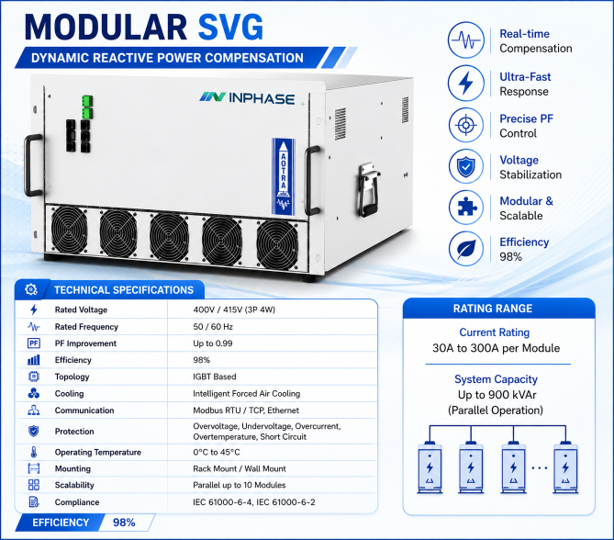
InPhase Static VAR Generator (SVG) is an advanced, electronics-based reactive power compensation solution designed to deliver precise, real-time power factor correction for modern industrial environments. Unlike traditional capacitor banks that provide stepped compensation, InPhase SVG dynamically adjusts to changing load conditions and delivers exactly the reactive power required at any moment. This helps industries reduce power factor penalties, minimize energy losses, improve voltage stability, and maximize the utilization of existing electrical infrastructure.InPhase SVG technology is specifically designed to optimize Power Factor Correction and Energy Consumption by providing accurate reactive power compensation in real time.Power Factor Correction and Energy Consumption are directly connected to industrial efficiency, power quality, and operating costs.https://inphase.in/power-quality-products
Key Features :
- Advanced Power Quality Management
- Intelligent Operation
- Smart integration
Measuring the Impact of Power Factor Correction on Energy Consumption
Industries often focus on reducing production costs, but many overlook how electrical inefficiencies contribute to unnecessary energy consumption. Poor power factor forces electrical systems to carry additional current, increasing cable losses, transformer loading, and heat generation throughout the facility.
Implementing effective Power Factor Correction helps reduce these hidden losses by minimizing reactive power demand and improving the efficiency of power distribution systems. As a result, facilities can lower energy consumption, improve voltage stability, and increase the available capacity of existing transformers and switchgear.
As industries continue to adopt automation, robotics, variable frequency drives, and smart manufacturing technologies, managing Power Factor Correction and Energy Consumption will become increasingly important. Traditional compensation methods may not provide the speed and accuracy required for modern dynamic loads. Advanced solutions such as InPhase SVG help facilities maintain optimal power factor under changing operating conditions, ensuring that Power Factor Correction and Energy Consumption remain aligned with energy efficiency goals. By combining intelligent compensation, real-time monitoring, and superior power quality performance, industries can significantly reduce Energy Consumption while improving system reliability and productivity.
Frequently Asked Questions
FAQ 1: How does Power Factor Correction reduce energy consumption?
Power Factor Correction reduces the amount of reactive power drawn from the electrical supply. As a result, current flow decreases, electrical losses are minimized, and overall energy efficiency improves. This helps industries lower operating costs and optimize energy consumption.
FAQ 2: Why is Power Factor Correction important for industrial facilities?
Power Factor Correction improves the efficiency of electrical systems by reducing unnecessary current flow. It helps industries avoid utility penalties, reduce distribution losses, improve equipment performance, and maximize the capacity of existing electrical infrastructure.
FAQ 3: Can Power Factor Correction improve power quality?
Yes. Effective Power Factor Correction helps stabilize voltage levels, reduce system stress, improve equipment reliability, and enhance overall power quality. Advanced solutions such as SVGs provide real-time compensation for changing load conditions.
FAQ 4: What are the benefits of using SVG instead of traditional APFC panels?
SVG technology provides ultra-fast, stepless reactive power compensation compared to the step-based compensation of traditional APFC panels. This enables more accurate Power Factor Correction, better energy efficiency, improved power quality, and reduced electrical losses.
FAQ 5: What is the ideal power factor for minimizing energy consumption?
Most industries aim for a power factor between 0.98 and 1.0. Maintaining a near-unity power factor helps reduce electrical losses, improve system efficiency, and support better energy consumption management.