
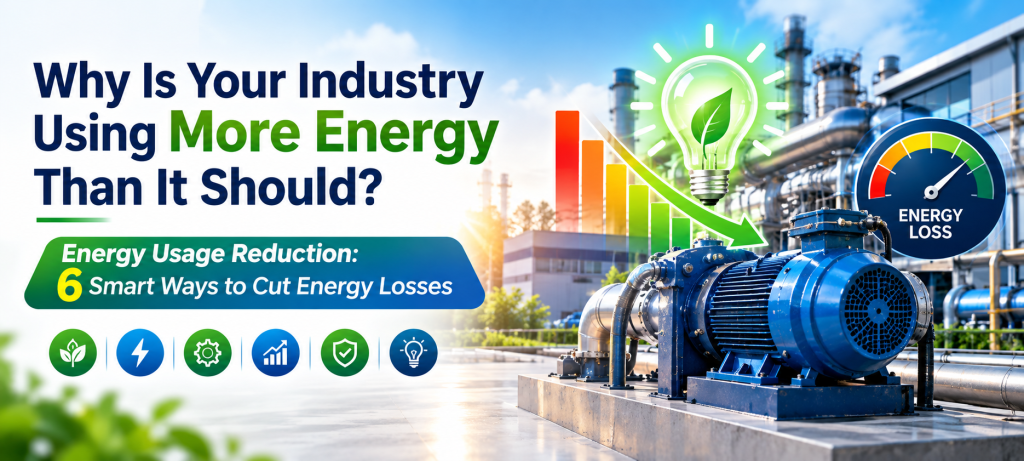
Your industrial facility is running every day. Motors are operating, machines are working, production lines are moving, and electrical equipment is handling continuous loads.
But is all the electrical energy being used efficiently?
Even when production remains the same, an inefficient electrical system can consume more energy than necessary. Excessive current, harmonic distortion, poor power factor, equipment losses, and unnecessary operation can all contribute to energy waste. This is why energy usage reduction is becoming an important priority for modern industries.
The good news is that reducing energy consumption does not always mean changing the production process or replacing every piece of equipment. Sometimes, the first step is simply understanding where energy is being lost. So, where does industrial energy get wasted, and what can industries do to reduce unnecessary consumption?
Let’s take a closer look.
Where Does Industrial Energy Get Wasted?
Energy can be lost at different points throughout an industrial electrical system. Motors, transformers, cables, variable frequency drives, UPS systems, and other electrical equipment operate continuously in many facilities. When these systems are overloaded, poorly maintained, or affected by poor power quality, additional losses can occur.
For example, low power factor can increase current flow for the same useful power. Harmonic currents can create additional heating in transformers, cables, and other equipment. Even equipment that operates when it is not actually required can contribute to unnecessary energy consumption. This means that energy usage reduction is not only about reducing the amount of equipment being used. It is also about improving how efficiently the electrical system operates. Industrial energy losses are as follows :
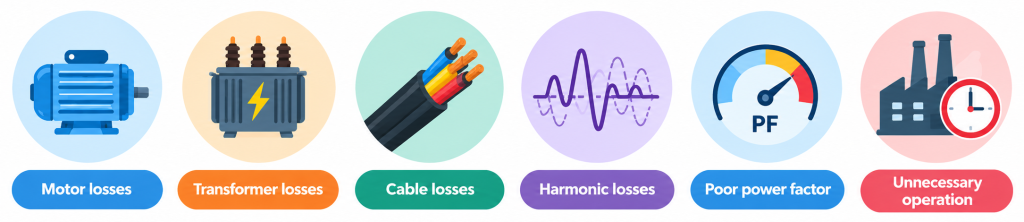
Six Practical Ways for Energy Usage Reduction
1. Improve Power Factor
Many industrial loads such as motors, pumps, compressors, and transformers require reactive power during operation. A low power factor increases the current required for the same useful power, which can increase losses in cables and transformers. Capacitor banks and automatic power factor correction systems can help compensate for reactive power demand. For stable loads, these methods can support energy loss reduction and better electrical efficiency.
2. Reduce Harmonic Distortion
Variable frequency drives, UPS systems, rectifiers, and other non linear loads can introduce harmonic currents into an electrical system. These currents can cause additional heating and losses in transformers, cables, and motors. Reducing excessive harmonics can therefore support energy loss reduction and improve overall power quality. Active Harmonic Filters can help by generating compensating currents to reduce unwanted harmonic components.
3. Maintain Motors and Drives Properly
Motors are major energy consumers in many industrial facilities. Poor maintenance, incorrect loading, and mechanical problems can increase their energy consumption. Regular inspection, proper sizing, and efficient operation can help prevent unnecessary losses. Proper maintenance of motors and drives can contribute to energy usage reduction while supporting reliable equipment operation.
4. Monitor Energy Consumption
Energy monitoring helps industries understand where electricity is being consumed and where losses may be occurring. Parameters such as voltage, current, active power, power factor, energy consumption, and harmonic distortion can provide useful information about system performance. Regular monitoring can help identify unusual consumption patterns and support energy usage reduction through timely corrective action.
5. Avoid Unnecessary Equipment Operation
Equipment that continues operating when it is not required can contribute to unnecessary energy consumption. Lighting, pumps, compressors, ventilation systems, and cooling equipment can often be operated according to actual production requirements. Reviewing operating schedules and using automation where appropriate can help reduce unnecessary energy use and support energy usage reduction.
6. Improve Transformer & Distribution Efficiency
Transformers, cables, busbars, and other distribution equipment continuously carry electrical power throughout an industrial facility. Overloading, excessive current, poor connections, and harmonic distortion can increase heating and electrical losses. Regular inspection and proper maintenance of these systems can help improve efficiency and contribute to energy loss reduction across the facility.
How Power Quality Affects Energy Usage
Energy efficiency and power quality are closely connected. An electrical system may continue supplying power even when its power quality is poor. But that does not necessarily mean that the system is operating efficiently.
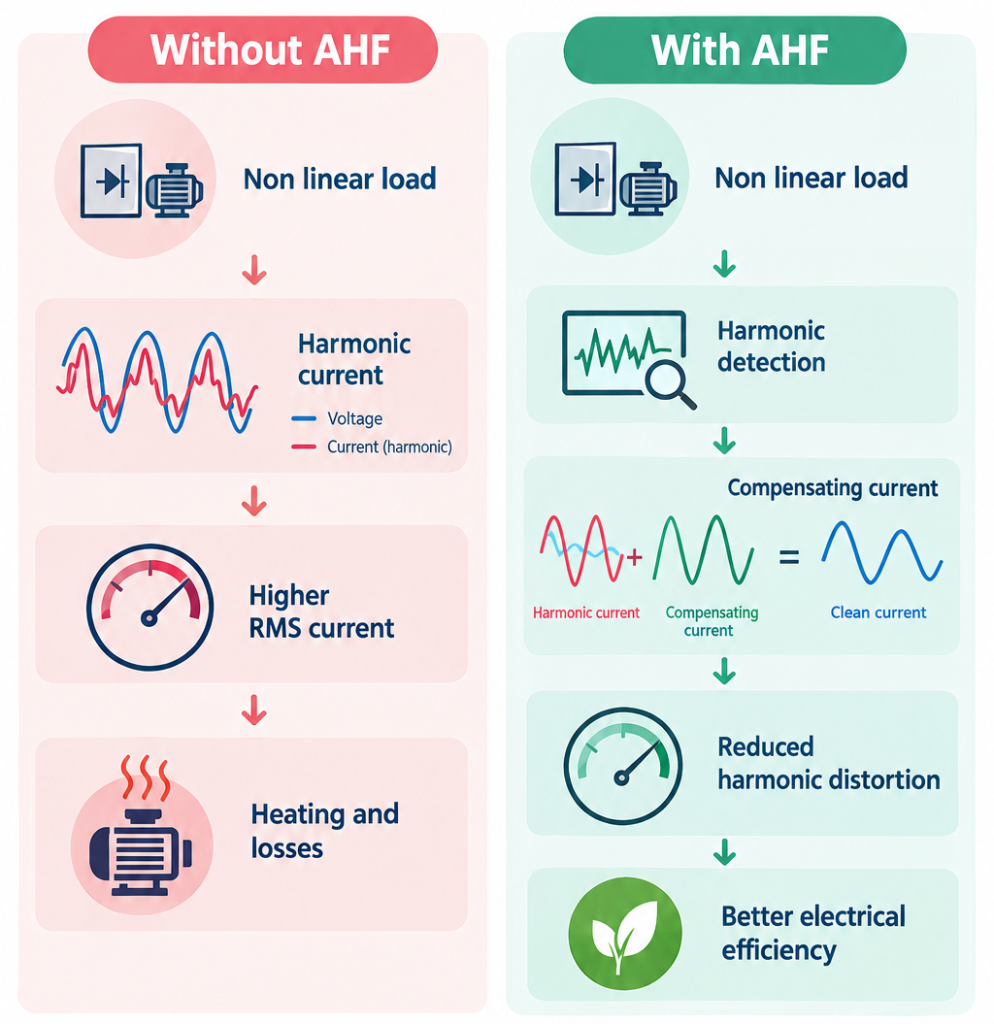
Consider harmonic distortion. When harmonic currents are present, the RMS current in the system can increase. This can result in additional heating and losses in transformers, cables, and other equipment. Similarly, a low power factor can increase the current required to deliver the same useful power.
This means that energy usage reduction should not be considered only as switching equipment off or reducing operating hours. Improving the electrical conditions under which equipment operates can also help reduce avoidable losses.
Why Harmonic Control Matters for Energy Usage Reduction
As industries add more variable frequency drives, UPS systems, automation equipment, and other power electronic devices, harmonic management becomes increasingly important. Excessive harmonic distortion can affect transformers, cables, capacitors, motors, and sensitive electrical equipment.
Modern industrial facilities therefore need to consider power quality along with energy efficiency. IEEE 519 is the relevant standard for harmonic control in electric power systems. The current IEEE 519 2022 standard establishes design goals for systems containing linear and non linear loads and addresses voltage and current distortion at the point of common coupling.
Can Conventional Harmonic Filters Handle Changing Loads?
Traditional passive filters can be useful in applications where the electrical load and harmonic conditions are relatively stable. However, industrial loads do not always remain constant. The number of operating machines can change. Production conditions can vary. VFDs can change speed. Different equipment can be switched on and off throughout the day.
As the load changes, the harmonic current profile can also change. This creates a need for a solution that can monitor the electrical system and respond to changing harmonic conditions.
This is where Active Harmonic Filters become important.
Active Harmonic Filters: A Dynamic Approach to Energy Usage Reduction
An Active Harmonic Filter continuously monitors the current in an electrical system and identifies unwanted harmonic components. It then generates compensating currents that oppose those harmonic components. The result is a cleaner current waveform with reduced harmonic distortion.
Unlike a passive filter that is designed around specific system conditions, an active filter can respond dynamically as the electrical load changes. This makes AHF technology particularly useful for modern industrial facilities with variable and non linear loads.
How InPhase AHF Can Support Energy Usage Reduction
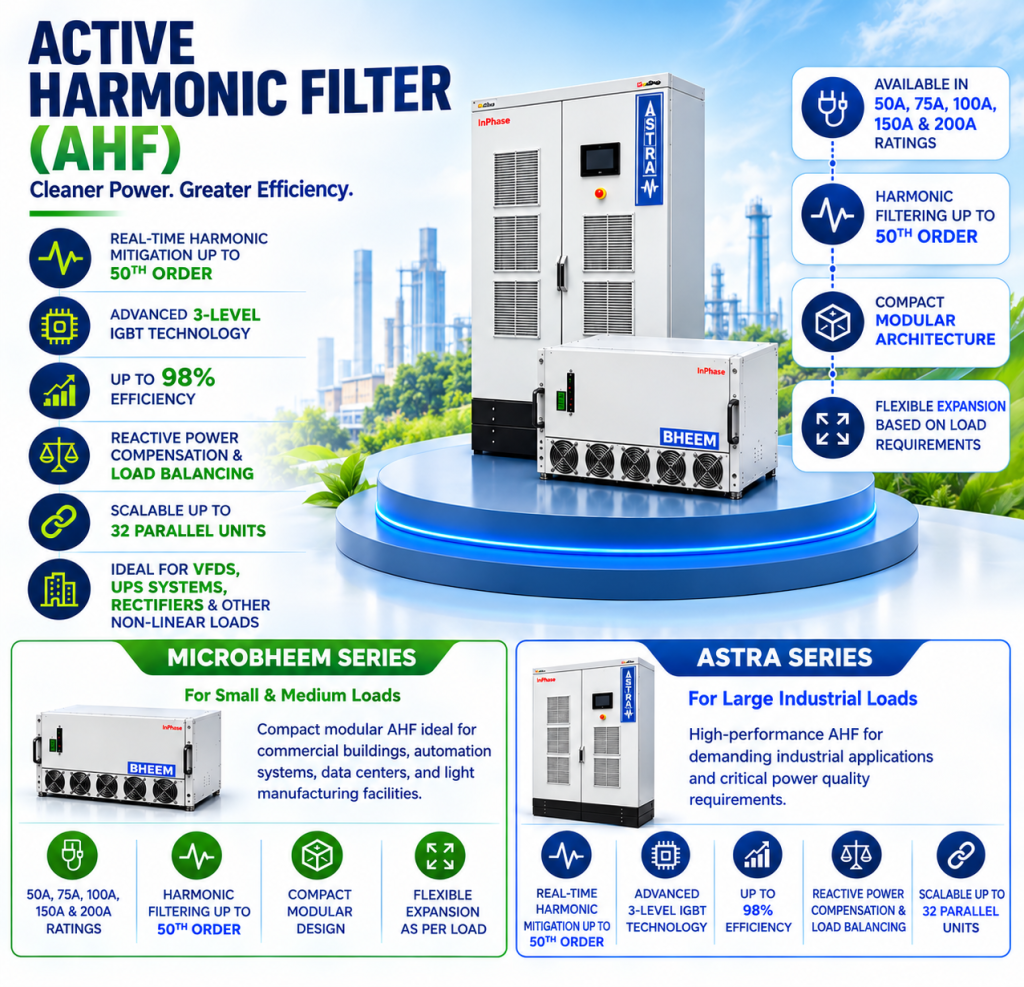
Harmonic distortion can contribute to additional current, heating, and energy losses in an industrial electrical system. InPhase Active Harmonic Filters provide a dynamic approach to managing these unwanted harmonic currents, helping industries improve power quality, reduce avoidable losses, and support more efficient operation.
Key features include:
- Harmonic mitigation up to the 50th harmonic
- Fast response of approximately 1 to 5 ms
- Around 98% efficiency
- Suitable for 415 V ±10% systems
- Modbus RTU, TCP/IP, and Ethernet communication
- Suitable for industrial applications with changing loads
InPhase currently offers AHF solutions through its MicroBheem and ASTRA platforms for different industrial applications. The current MicroBheem AHF platform uses 3 Level IGBT technology and offers harmonic filtering, with the AHF specification listing up to 25th order harmonic filtering and the AHF+ version extending up to the 50th order. The platform also supports power factor correction and other compensation modes depending on the configuration. This makes the solution suitable for industries where harmonic distortion, changing loads, and electrical efficiency need to be considered together.
Looking to reduce energy losses and improve electrical efficiency in your industrial facility? Explore InPhase Active Harmonic Filter solutions and take a smarter step towards better power quality and energy usage reduction.