
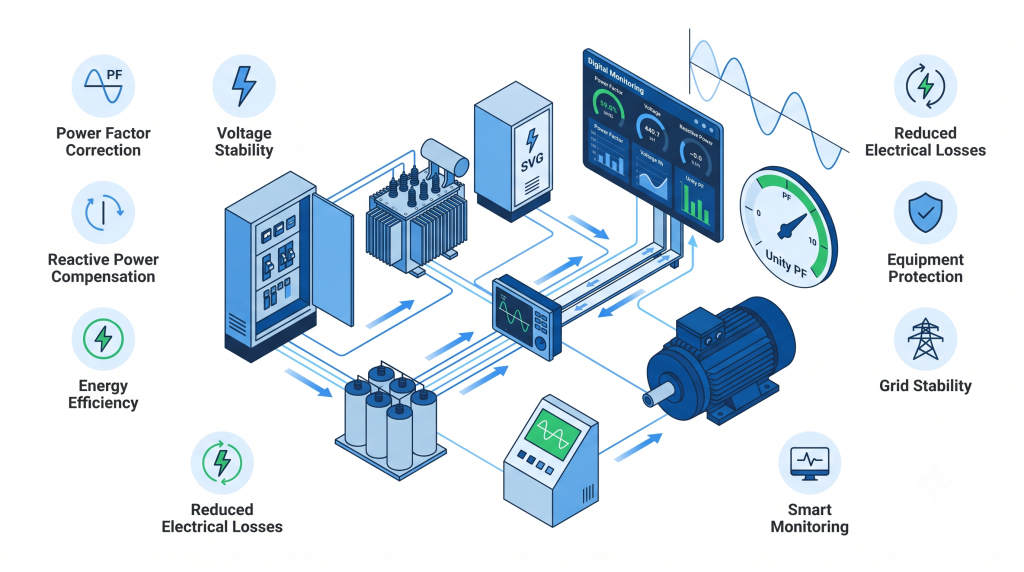
VAR Compensation has become an essential component of modern industrial power systems as facilities increasingly rely on inductive loads, automation equipment, and power electronic devices. Manufacturing plants, commercial buildings, utilities, renewable energy projects, and data centers require effective reactive power management to maintain voltage stability, improve power factor, and optimize overall electrical system performance.
Without proper VAR Compensation, industries experience increased energy losses, voltage instability, poor equipment performance, and higher electricity costs. Implementing advanced reactive power compensation solutions helps improve power quality, reduce utility penalties, enhance equipment reliability, and maximize system efficiency.
Understanding Reactive Power
Electrical power systems consist of three types of power:
- Active Power (kW)
- Reactive Power (kVAR)
- Apparent Power (kVA)
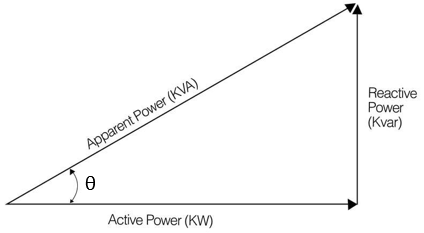
Active power performs useful work, while reactive power is required to establish the magnetic fields necessary for operating motors, transformers, generators, and inductive equipment. Although reactive power does not perform useful work, it occupies system capacity and increases current flow throughout the electrical network.
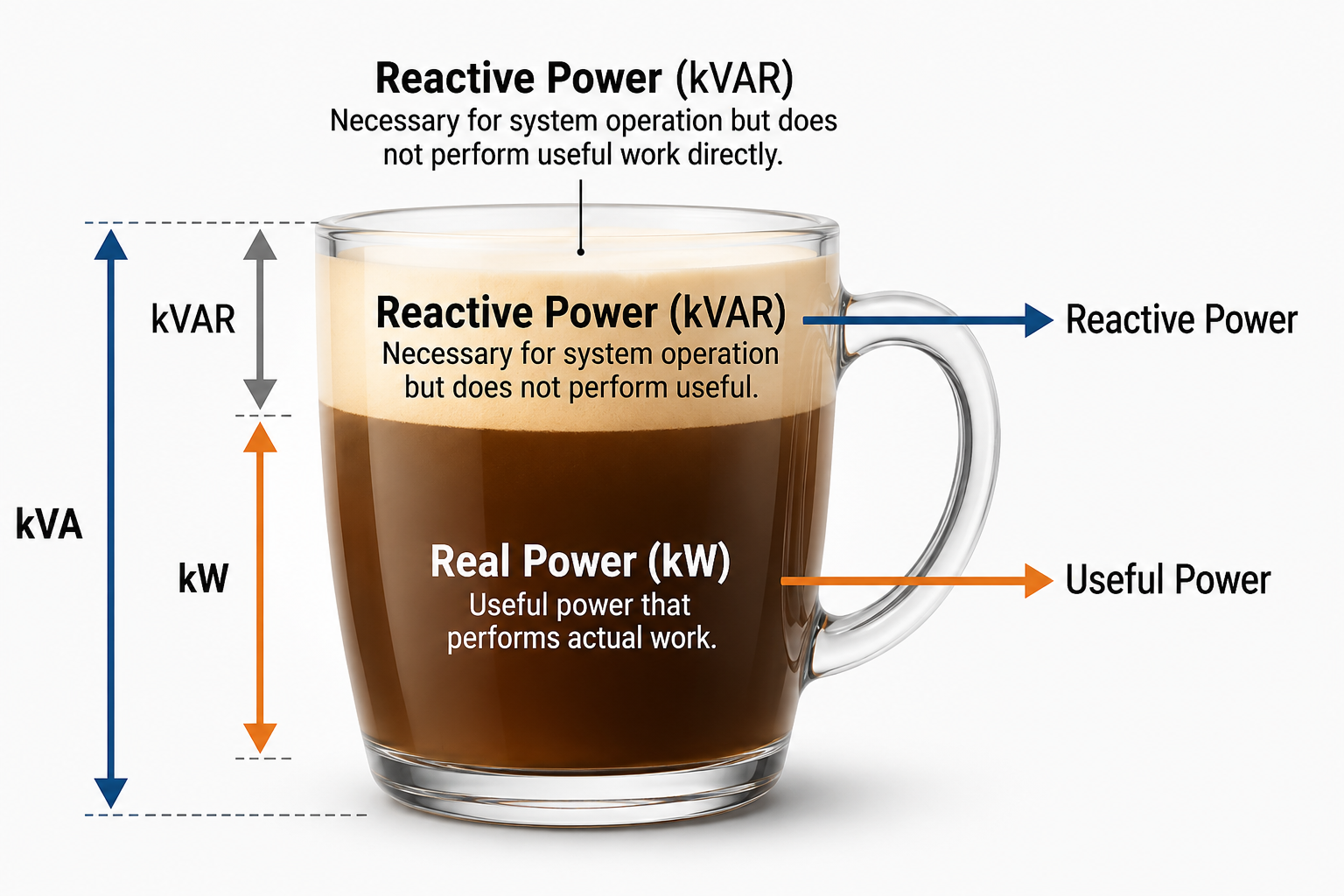
As industrial facilities continue to expand, effective VAR Compensation becomes critical for maintaining an efficient electrical system.
Why VAR Compensation Is Important
Many industrial processes depend heavily on inductive equipment that continuously consumes reactive power.
Common reactive power sources include:
- Induction Motors
- Variable Frequency Drives (VFDs)
- Transformers
- Welding Machines
- Compressors
- Pumps
- HVAC Systems
- Elevators
- Conveyor Systems
Without adequate VAR Compensation, these loads reduce overall system efficiency and increase operational costs.
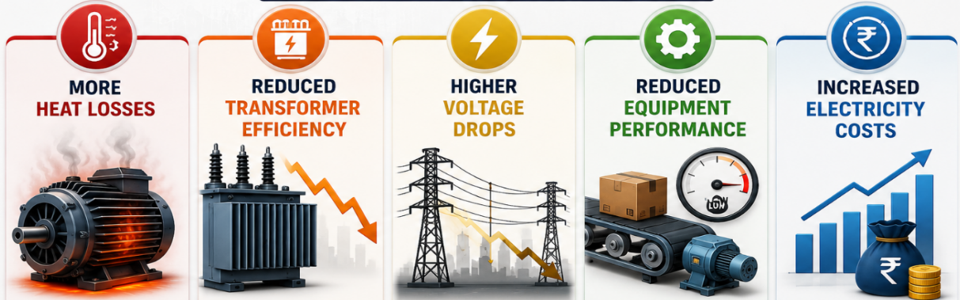
Problems Caused by Poor VAR Compensation
When reactive power demand is not properly managed, several operational problems can occur.
Poor Power Factor
Low power factor increases apparent power demand, forcing electrical equipment to carry higher currents than necessary.
Increased Energy Losses
Higher current flow produces greater I²R losses in cables, transformers, and switchgear.
Voltage Drop
Excessive reactive current causes voltage drops across the electrical distribution network, affecting equipment performance.
Utility Penalties
Many utilities impose penalties on industries operating with poor power factor or excessive reactive power demand.
Reduced Equipment Capacity
Transformers and generators must supply both active and reactive power, reducing their available capacity for productive loads.
Methods of VAR Compensation
Different technologies are available depending on load characteristics and system requirements.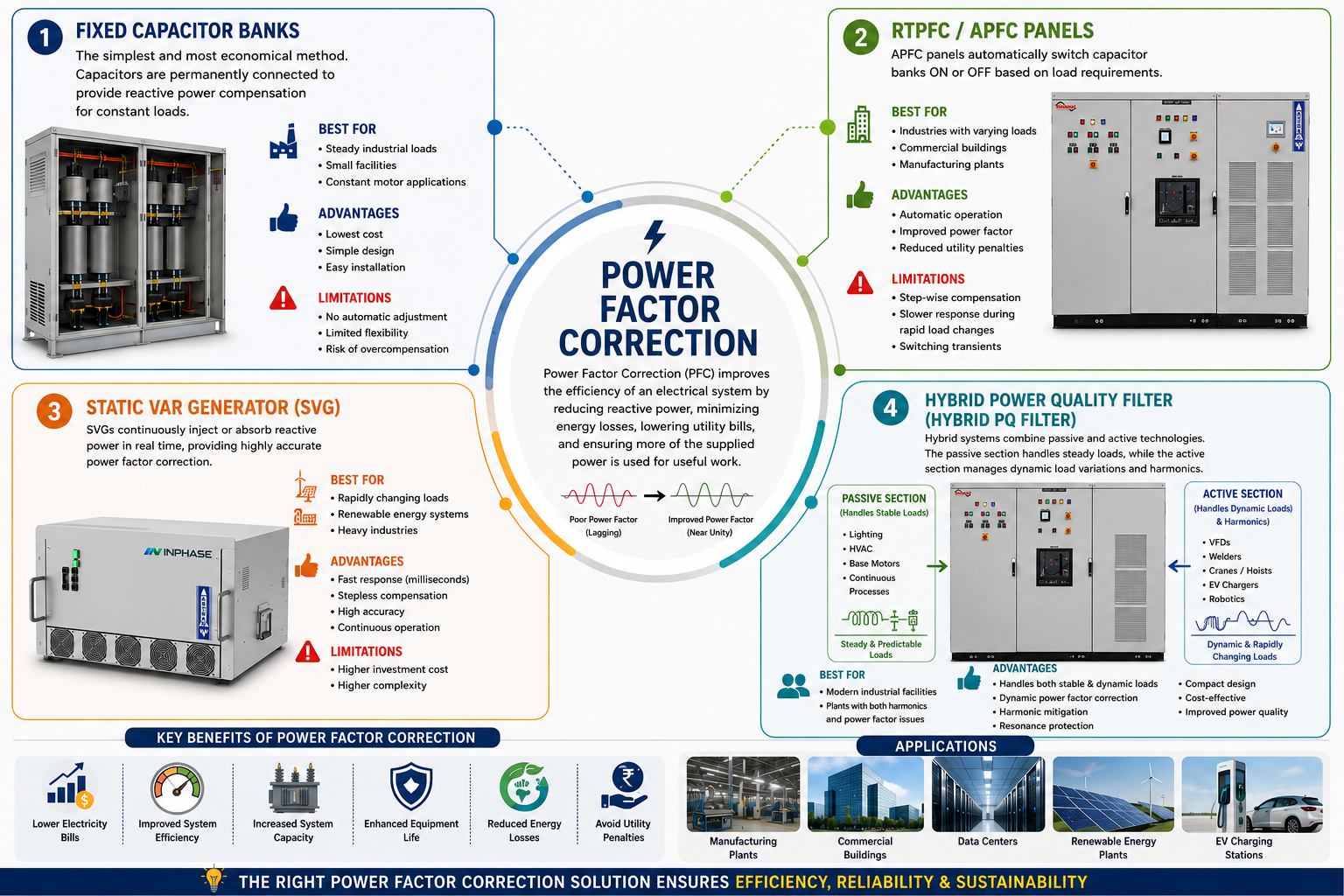
Capacitor Banks
Traditional capacitor banks provide fixed or stepped reactive power compensation for relatively constant loads.
Advantages:
- Simple installation
- Low initial cost
- Suitable for steady loads
Limitations:
- Slow response
- Fixed compensation
- Risk of overcompensation
Automatic Power Factor Correction (APFC)
APFC panels automatically switch capacitor banks according to changing load requirements.
Applications:
- Manufacturing Plants
- Commercial Buildings
- Textile Industries
- Water Treatment Plants
Static VAR Generator (SVG)
Static VAR Generators provide dynamic VAR Compensation by continuously injecting or absorbing reactive current.
Unlike capacitor banks, SVG systems respond instantly to changing load conditions without mechanical switching.
Benefits include:
- Dynamic power factor correction
- Fast response
- Voltage stabilization
- No overcompensation
- Improved energy efficiency
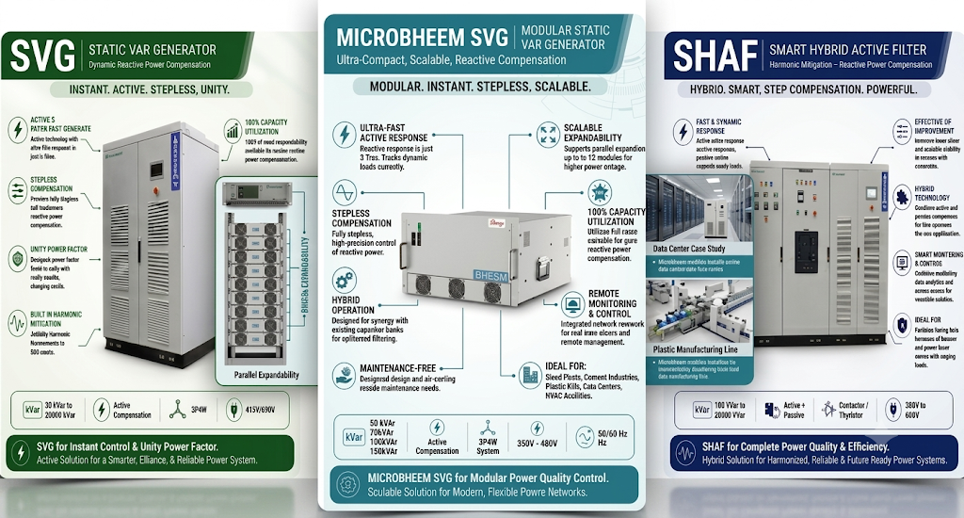
InPhase VAR Compensation Solutions
InPhase offers intelligent VAR Compensation solutions engineered for industrial and commercial applications.
InPhase Static VAR Generator (SVG)
The InPhase SVG delivers precise reactive power compensation under dynamic operating conditions.
Key features include:
- Response time below 20 ms
- Unity power factor operation
- Dynamic leading and lagging compensation
- Voltage stabilization
- Modular architecture
- High efficiency
- Remote monitoring capability
- IEEE-compliant performance
Smart Hybrid Active Filter (SHAF)
The InPhase SHAF integrates harmonic filtering with VAR Compensation, providing comprehensive power quality improvement.
Benefits include:
-
- Harmonic mitigation
- Reactive power compensation
- Reduced KVAH billing
- Improved voltage regulation
- Lower maintenance costs
Benefits of VAR Compensation
Implementing proper VAR Compensation offers numerous technical and financial benefits.
- Improved power factor
- Reduced electricity bills
- Lower transformer loading
- Reduced cable losses
- Better voltage regulation
- Increased equipment lifespan
- Higher system efficiency
- Reduced utility penalties
- Improved production reliability
- Better utilization of electrical infrastructure
- IEEE-519 compliance
Industrial Applications
VAR Compensation is widely used across numerous industries, including:
- Steel Plants
- Cement Industries
- Textile Mills
- Pharmaceutical Manufacturing
- Automotive Plants
- Commercial Buildings
- Hospitals
- Airports
- Data Centers
- Renewable Energy Plants
- Water Treatment Facilities
- Food Processing Industries
Choosing the Right VAR Compensation Solution
Selecting the appropriate VAR Compensation technology depends on several factors.
Important considerations include:
- Nature of electrical loads
- Reactive power demand
- Harmonic distortion levels
- Load variation
- Power factor targets
- Available electrical infrastructure
- Future expansion plans
- Utility regulations
- Return on investment
A detailed power quality assessment helps determine the most suitable compensation strategy for each facility.
Why Choose InPhase?
InPhase provides advanced VAR Compensation solutions backed by engineering expertise and proven industrial performance.
Our capabilities include:
- Power Quality Audits
- Reactive Power Analysis
- Harmonic Studies
- System Design
- Installation & Commissioning
- Performance Testing
- Remote Monitoring
- Technical Support
With indigenous product development, intelligent DSP-based control, and customized engineering solutions, InPhase delivers reliable VAR Compensation systems that improve efficiency, reduce operating costs, and enhance electrical system performance.
As industrial electrical systems become increasingly complex, effective VAR Compensation is essential for maintaining high power factor, stable voltage, and efficient energy utilization. Proper reactive power management reduces electrical losses, minimizes utility penalties, protects valuable equipment, and improves overall operational reliability.
With advanced technologies such as InPhase Static VAR Generators (SVG) and Smart Hybrid Compensation Systems, industries can achieve intelligent, dynamic, and future-ready VAR Compensation that supports long-term productivity and sustainable electrical performance.
