
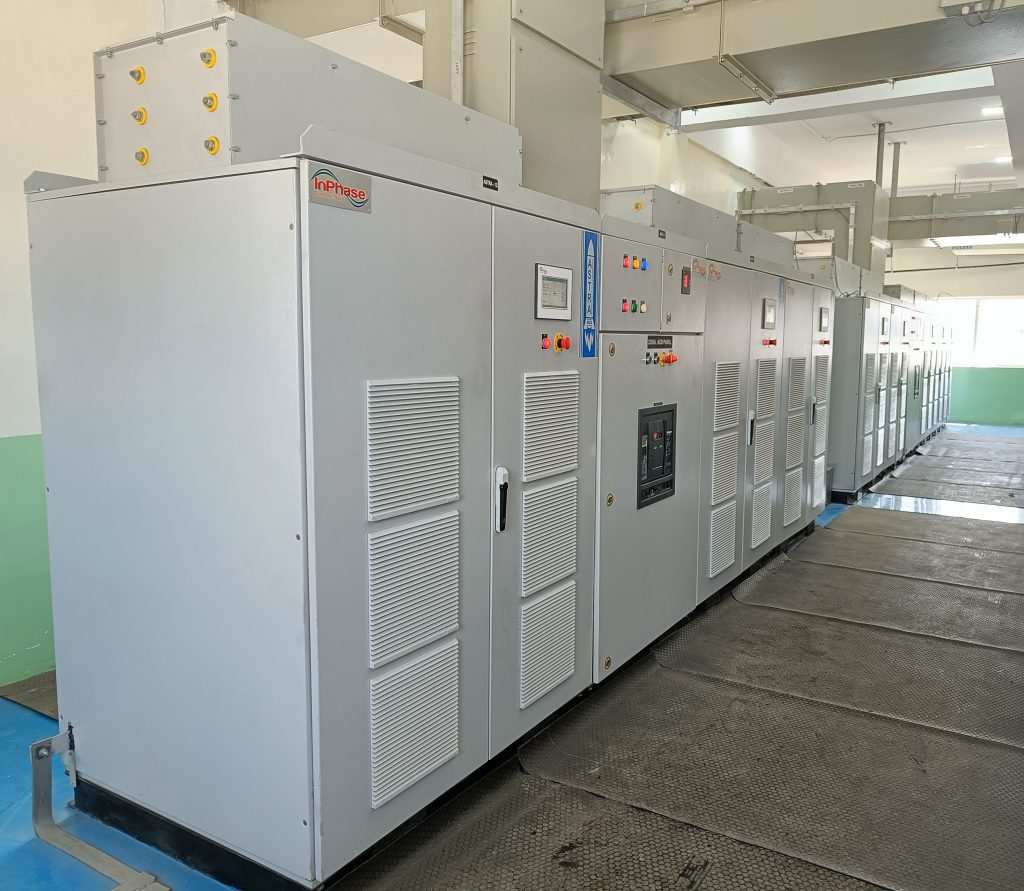
The Hidden Power Quality Problem in Modern Facilities
Hybrid Filters technology is becoming increasingly important in modern factories, commercial buildings, data centers, and shopping malls where power electronic devices are widely used. These technologies improve productivity and energy efficiency, but they also introduce a less visible challenge: harmonics and excessive reactive power.
Many facility owners remain unaware of these power quality issues until they begin experiencing higher energy costs, equipment overheating, nuisance tripping, capacitor failures, reduced power factor, and unexpected downtime. As electrical networks become more complex, the need for effective power quality solutions continues to grow, making Hybrid Filters a reliable choice for modern facilities.
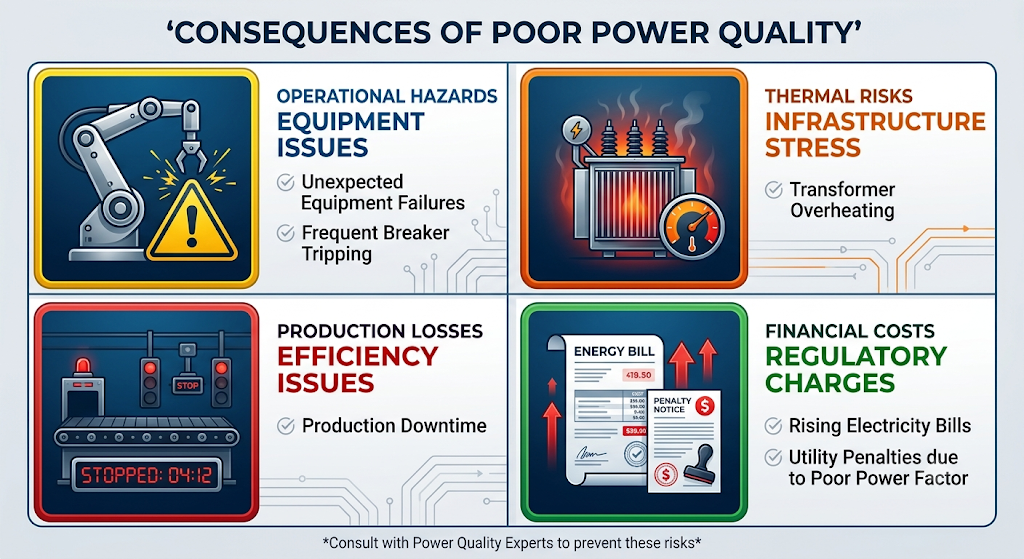
The consequences of poor power quality
“Imagine a highway designed for smooth traffic flow. Harmonics are like unwanted vehicles entering the road and creating traffic jams. The more congestion there is, the harder it becomes for electricity to travel efficiently through the system. “
This is where hybrid filters become important.
The Traditional Choices: Passive or Active Filters?
A Passive Harmonic Filter is a fixed-tuned electrical filter that reduces harmonics using capacitors and inductors, helping improve power quality and power factor. This is simple in design and have low initial cost , but for that you will compensate for a large amount as penalty and utility bills.
| ✅ Pros / Merits | ❌ Cons / Limitations |
|---|---|
| 💰 Lower Initial Cost | 🔒 Limited Flexibility |
| 🛠️ Simple Design | ⚠️ Risk of Resonance |
| ⚖️ Good for Stable Loads | ⚡ Overcompensation at Low Load |
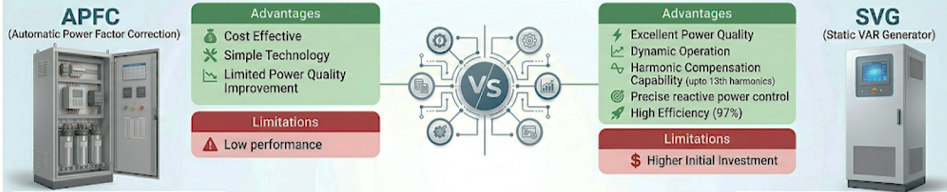
By coming to the Active filters APFC and SVG both are efficient and effective , but can’t use instead of other.
Hybrid Filters Are the Best of Both Worlds
Instead of choosing between passive and active technologies, hybrid filters combine both into one intelligent solution.
“Think of a hybrid car. A hybrid vehicle uses a conventional engine for heavy-duty operation and an electric motor for efficiency and precision.”
Similarly, a Hybrid Filter uses:
- Passive components for bulk reactive power compensation
- Active electronics for fast and precise power factor correction
| 💰 Better Cost Efficiency | 🎯 Dynamic Power Factor Correction |
| ⚡ Improved Power Quality | 🚀 Higher System Efficiency |
| 🔄 Handles Both Stable and Dynamic Loads | 📦 Compact Design |
| 🛡️ Resonance Protection | 🔧 Lower Maintenance Costs |
This combination delivers high performance without the high cost of a fully active solution.
| Feature | 🟢 Passive Filter | 🔵 Active Filter | 🟣 Hybrid Filter |
|---|---|---|---|
| Harmonic Reduction | ⭐⭐⭐ Moderate | ⭐⭐⭐⭐⭐ High | ⭐⭐⭐⭐⭐ High |
| Dynamic Compensation | ❌ No | ✅ Yes | ✅ Yes |
| Power Factor Correction | ✅ Yes | ⚠️ Limited | ✅ Excellent |
| Resonance Protection | ❌ Low | ✅ High | ✅ High |
| Initial Cost | 💰 Low | 💰💰💰 High | ⚖️ Optimized |
| Return on Investment | ⭐⭐⭐ Moderate | ⭐⭐⭐ Moderate | ⭐⭐⭐⭐⭐ High |
| Best Application | Stable Loads | Dynamic Loads | Mixed Industrial Loads |
The InPhase SHAF Advantage
For organizations looking to modernize existing power quality filtering systems, InPhase offers the Smart Hybrid Active Filter (SHAF). Rather than replacing existing capacitor banks and AHF panels, SHAF works with existing infrastructure and transforms it into a smarter, more responsive system, which strictly follow IEEE519 , IEEE 1453, IEC, IEEE1159 standards
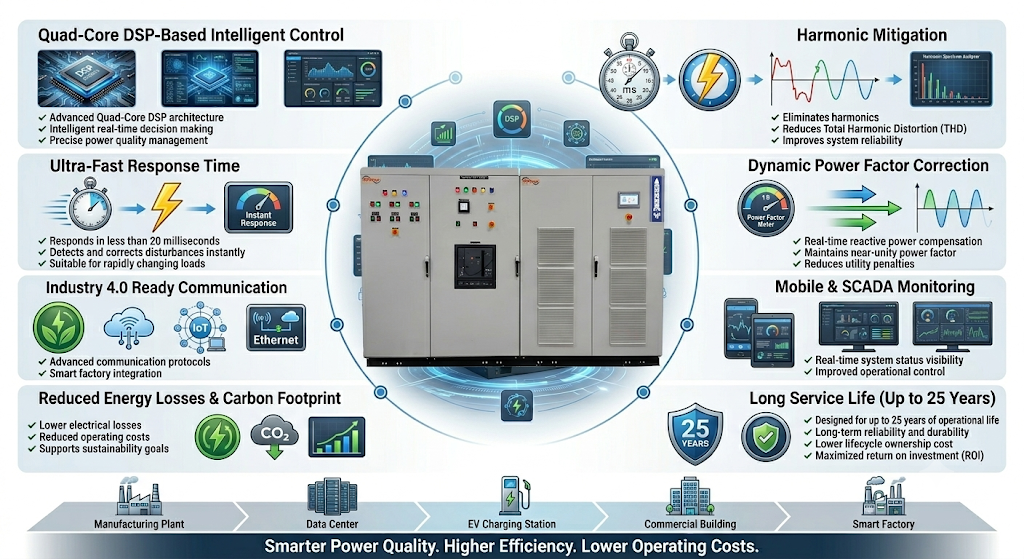
Organizations that proactively address Power Quality Challenges in Renewable Energy can improve system performance, achieve grid compliance, reduce losses, and maximize return on investment while supporting sustainable energy goals.
As the renewable sector continues to expand, Power Quality Challenges in Renewable Energy will remain a critical focus area for developers, utilities, and industrial consumers. Investing in the right power quality solutions ensures long-term reliability, compliance, and profitability.
