
Harmonics Aren’t Always Visible: The Hidden Threat to Industrial Power Quality
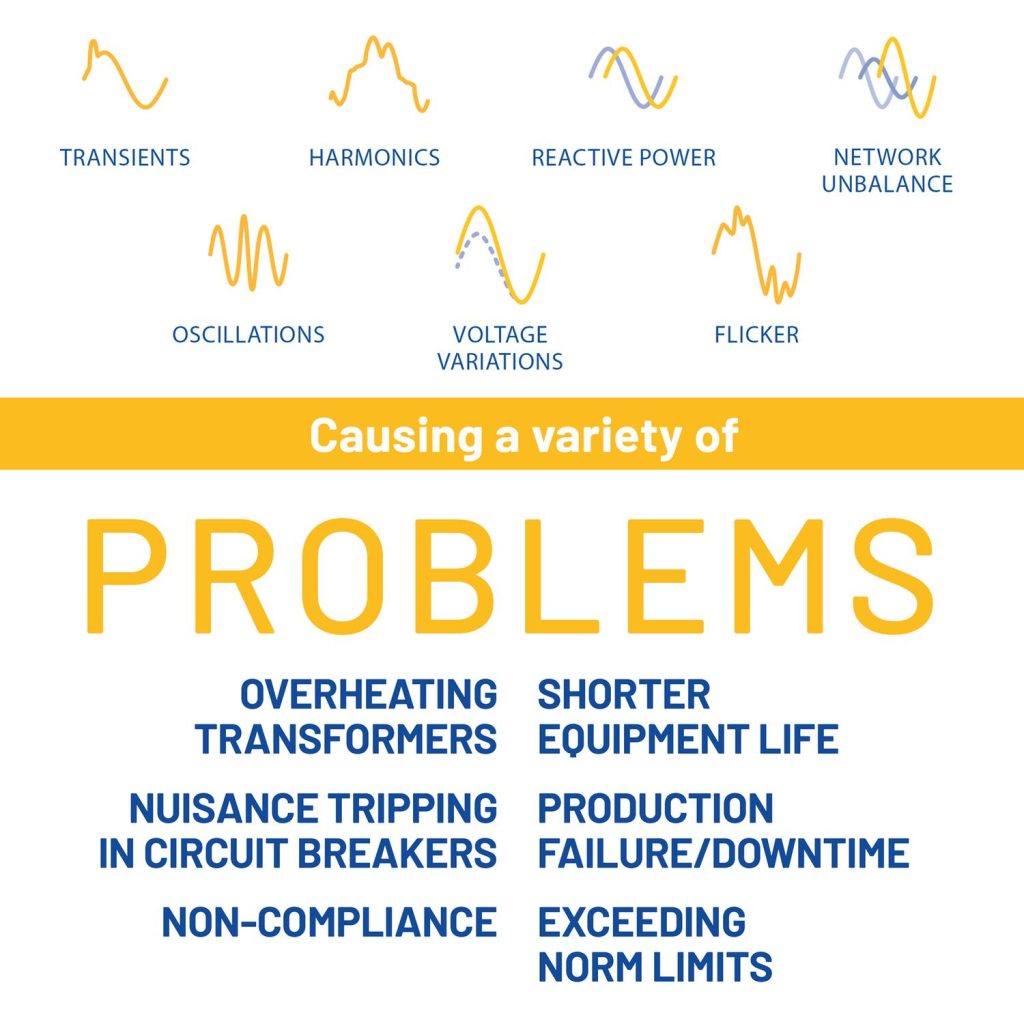
Harmonics in electrical systems are one of the most overlooked industrial power quality problems. Most facilities don’t know they have excessive harmonic distortion until something breaks. Cable overheating, electronic card failures, flickering lights, busbar heating and transformer noise can all be warning signs that deserve investigation.
These problems rarely appear as a separate line item on an electricity bill. Instead, they can lead to unplanned downtime, equipment replacement costs, maintenance expenses and reduced equipment life.
Understanding why harmonics aren’t always visible is important for industrial facilities because harmonic distortion can develop gradually without obvious warning signs.
The reason harmonics aren’t always visible is that electrical waveform distortion can develop without immediately affecting normal machine operation.
Why Harmonics Aren’t Always Visible in Industrial Electrical Systems
Unlike power factor, which is commonly displayed on electrical energy meters, harmonic distortion requires suitable power quality measurement equipment for accurate assessment.
A professional power quality study helps identify:
-
Voltage Total Harmonic Distortion (THDv)
-
Current harmonic distortion
-
Total Demand Distortion (TDD)
-
Individual harmonic components
-
Voltage fluctuations and electrical disturbances
-
Load variations and equipment operating conditions
Without proper measurements, it can be difficult to identify the actual source and severity of harmonic problems.
This is why industrial facilities should consider continuous power quality monitoring alongside periodic electrical assessments.
What Causes Harmonics in Industrial Electrical Systems?
Modern factories increasingly depend on nonlinear electrical loads. These loads draw current in a distorted waveform and can introduce harmonic currents into the electrical network. In many industrial facilities, harmonics aren’t always visible during routine inspections, making power quality measurements essential.
Common sources include:
Variable Frequency Drives (VFDs)
VFDs control motor speed and improve process flexibility, but conventional drive designs can generate harmonic currents.
Inverter-Based Air Conditioning Systems
Inverter-driven air conditioners use power-electronic converters that can contribute to harmonic distortion.
BLDC Motors and Electronic Equipment
Brushless DC motors, switching power supplies and electronic controllers use power converters that may generate harmonics.
Solar Inverters and EV Chargers
Solar installations, electric vehicle charging systems and other inverter-based equipment can influence power quality depending on their design, operating conditions and electrical network characteristics.
As industrial facilities adopt more power-electronic equipment, harmonic assessment becomes increasingly important.
How Harmonics Affect Industrial Equipment
Excessive harmonic distortion can create several operational challenges:
-
Cable overheating: Additional harmonic currents can increase conductor heating.
-
Electronic card failures: Distorted electrical conditions can affect sensitive electronic equipment.
-
Transformer heating: Harmonic currents can increase transformer losses and temperature.
-
UPS problems: Harmonic distortion can affect UPS operation and compatibility.
-
Motor heating: Harmonic components can increase motor losses and heating.
-
Production interruptions: Electrical disturbances can contribute to unexpected equipment trips and downtime.
-
Reduced equipment life: Prolonged electrical stress can increase maintenance requirements.
Identifying these issues early can help industrial facilities improve electrical reliability.
For more information, explore common industrial power quality problems and their possible solutions.
IEEE 519-2022: Understanding Harmonic Distortion Limits
IEEE 519-2022 is an important reference for harmonic control in electric power systems.
It establishes voltage and current distortion limits at the Point of Common Coupling (PCC). The applicable limits depend on system voltage and electrical network characteristics.
For example, the voltage THD limit for systems rated up to 1 kV is 8% at the PCC. Current Total Demand Distortion (TDD) limits are determined separately using factors such as the short-circuit current to maximum demand load current ratio (Isc/IL).
A facility should not assume that a single THD or TDD value applies to every electrical system. Proper measurements and engineering assessment are necessary to evaluate compliance.
Read more about the IEEE 519-2022 Standard for Harmonic Control in Electric Power Systems.
Why Power Quality Monitoring Is Essential
A one-time electrical measurement provides a snapshot of system performance. However, industrial loads change throughout the day as machines start, stop and operate under different production conditions. Because harmonics aren’t always visible, continuous electrical monitoring helps maintenance teams identify hidden power quality issues.
Continuous power quality monitoring helps facilities understand:
-
Changes in harmonic distortion
-
Voltage and current variations
-
Power factor performance
-
Transformer loading
-
Electrical energy consumption
-
Abnormal operating conditions
An IoT-based energy management system can help maintenance teams monitor electrical parameters, identify abnormal trends and make informed decisions.
For meaningful results, facilities should compare pre-installation and post-installation measurements under comparable operating conditions.
Although harmonics aren’t always visible during normal equipment operation, continuous power quality monitoring can help identify abnormal harmonic levels.
How Active Harmonic Filters Help Reduce Harmonics
An Active Harmonic Filter (AHF) is an advanced power quality solution designed to compensate for harmonic currents generated by nonlinear loads.
It monitors the electrical network and injects compensating currents to reduce harmonic distortion.
The benefits can include:
-
Reduced harmonic current distortion
-
Lower harmonic-related heating and losses
-
Improved electrical system performance
-
Better equipment operating conditions
-
Support for applicable IEEE 519 compliance objectives
Explore InPhase Active Harmonic Filter solutions for industrial harmonic mitigation.
For broader electrical power quality requirements, explore our industrial power quality products.
Beyond Harmonics: Reactive Power Compensation
Harmonic distortion is not the only electrical power quality concern. Industrial facilities may also experience poor power factor and fluctuating reactive power demand.
A Static VAR Generator (SVG) provides dynamic reactive power compensation and can help improve power factor performance.
The correct combination of harmonic mitigation and reactive power compensation depends on the electrical system design and measured load characteristics.
Why Industrial Facilities Should Act Now
The increasing use of VFDs, inverters, automation systems, solar installations and electronic equipment is changing industrial electrical networks.
Emerging technologies, including silicon carbide-based power converters and medium-voltage power-electronic systems, make power quality assessment an increasingly relevant part of electrical system planning.
Facilities that measure, monitor and address electrical disturbances can make better decisions about equipment reliability, maintenance and energy performance.
Start with a Power Quality Study
At InPhase, we believe that identifying the problem is the first step towards finding the right solution.
A preliminary assessment of transformer loading and electrical operating conditions can help determine the scope of a detailed power quality study. Measurement duration depends on load variation, the investigation objectives and applicable assessment requirements.
If your facility experiences cable overheating, unexplained equipment failures, transformer heating or production interruptions, don’t ignore the warning signs.
Contact InPhase to discuss your industrial power quality requirements and explore suitable harmonic mitigation solutions.
Measure first. Understand the problem. Choose the right solution. Remember that harmonics aren’t always visible, but their impact on industrial equipment can be significant over time.