
 Steel and Cement Industries
 Textile Industries
 Process Industries
 Automobile
 Railway / Metro
 Solar Farms
 Power Factor Improvement
 KVAH Billing Reduction
 Captive Power PF Improvement
 Harmonics Mitigation
 Drives Harmonic Mitigation
 Unbalance Compensation
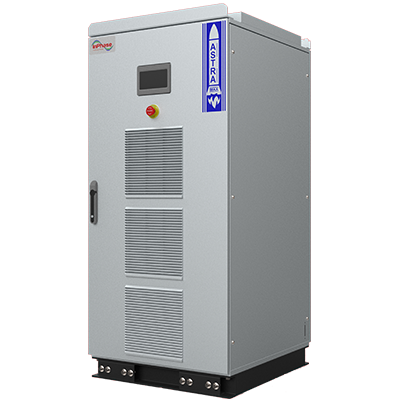 Active Harmonic Filter
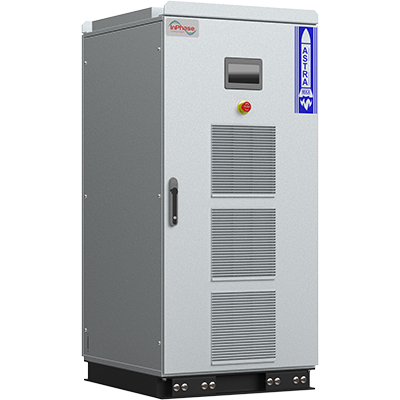 Static VAR Generator
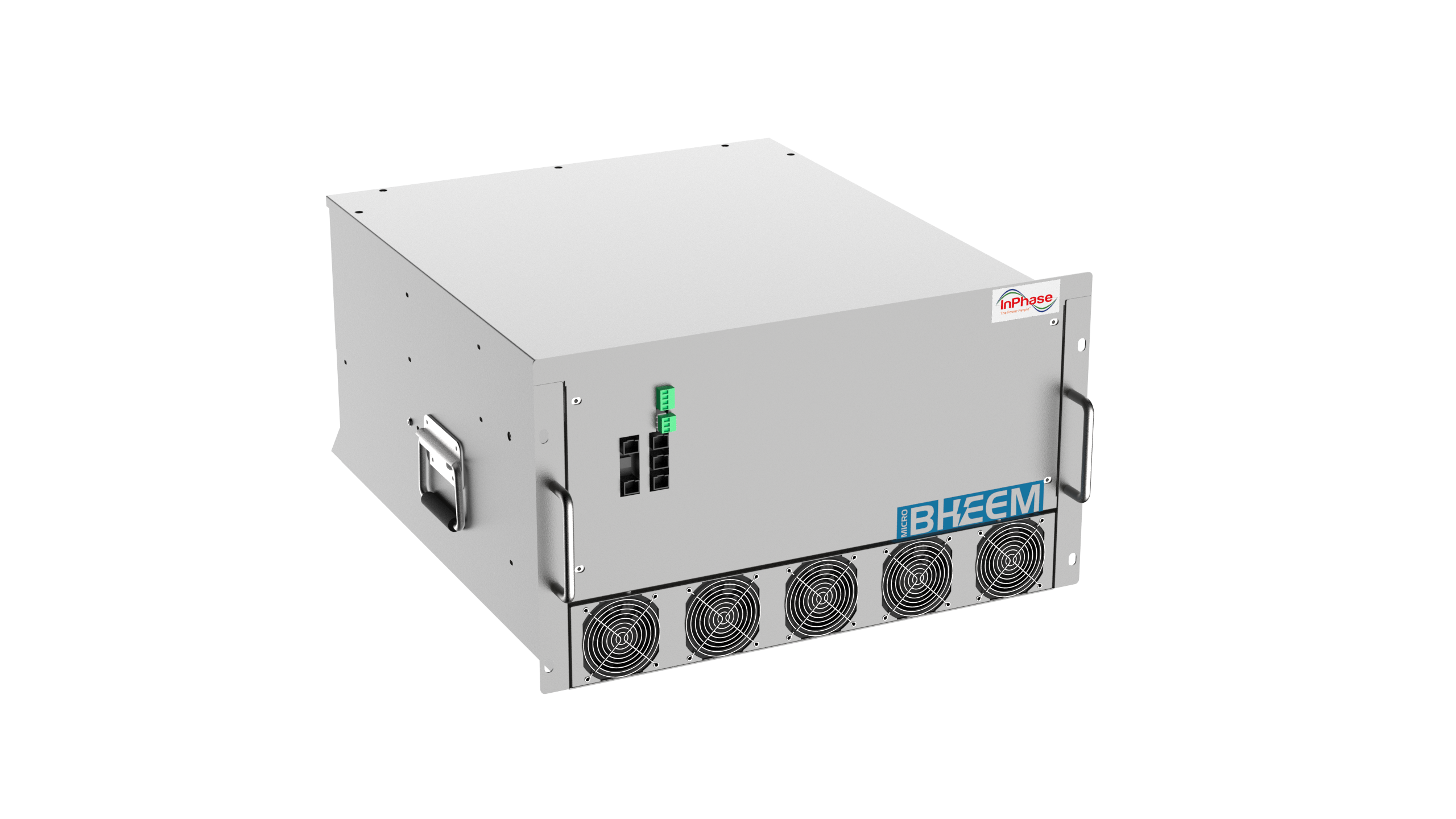 Modular AHF
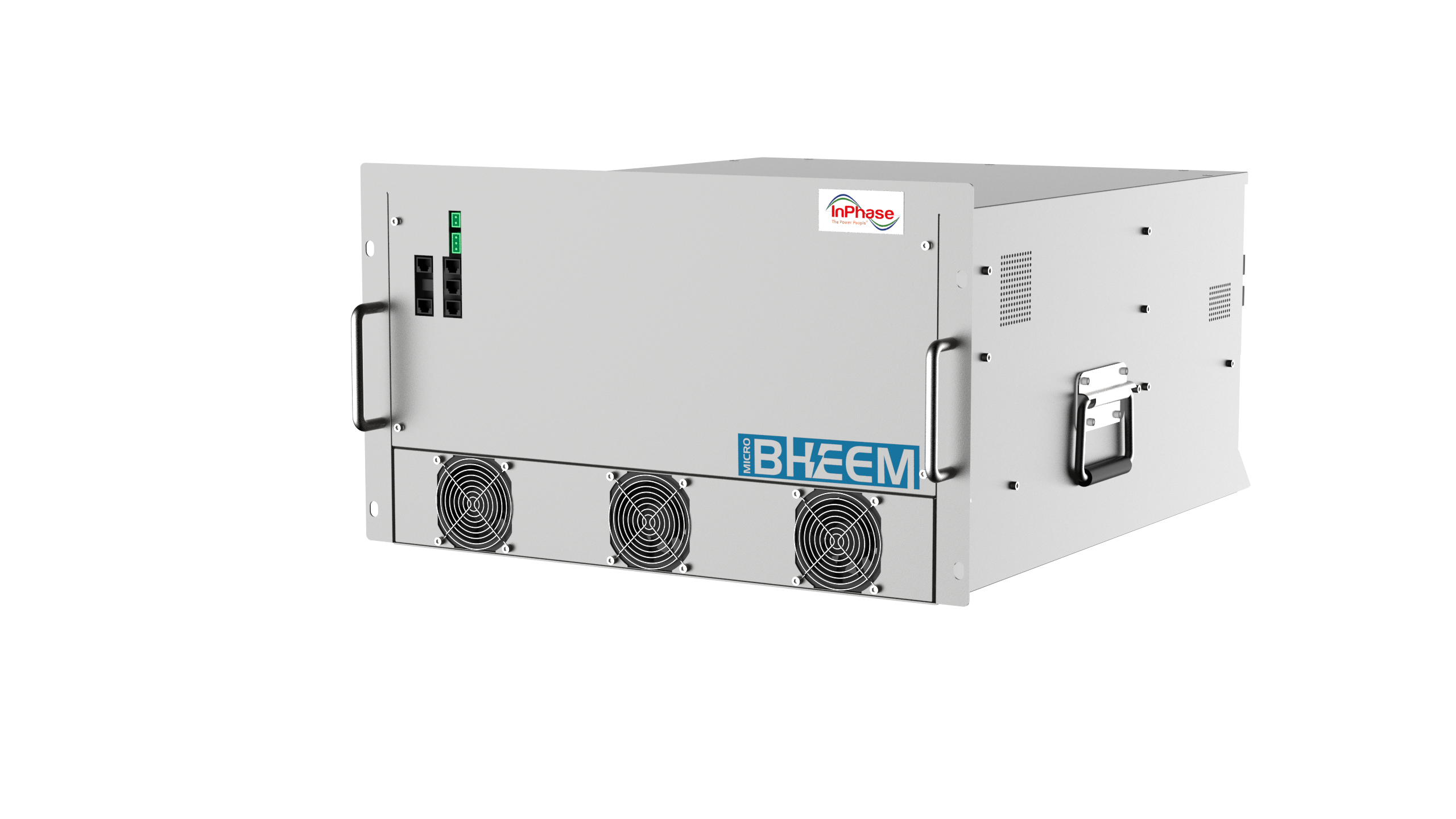 Modular SVG
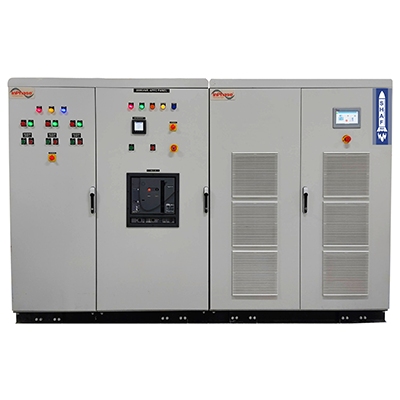 Smart Hybrid Active Filter
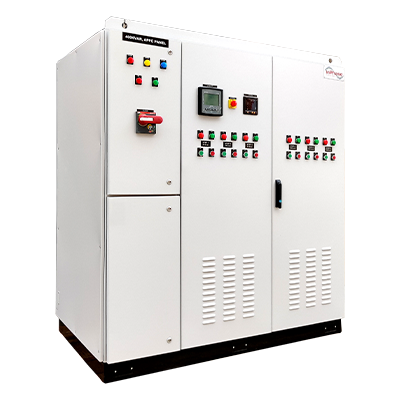 APFC
APFC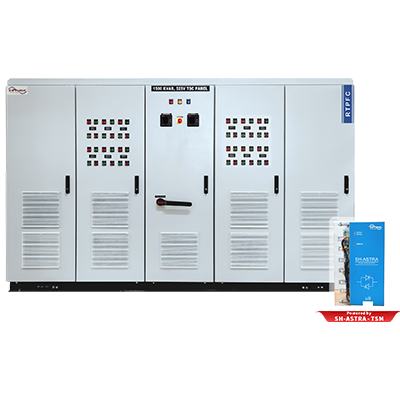 RTPFC
RTPFC Power Quality Study
 Energy Audit
 Harmonics Analysis
 Product Support



Step 1: Preparation and Assessment
- Load Analysis: Determine harmonic-producing loads (VFDs, UPS systems, etc.).
- THD Measurement: Measure Total Harmonic Distortion to understand baseline conditions.
- Filter Selection: Choose an Active Harmonic Filter with proper capacity for your load.
- Site Assessment: Identify installation location with proper ventilation, space, and accessibility.
Step 2: Safety Precautions
- De-energize the main power supply before installation.
- Use insulated tools and personal protective equipment (PPE).
- Ensure proper grounding to prevent electrical hazards.
- Follow manufacturer safety guidelines and local electrical codes.
Step 3: Mounting the Filter
- Install the filter in a dry, well-ventilated area near the main panel.
- Mount the AHF securely on the wall or floor using brackets provided.
- Ensure adequate clearance around the filter for maintenance access.
Step 4: Electrical Connections
- Connect the input lines of the AHF to the main power supply.
- Connect the output lines to the load or busbar as per manufacturer wiring diagram.
- Ensure all connections are tight and labeled correctly.
- Verify grounding and bonding to prevent electrical interference.
Step 5: Configuration and Commissioning
- Power on the filter and monitor startup sequence.
- Configure the filter parameters:
- Nominal voltage
- Load type
- Compensation settings
- Verify harmonic reduction by measuring THD before and after filter activation.
- Adjust settings for optimal performance based on measured harmonics.
Step 6: Testing and Verification
- Perform load testing to ensure the AHF compensates harmonics effectively under real operating conditions.
- power quality parameters such as THD, voltage stability, and reactive power compensation.
- Ensure proper communication with monitoring systems if the AHF is network-enabled.
Step 7: Maintenance Tips
- Periodically inspect connections and cooling systems.
- Check filter performance and THD levels monthly or as recommended by the manufacturer.
- Clean the filter and environment to prevent dust accumulation.
Conclusion
Proper installation of an Active Harmonic Filter ensures reduced harmonics, improved voltage stability, and enhanced energy efficiency. Following these steps will help industries maintain reliable and efficient power systems.
Call to Action:
For expert assistance with Active Harmonic Filter installation, contact InPhase Power Solutions today and optimize your industrial power quality.