Many industrial facilities unknowingly operate with poor power factor, a hidden electrical inefficiency that increases current flow, wastes energy, overloads infrastructure, and reduces overall system efficiency. Because these losses are not visible on the production floor, they often remain unnoticed until they begin affecting operating costs, equipment performance, and future expansion of plants. Effective Energy Management is crucial to address these inefficiencies. Poor Energy Management can have significant consequences for overall operations, making proper Energy Management a vital focus for success. In summary, effective Energy Management practices are essential for optimizing industrial operations.
By implementing effective strategies for managing energy resources, companies can significantly increase their productivity while also contributing to environmental sustainability. For instance, utilizing energy-efficient machinery not only reduces costs but can also enhance the lifespan of equipment, resulting in lower maintenance expenses. This approach aligns with comprehensive Energy Management practices.
Incorporating effective Energy Management not only improves productivity but also supports sustainability efforts across industries.
Energy Management: Enhancing Operational Efficiency
Incorporating principles of Energy Management can lead to more strategic operations and lower costs.
Incorporating proper Energy Management practices can lead to long-term savings and improved operational workflows.
Incorporating a strategic approach to Energy Management can lead to finding hidden costs and improving overall efficiency.
Incorporating Energy Management practices can lead to substantial savings and improved operational effectiveness.
Incorporating Energy Management practices can lead to substantial financial benefits.
By prioritizing Energy Management, businesses can optimize their energy consumption and achieve sustainable growth.
Imagine filling a water tank through a pipe that has a small leak.
The tank eventually fills, but more water is required than necessary because some is wasted along the way. In the same way, electrical inefficiencies can cause industries to consume more power than needed to achieve the same output.
This analogy can be extended further. Just as the water tank may require additional input to compensate for the leak, industries are compelled to invest more in energy than they may realize. This surplus expenditure adds up over time, impacting not just the bottom line but also the competitive edge of the business.
Understanding the Impact of Energy Management on Operational Costs
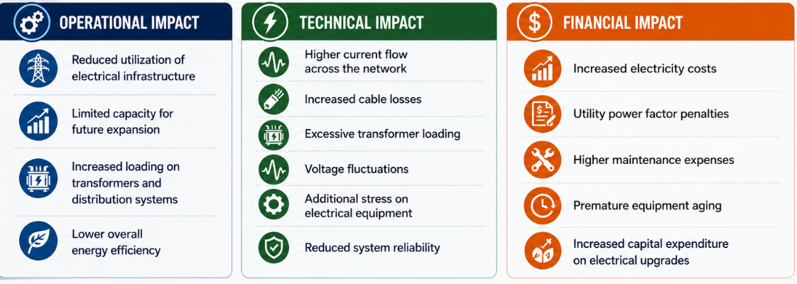
Energy management directly impacts operational costs by influencing energy consumption, system efficiency, and equipment performance. Poor energy management leads to higher electricity bills, energy waste, increased maintenance costs, and reduced productivity. By implementing effective energy management strategies, industries can optimize energy use, lower operating expenses, improve reliability, and enhance overall profitability.
Key Benefits of Effective Energy Management Strategies
Effective energy management strategies help industries reduce operational costs, improve energy efficiency, and maximize equipment performance. By monitoring and optimizing energy consumption, organizations can minimize energy waste, lower utility bills, extend asset life, and reduce maintenance requirements. Strong energy management also enhances power quality, improves system reliability, supports sustainability goals, and increases overall productivity, leading to greater profitability and long-term business success.
Importance of Energy Management in Modern Industries
Energy management is critical for modern industries to reduce energy costs, improve efficiency, and ensure reliable operations. By optimizing energy usage, businesses can minimize waste, enhance equipment performance, boost productivity, and achieve greater profitability while supporting sustainability goals.
Many organizations focus on reducing energy consumption but overlook how efficiently electricity is being utilized.Poor power factor can affect operations in several ways.
To illustrate, a manufacturing facility that uses outdated machinery may experience higher energy losses compared to a facility that has invested in modern, energy-efficient equipment. The latter not only conserves energy but also produces higher quality outputs with less waste.
Understanding the importance of Energy Management not only helps in reducing costs but also enhances operational efficiency.https://ieeexplore.ieee.org/document/9012368
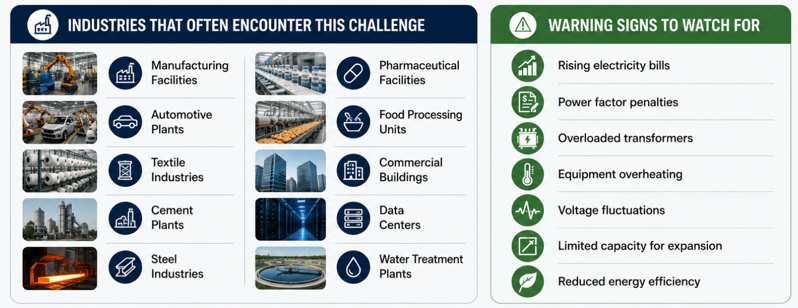
Is Your Industry Vulnerable to These Inefficiencies?
Recognizing the warning signs early can help organizations improve energy efficiency, reduce operating costs, and make better use of their existing electrical infrastructure.
Some warning signs include unexpected surges in energy bills or decreased productivity levels. Recognizing these signs early can lead to interventions that significantly reduce operating costs and enhance energy efficiency across facilities.
How Industries Are Tackling Hidden Energy Losses
Industries are increasingly turning to smart technologies, including IoT devices and AI-driven analytics, to monitor energy usage in real-time. These technologies can provide insights that help organizations pinpoint inefficiencies that may otherwise go unnoticed.
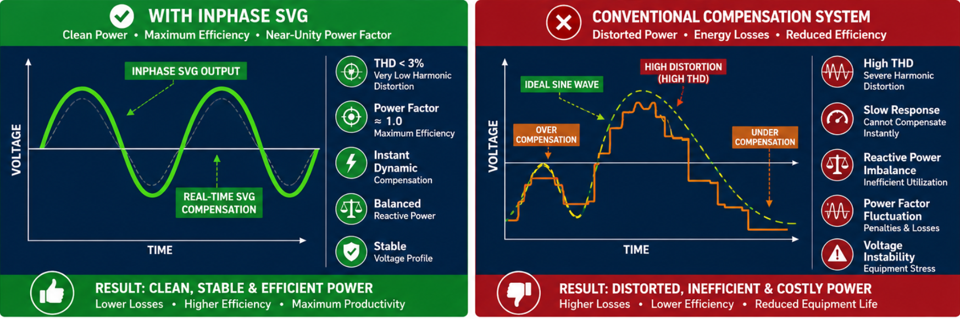
Industries use several approaches to improve power factor and optimize energy utilization.
- Fixed Capacitor Banks : Capacitors remain permanently connected to the system.
Limitations
- Cannot respond to changing loads
- Risk of over-compensation
- Conventional Power Factor Correction Systems :Automatically switch capacitor stages according to system demand.
Limitations
- May not respond effectively to rapid load fluctuations
In addition to fixed capacitor banks and conventional power factor correction, industries are also adopting advanced energy management systems that utilize predictive analytics to anticipate energy needs based on historical data and changing demand patterns.
How InPhase SVG Helps Industries Use Power More Efficiently
Furthermore, InPhase SVG technology can also help organizations transition towards renewable energy sources. By efficiently managing reactive power, businesses can better integrate solar or wind energy systems, thus enhancing their sustainability efforts.
Changing loads demand smarter compensation.
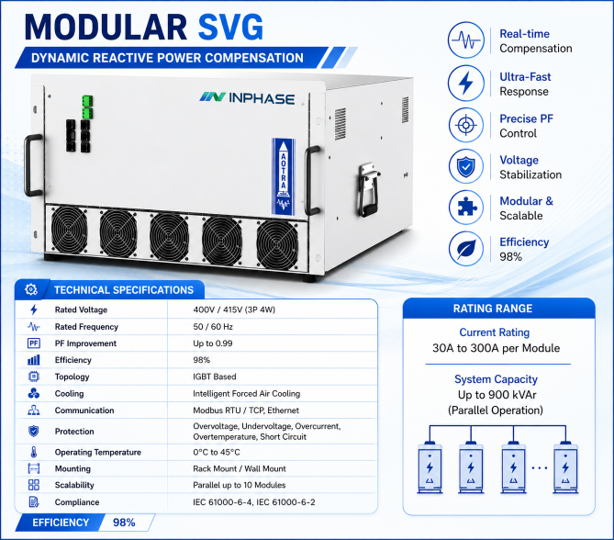
Modern industrial loads are constantly changing, making traditional power factor correction methods less effective. InPhase SVG (Static Var Generator) delivers real-time reactive power compensation, helping industries maintain near-unity power factor, reduce electrical losses, improve voltage stability, and maximize overall system efficiency even under rapidly varying load conditions. https://inphase.in/power-quality-products
Key Features :
- Advanced Power Quality Management
- Intelligent Operation Modes
- Smart Integration
- Industrial grade Reliability
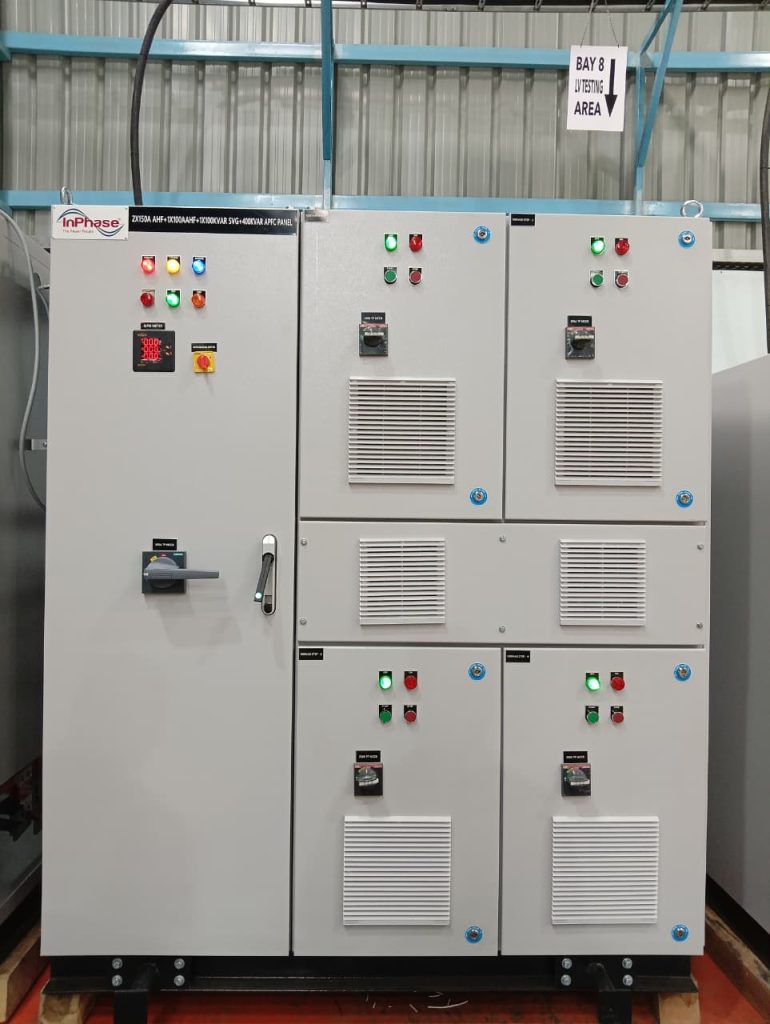
In InPhase Power Technologies solutions, modular SVG systems are mainly designed for small and medium-scale industries where the load keeps changing frequently and flexibility is important. For large-scale industries, InPhase uses high-capacity SVG systems designed to handle heavy and continuous loads such as steel plants, cement industries, and large manufacturing units.
This adaptability not only supports the current load but also positions the industry for future growth, as energy needs can evolve rapidly with technology advancements and market demands.