Reactive power may be invisible, but its impact on power quality is significant.
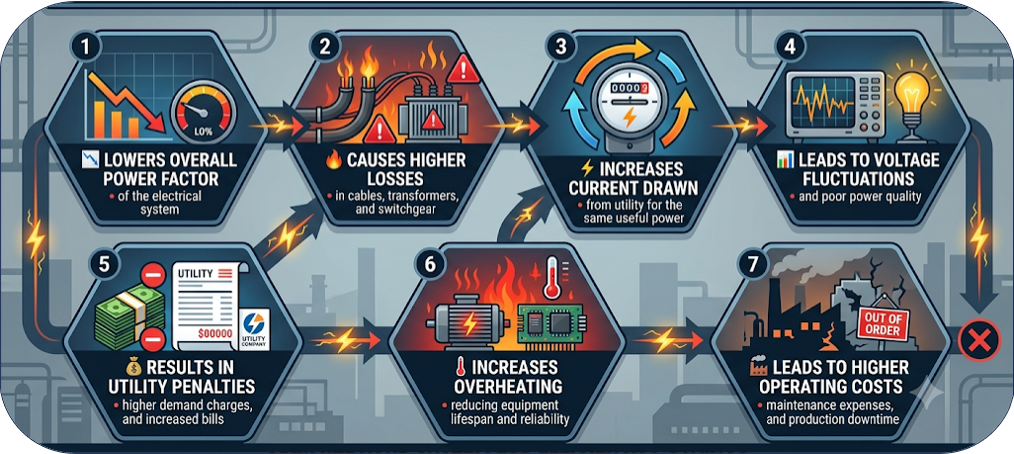
As inductive loads draw reactive power from the network, the power factor decreases, causing higher current flow, increased losses, voltage drops, reduced equipment efficiency, and unnecessary stress on electrical infrastructure.
“A low power factor doesn’t just waste energy—it wastes the capacity of your entire electrical system.”
Reactive Power and Effect on power factor
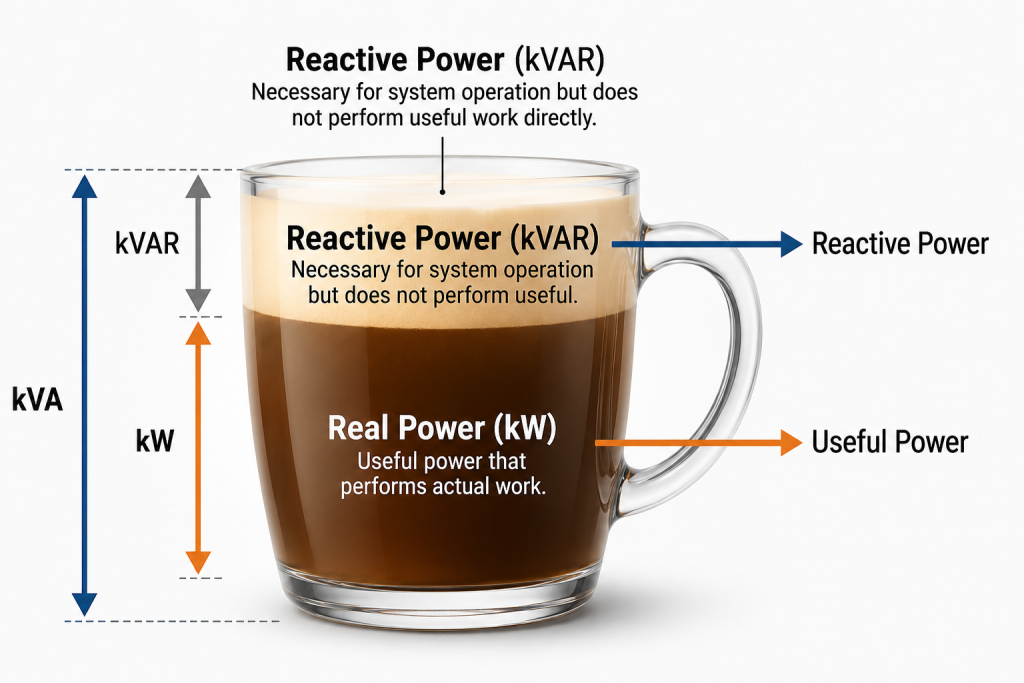
Reactive power is the portion of electrical power that continuously moves back and forth between the source and the load without being converted into useful work. Unlike active power, which drives motors, powers lighting, and performs productive tasks, reactive power is not consumed by the load. Instead, it plays a vital role in maintaining voltage levels and supporting the operation of electrical equipment.
Reactive power is measured in volt-amperes reactive (VAR). It is primarily associated with inductive devices such as motors, transformers, and reactors, which require magnetic fields for operation. As current flows through these components, it lags behind the voltage waveform, creating a phase difference between the two. This phase shift causes reactive power to circulate within the electrical network, enabling inductive equipment to sustain the magnetic fields necessary for proper functioning.
These are the impacts of reactive power for the industry.
Power Factor Correction (PFC) and its Importance
Power factor is the measure of how efficiently electrical power is converted into useful work output in an AC circuit. It is the ratio of real power to apparent power
Power Factor (PF) = cosθ = Active Power (kW) Apparent Power (kVA) 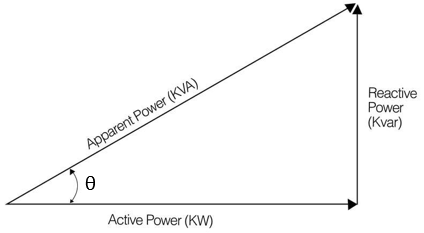
Power Factor Correction (PFC) is the process of improving the power factor of an electrical system by reducing unnecessary reactive power. It helps ensure that more of the supplied electrical power is converted into useful work, improving the efficiency of the power system.
| ⚡ Improved Efficiency |
💰 Lower Electricity Bills |
| 🔥 Reduced Energy Losses |
🔧 Longer Equipment Life |
| 📈 Increased System Capacity |
🏭 Improved Reliability |
| 🌡️ Reduced Equipment Heating |
📊 Better Voltage Regulation |
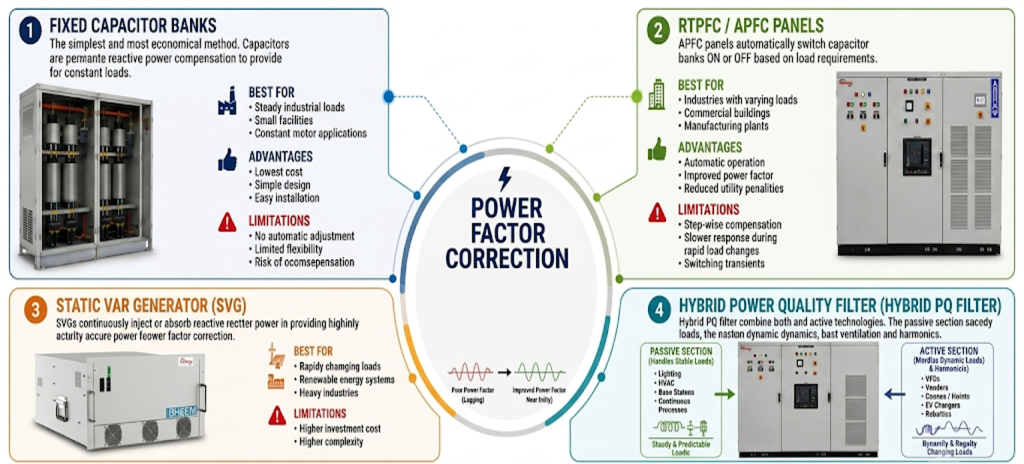
Power factor correction methods
In generally for Power Factor Correction, Capacitor banks, RTPFC/A{FC , SVG’s and Hybrid PQ filters are used. In these methods, the reactive power is absorbed or added to make the power factor unity.
InPhase Power Factor Correction Solutions
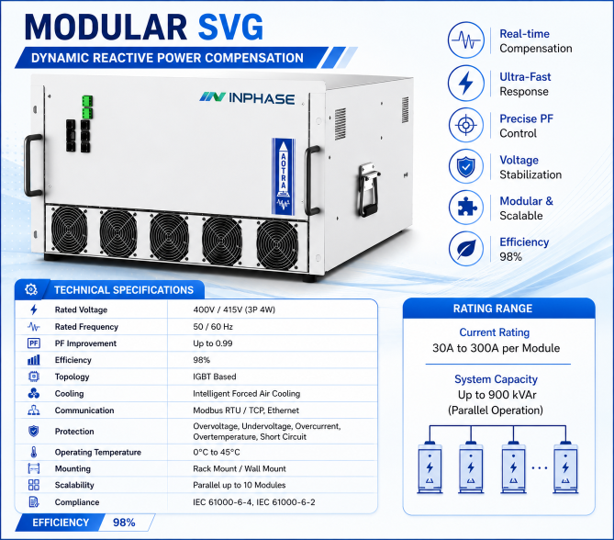
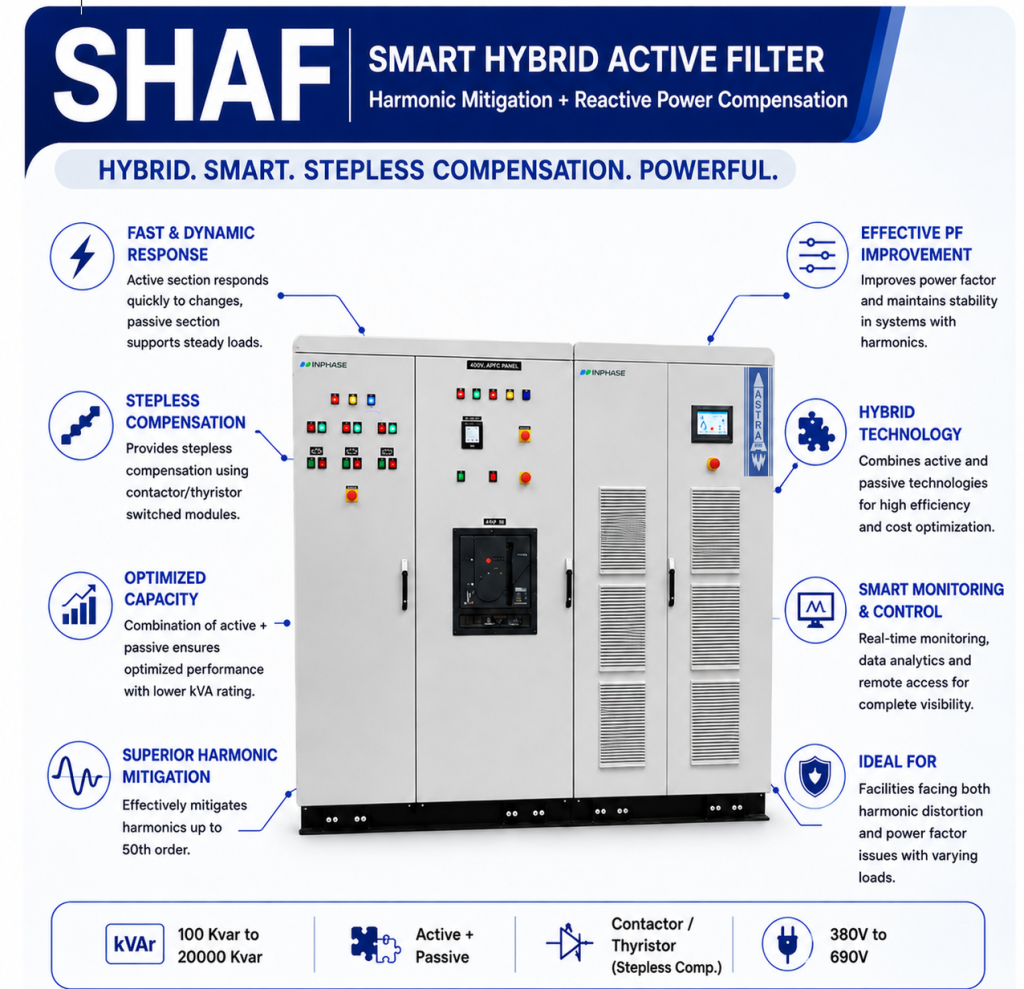
For InPhase , SVG , Hybrid SHAF which is useful both the harmonic mitigation and reactive power compensation.
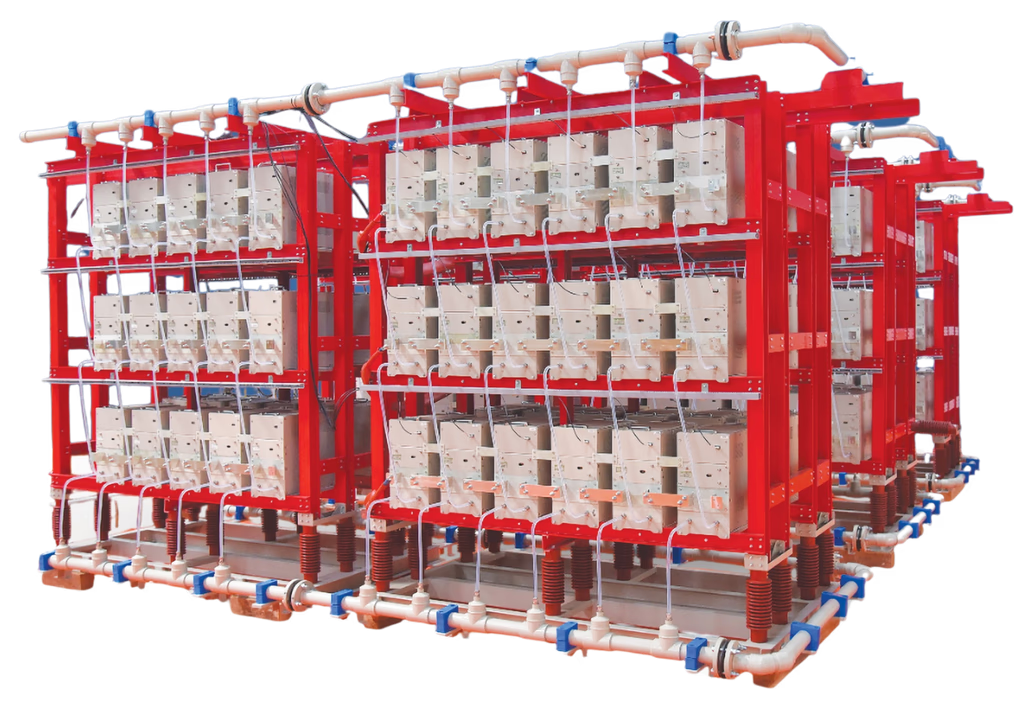
INPHASE VAJRA is a next-generation transformer-less SVG solution designed to transform power quality in modern industries. Utilizing advanced multilevel IGBT technology, it provides fast and accurate reactive power compensation, voltage regulation, and load balancing. Built for operation in extreme industrial conditions, the system integrates intelligent DSP control, fiber-optic communication, and cloud-enabled monitoring to optimize energy consumption, improve system reliability, and minimize electricity penalty charges.
Solutions:
1 MVAr to 50 MVAr
|
Compensation:
Dynamic Reactive Power Control
|
Types:
IGBT Based
|
Voltage:
3.3 kV to 33 kV
|
If you’re looking for advanced power quality solutions that deliver superior power factor correction, harmonic mitigation, and long-term reliability, InPhase offers a comprehensive range of innovative products to meet the demands of modern industries and compliance with the IEEE519 , IEEE 1453-2015,IEC regulatory standards
Choose InPhase for efficient, stable, and future-ready power management.