
“Your plant may already have a capacitor panel, but that doesn’t mean your power factor problem is solved.”
Industrial Power Factor Correction is essential for reducing electricity costs, improving energy efficiency, and avoiding costly power factor penalties in modern industrial facilities. Many industries install capacitor panels expecting immediate savings, but changing load conditions can turn fixed compensation into a source of hidden losses, reduced efficiency, and poor power quality.
The costly mistake is assuming that a capacitor panel and an APFC panel deliver the same performance. In reality, conventional compensation systems often fail to respond to dynamic industrial loads, resulting in inconsistent power factor, increased electrical losses, and higher operating costs.
Is your power factor correction system saving money or silently increasing costs?
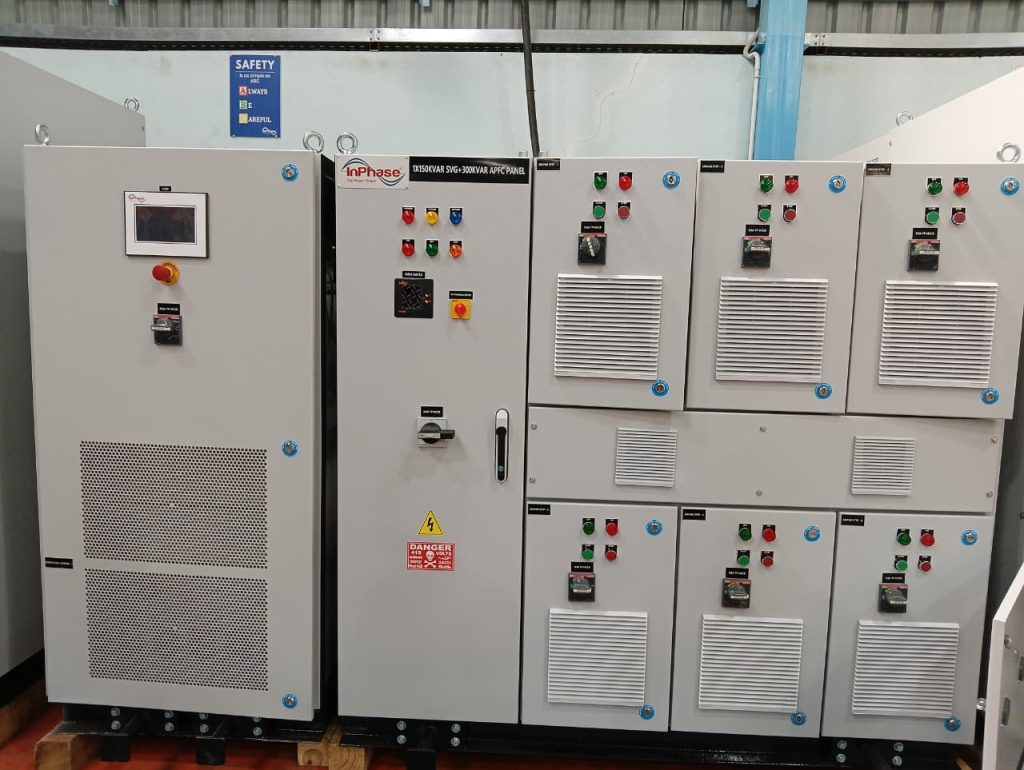
What Is Power Factor Correction?
Power factor correction is the process of reducing unnecessary reactive power demand in an electrical system. This is typically achieved using capacitors, which supply reactive power locally instead of drawing it from the utility. The primary goal of power factor correction is to eliminate poor power factor conditions before they impact productivity and profitability. By reducing reactive power flow, industries can improve system efficiency, lower energy losses, and maintain compliance with utility power factor requirements.https://ieeexplore.ieee.org/document/6430582
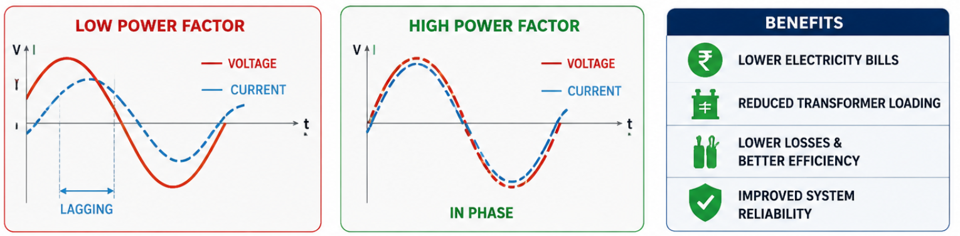
Low Power Factor Effects : Higher Electricity Bills, More Losses, Reduced Efficiency
Your Plant Has a Capacitor Panel. But Is It Actually Saving Money?
Most industries believe their power factor problem is solved once a capacitor panel is installed. Yet many continue to face hidden losses, rising energy costs, and power factor penalties because their compensation system cannot adapt to changing load conditions.In many facilities, poor power factor continues to exist even after capacitor installation because the compensation system cannot respond to rapidly changing loads. As production processes become more automated and dynamic, fixed compensation often struggles to maintain a consistent power factor, leading to avoidable energy waste.
Having capacitors isn’t enough. The real question is whether your power factor correction system is optimized for today’s dynamic industrial environment
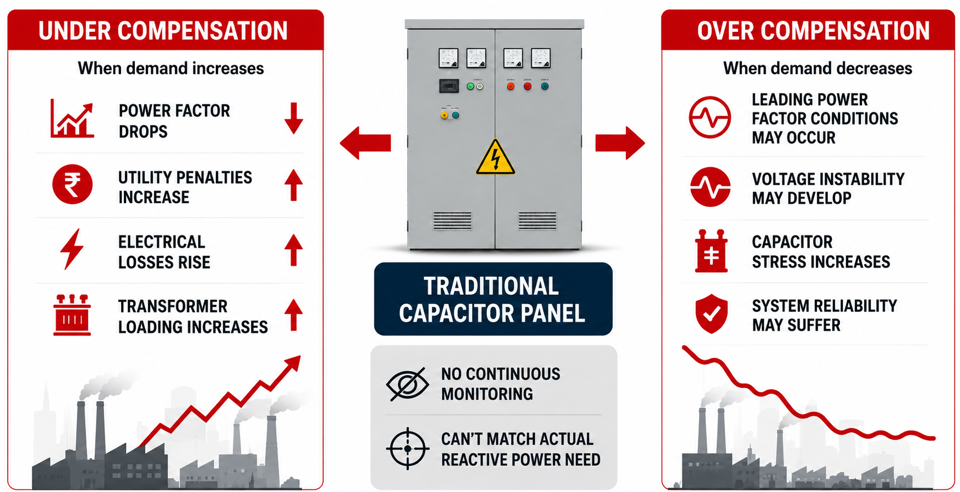
What Happens When Your Capacitor Panel Cannot Respond to Changing Loads?
When load conditions change throughout the day, a traditional capacitor panel may either under-compensate or over-compensate the system. This can result in poor power factor, voltage fluctuations, increased transformer loading, and higher maintenance costs. Over time, these issues can negatively affect equipment performance and plant reliability.
Why Addressing Poor Power Factor Matters More Than Ever
In today’s highly automated industrial environments, poor power factor can have a greater impact than many businesses realize. As variable-speed drives, automated machinery, and fluctuating loads become more common, maintaining a stable power factor becomes increasingly challenging. Without proper compensation, poor power factor can increase system losses, reduce equipment life, and limit overall operational efficiency.
Many industries continue to rely on conventional capacitor panels that were designed for relatively stable electrical loads. As production processes become more automated, load variations become faster and more frequent, making traditional compensation methods less effective. Industrial Power Factor Correction systems must respond instantly to these changes to maintain a stable power factor, reduce reactive power demand, and ensure reliable operation under all loading conditions.
Are These Warning Signs Already Present in Your Facility?
- Do your electricity bills keep increasing despite stable production?
- Are you receiving power factor penalties?
- Do your transformer temperatures seem unusually high?
- Are capacitor replacements becoming frequent?
- Is your power factor inconsistent throughout the day?
- Have you expanded automation but retained the same old capacitor panel?
Benefits of Industrial Power Factor Correction
Implementing Industrial Power Factor Correction offers several advantages for modern industries:
- Reduces electricity bills by minimizing reactive power demand.
- Eliminates power factor penalties imposed by utilities.
- Improves voltage stability throughout the electrical network.
- Reduces transformer and cable losses.
- Increases the efficiency and lifespan of electrical equipment.
- Supports reliable operation under dynamic load conditions.
Still Struggling with Power Factor Fluctuations? Discover InPhase SVG
Changing loads demand smarter compensation.
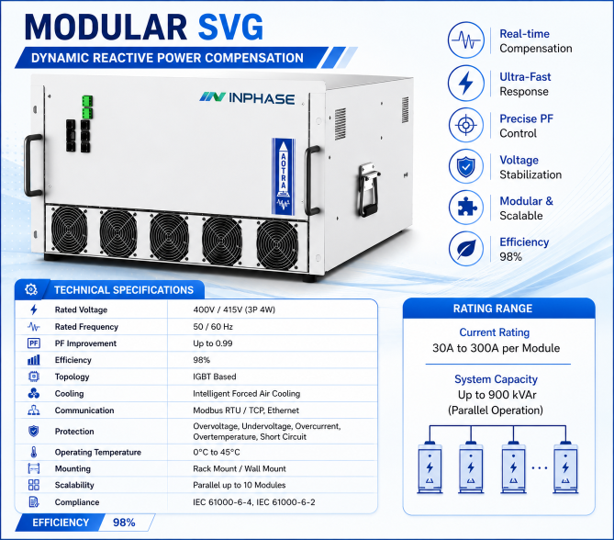
Modern industrial loads are constantly changing, making traditional power factor correction methods less effective. InPhase SVG (Static Var Generator) delivers real-time reactive power compensation, helping industries maintain near-unity power factor, reduce electrical losses, improve voltage stability, and maximize overall system efficiency even under rapidly varying load conditions. https://inphase.in/modular-static-var-generator/
Key Features :
- Advanced Power Quality Management
- Intelligent Operation Modes
- Smart Integration
- Industrial grade Reliability
In InPhase Power Technologies solutions, modular SVG systems are mainly designed for small and medium-scale industries where the load keeps changing frequently and flexibility is important. For large-scale industries, InPhase uses high-capacity SVG systems designed to handle heavy and continuous loads such as steel plants, cement industries, and large manufacturing units.
FAQ
1. What is Industrial Power Factor Correction?
Industrial Power Factor Correction is the process of improving the power factor of an industrial electrical system by reducing reactive power demand. It helps lower electricity costs, minimize power factor penalties, improve energy efficiency, and enhance the overall reliability of electrical equipment.
2. Why is Industrial Power Factor Correction important for industries?
Industrial Power Factor Correction is important because a poor power factor increases current flow, electrical losses, and utility charges. An efficient power factor correction system reduces energy losses, improves voltage stability, and extends the life of transformers, motors, and other electrical equipment.
3. What is the difference between a capacitor panel and an SVG?
A capacitor panel provides fixed or stepped reactive power compensation and is suitable for relatively stable loads. A Static Var Generator (SVG) delivers dynamic, real-time reactive power compensation, making it more effective for industries with rapidly changing load conditions.
4. What are the signs that my industry needs Industrial Power Factor Correction?
Common signs include rising electricity bills, recurring power factor penalties, fluctuating power factor, transformer overheating, frequent capacitor failures, voltage instability, and expanding automation without upgrading the compensation system.
5. How does Industrial Power Factor Correction reduce electricity costs?
Industrial Power Factor Correction reduces reactive power demand, lowers current flow, minimizes I²R losses in cables and transformers, avoids utility penalties, and improves the overall efficiency of the electrical distribution system.
6. Which industries benefit the most from Industrial Power Factor Correction?
Industries such as textile manufacturing, steel plants, cement plants, automotive manufacturing, food processing, pharmaceuticals, chemical plants, paper mills, and commercial facilities benefit significantly from Industrial Power Factor Correction due to their dynamic electrical loads.
7. How does InPhase SVG improve Industrial Power Factor Correction?
InPhase SVG continuously monitors load variations and injects the required reactive power in real time. This enables industries to maintain near-unity power factor, improve voltage stability, reduce electrical losses, and achieve better power quality than conventional capacitor-based systems.