
Are You Aware About Power factor Correction?
Are the benefits of Power Factor Correction just a topic of study? Absolutely not. Power Factor Correction provides significant real-world advantages that directly impact the efficiency, reliability, and profitability of industrial and commercial electrical systems.
A poor power factor forces equipment to draw more current than necessary to deliver the same amount of useful power, resulting in increased energy losses, higher electricity bills, excessive heating of transformers and cables, and reduced system efficiency. Over time, these inefficiencies can increase operating costs and shorten the lifespan of critical electrical equipment.
By implementing effective Power Factor Correction, facilities can reduce unnecessary current flow, improve voltage stability, increase available system capacity, and minimize utility penalty charges associated with low power factor. Improved power factor also reduces stress on transformers, generators, switchgear, and distribution networks, leading to enhanced reliability and lower maintenance requirements.
In modern industries where energy efficiency and operational continuity are essential, Power Factor Correction plays a vital role in optimizing electrical performance and ensuring that power is utilized as effectively as possible. Beyond financial savings, it also contributes to sustainable energy usage by reducing wasted electrical energy and improving the overall power quality of the facility.
What is Power Factor and Power Factor Correction?
Power factor is a measure of how well an electrical system converts electric power into useful work output.
Power Factor (PF) = cosθ = Active Power (kW) Apparent Power (kVA)
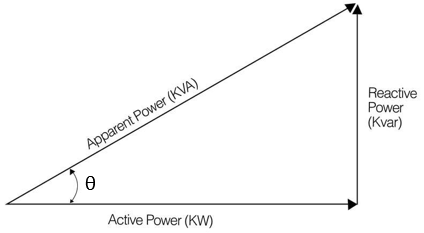
Power Factor Correction (PFC) is the process of improving the power factor of an electrical system so that electricity is used more efficiently. In simple terms, it helps ensure that the power supplied by the utility is converted into useful work with minimal energy loss.
In simple pushing a shopping cart with a faulty wheel—it takes extra effort to move forward. Similarly, a poor power factor causes excess current flow and energy loss.

The benefits of good Power Factor are enormous, ranging from business profits to environmental factors. Also that will follow the industrial power quality standards like IEEE519 , IEEE 1453, IEEE1159.
Power Factor Correction Methods
For better power factor there are several methods are used in today’s industries like traditional capacitor bank, advanced APFC, RTPFC, Static VAR Generators(SVG’s), Hybrid compensation methods.
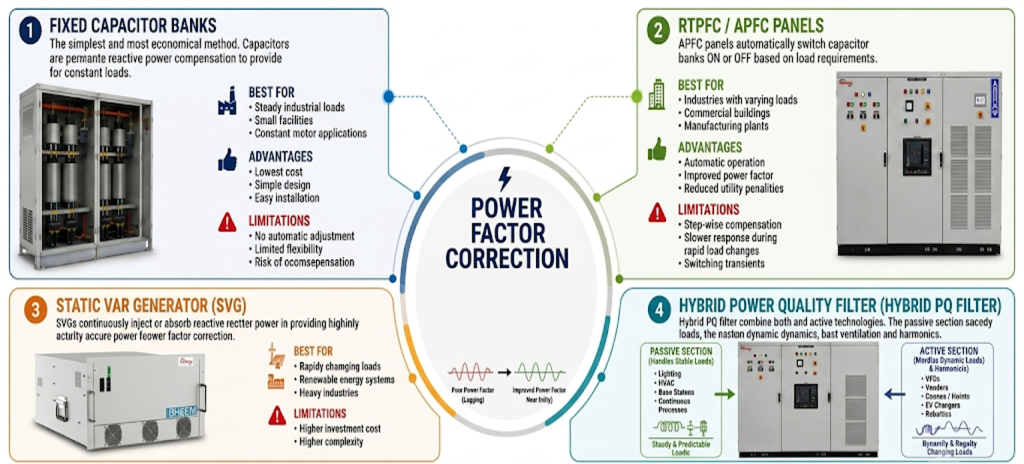
InPhase Methods For Power Factor Correction
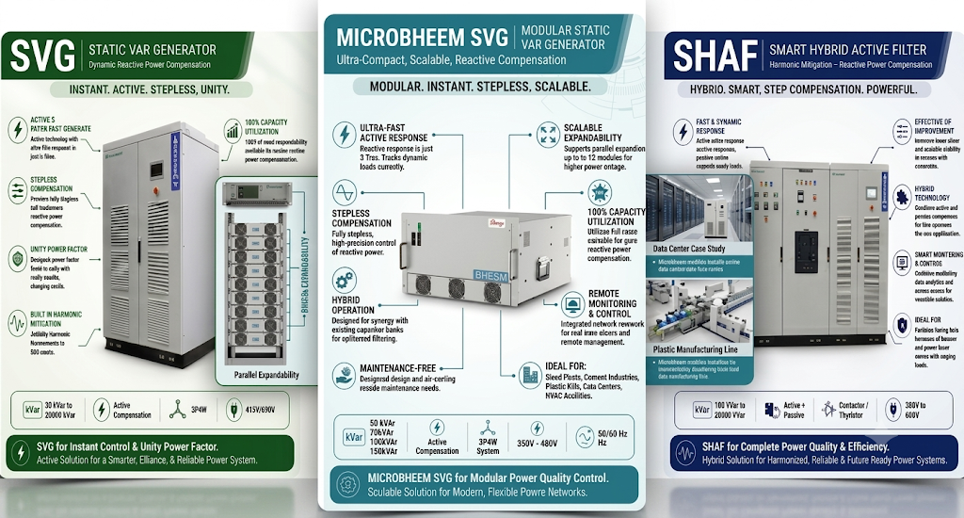
MicroBheem SVG and SHAF are the innovative power quality enhancer for all type of industries with ultra fast response time, also having harmonic mitigation.
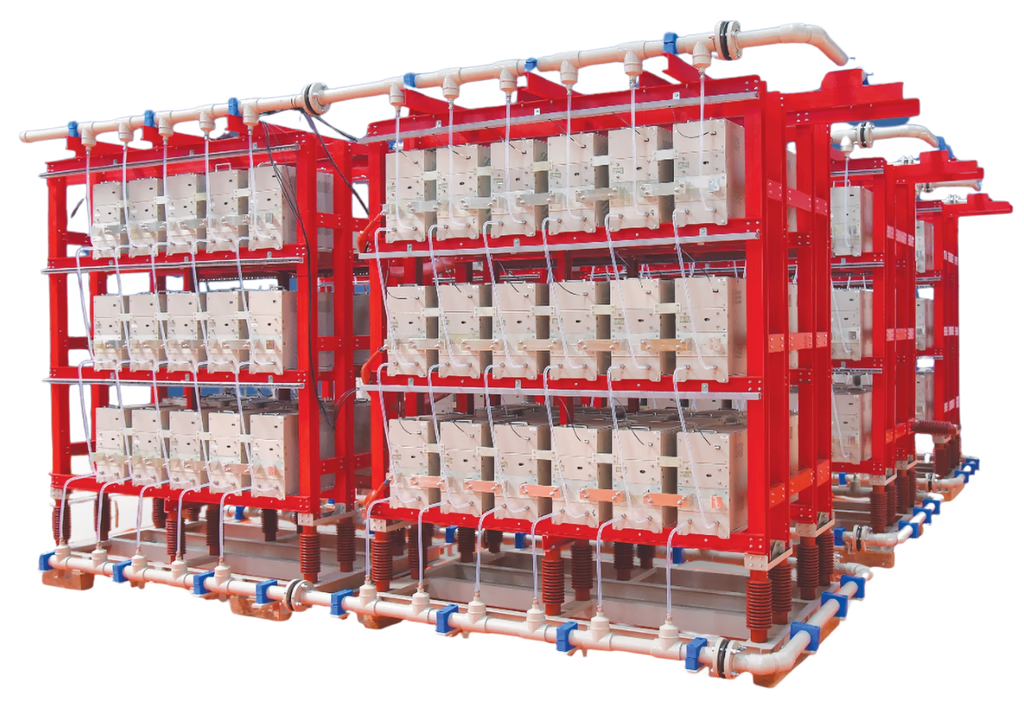
INPHASE VAJRA is a next-generation transformer-less SVG solution designed to transform power quality in modern industries. Utilizing advanced multilevel IGBT technology, it provides fast and accurate reactive power compensation, voltage regulation, and load balancing. Built for operation in extreme industrial conditions, the system integrates intelligent DSP control, fiber-optic communication, and cloud-enabled monitoring to optimize energy consumption, improve system reliability, and minimize electricity penalty charges.
|
Solutions: 1 MVAr to 50 MVAr |
Compensation: Dynamic Reactive Power Control |
Types: IGBT Based |
Voltage: 3.3 kV to 33 kV |
Power Factor Correction is a smart investment and it is the primary object of InPhase Power Technologies ,for any facility looking to reduce electricity costs, improve energy efficiency, and enhance overall power quality. By reducing energy losses, and ensuring reliable system performance, businesses can achieve both operational and financial benefits.
If you’re looking for advanced power quality solutions that deliver superior power factor correction, harmonic mitigation, and long-term reliability, InPhase offers a comprehensive range of innovative products to meet the demands of modern industries. Choose InPhase for efficient, stable, and future-ready power management.
