Reactive Power compensation is one of the most overlooked factors affecting industrial energy costs and profitability. While it is essential for operating motors, transformers, and other inductive equipment, excessive electrical demand can increase losses and reduce system efficiency.
What if you’re paying for power that isn’t contributing to production? Behind rising electricity bills, poor power quality, and power factor penalties lies a hidden cost that many facilities fail to monitor.
The real question isn’t whether this issue exists in your facility—it’s how much it’s costing your business every month. Understanding and controlling it can significantly improve operational performance and profitability.
What Exactly Is Reactive Power?
This electrical energy component helps equipment operate but does not perform any useful work itself.While it is necessary for devices like motors and transformers, excessive reactive power can increase electrical losses and reduce overall system efficiency. https://ieeexplore.ieee.org/document/6536120
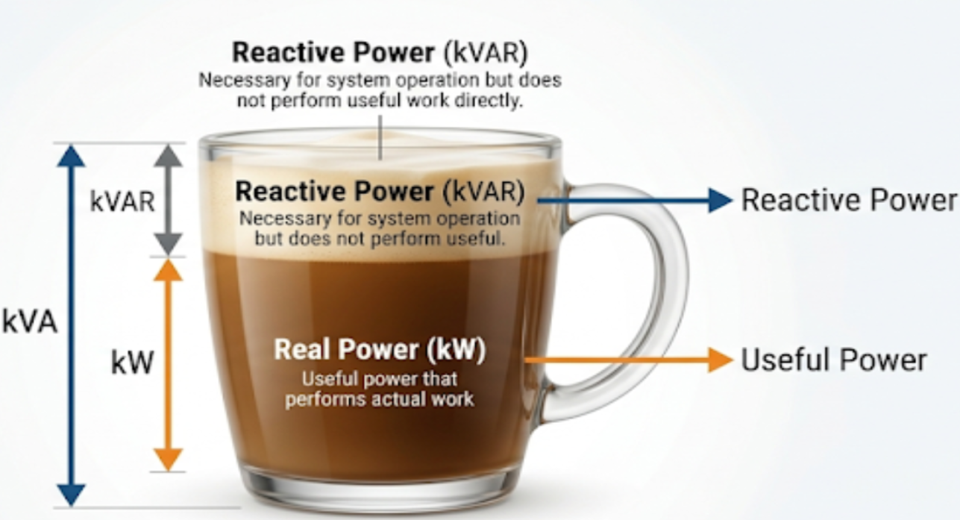
Reactive Power Compensation plays a vital role in maintaining an efficient electrical system. Without proper Reactive Power Compensation, industries experience poor power factor, higher current flow, increased energy losses, and unnecessary utility penalties. An effective Reactive Power Compensation solution ensures that electrical equipment receives the reactive power it requires while minimizing losses across the distribution network.
Common Sources of Excess Electrical Demand
- Large Induction Motors : Motors require magnetic fields to operate, making them one of the largest consumers of reactive power.
- Pumps and Compressors : Heavy-duty pumping and compressed air systems continuously draw reactive power from the electrical network.
- Transformers : Even when lightly loaded, transformers consume reactive power.
- Welding Machines and Industrial Drives : Rapidly changing loads create varying reactive power requirements that traditional correction systems often struggle to handle.
What Happens When Reactive Power Is Not Controlled?
Many facilities focus only on energy consumption while overlooking how electrical demand affects system performance. Higher current flow increases stress on transformers, cables, switchgear, and generators, leading to additional heating and reduced equipment lifespan. Over time, these hidden inefficiencies can result in higher maintenance costs, unexpected downtime, and expensive infrastructure upgrades. By improving power quality and optimizing electrical system performance, industries can reduce operating expenses while improving overall reliability and productivity.
Implementing Reactive Power Compensation provides several operational and financial benefits. It improves power factor, reduces transmission losses, lowers electricity bills, increases transformer capacity, stabilizes voltage levels, and extends the life of electrical equipment. Modern industries depend on Reactive Power Compensation to maintain reliable production and improve overall energy efficiency.
Hidden Costs Beyond Electricity Bills
Many industries focus only on monthly electricity charges, but inefficient electrical systems can create several indirect costs. Increased current flow places additional stress on transformers, cables, switchgear, and backup generators, causing higher operating temperatures and reducing equipment life.
These inefficiencies can also lead to unexpected maintenance requirements, production interruptions, and reduced system reliability. As facilities expand and electrical loads increase, poor power management may force costly infrastructure upgrades that could otherwise be delayed or avoided.
By improving power quality and optimizing electrical performance, industries can maximize the use of existing assets, reduce maintenance expenses, and create a more reliable foundation for future growth.
Ask Yourself These Questions
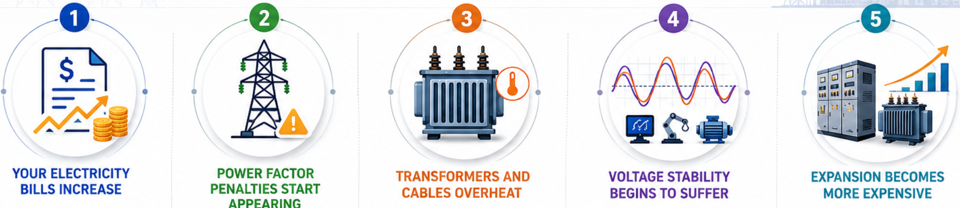
- Are electricity costs increasing despite stable production levels?
- Are power factor penalties affecting monthly operating expenses?
- Are transformers, cables, or switchgear running hotter than expected?
- Is voltage instability impacting production reliability?
- Are future expansion plans requiring costly infrastructure upgrades?
If the answer to even one of these questions is yes, reactive power may already be affecting your facility’s profitability.
Why Traditional Capacitor Banks Are No Longer Enough?
For decades, capacitor banks have been the standard solution for power factor correction. Modern industries rely on VFDs, automation systems, CNC machines, and rapidly changing loads. As electrical load demand constantly fluctuates traditional capacitor banks often fail to respond quickly enough, resulting in inefficient power factor correction and reduced power quality.
As industrial loads become more dynamic, the demand for Reactive Power Compensation changes continuously. Variable frequency drives, robotics, CNC machines, and automated production lines require fast and accurate compensation. Without proper Reactive Power Compensation, industries often experience voltage fluctuations, poor power quality, and increased operating costs.
Why More Industries Are Switching to InPhase SVG Solutions
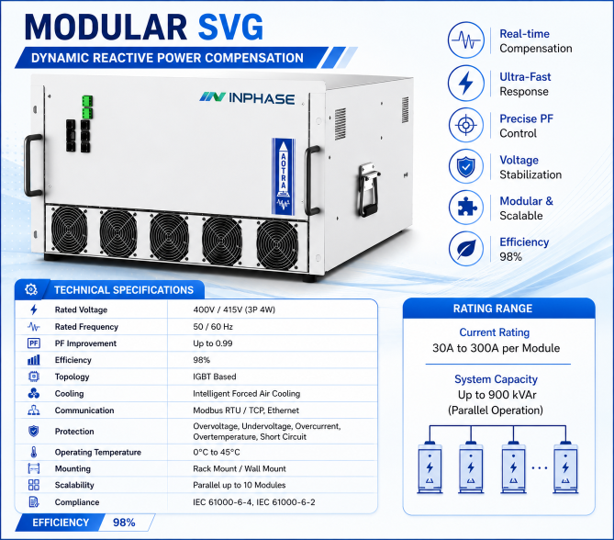
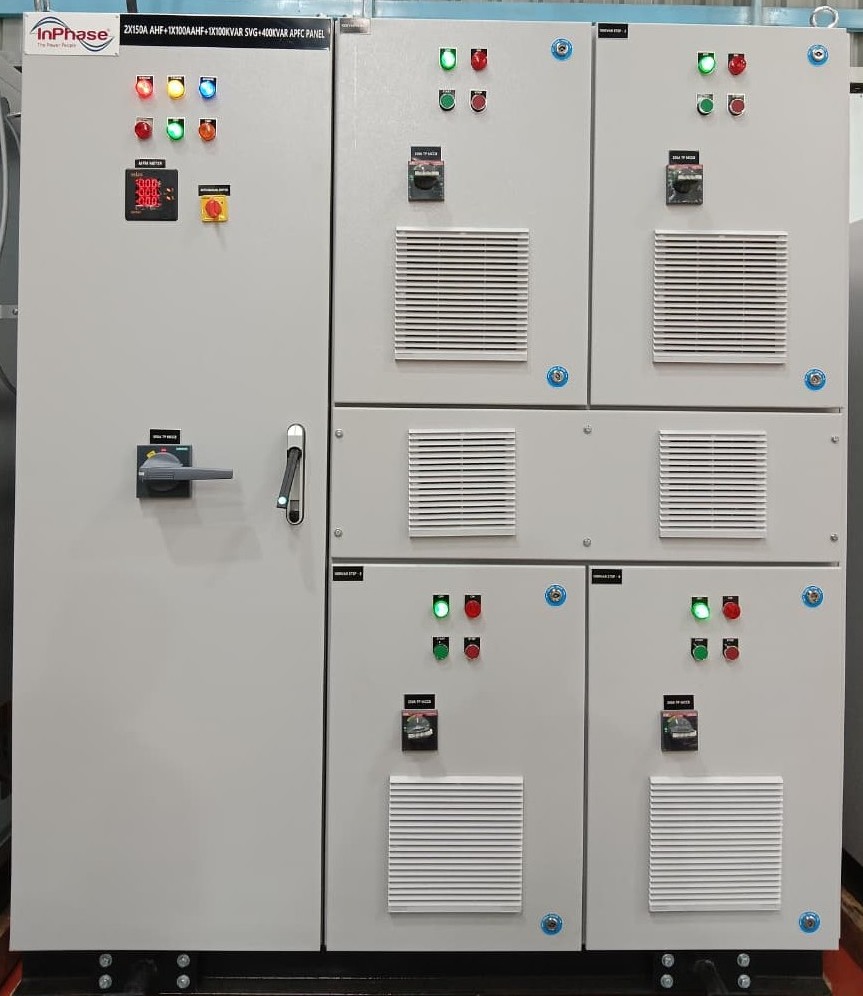
Modern industries need faster and more accurate reactive power compensation than traditional systems can provide. InPhase SVG responds in real time to changing load conditions, helping industries maintain near-unity power factor, improve power quality, reduce energy losses, and eliminate power factor penalties.https://inphase.in/modular-static-var-generator/
Key Features :
- Advanced Power Quality Management
- Intelligent Operation Modes
- Smart Integration
- Industrial Grade Reliability
Specifications :
- Efficiency : 98%
- Topology : 3-Level IGBT
- Harmonic Range : Up to 13th order harmonics
- Control Basis : Closed loop operation