
Make in India SME Manufacturing Is Becoming “Make MY India”
Make in India SME manufacturing has evolved from a government-led initiative into a powerful business strategy embraced by thousands of Indian small and medium enterprises.
When the Make in India campaign was launched in 2014, it was largely associated with large factories, foreign investment, and ambitious industrial growth targets. More than a decade later, the success of Indian manufacturing is increasingly being shaped by SMEs that design, engineer, manufacture, test, and innovate within India.
This shift represents something much deeper: Make in India is becoming Make MY India.
For Indian SMEs, local manufacturing is no longer only a national mission. It has become a strategic business decision that can improve resilience, accelerate innovation, reduce operational risks, and strengthen long-term competitiveness.
At InPhase Power Technologies, this philosophy is reflected in the way power quality solutions are designed, engineered, manufactured, tested, and supported from India.
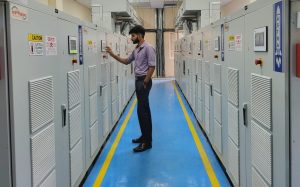
Make in India Manufacturing at InPhase Power Technologies
At InPhase Power Technologies, we believe that meaningful local manufacturing goes beyond assembling products.
Our approach focuses on developing in-house engineering capabilities and building solutions that address the practical requirements of Indian industries. Our complete range of Active Harmonic Filters (AHF), Static VAR Generators (SVG), and Hybrid Harmonic Filters is designed, engineered, manufactured, tested, and supported in-house from our Bengaluru manufacturing facility.
Our solutions are developed with a clear understanding of Indian industrial power systems and operating conditions, including:
- Voltage fluctuations
- Harmonic-rich electrical networks
- High ambient temperatures
- Variable industrial loads
- Grid instability
- Challenging operating environments
This approach reflects the true spirit of Make in India SME manufacturing: developing indigenous engineering capabilities while delivering reliable, application-focused solutions for Indian industries.
Two Reasons Why Make in India SME Manufacturing Has Become a Strategic Necessity
1. Make in India SME Manufacturing Builds Business Resilience
For years, the Make in India initiative focused primarily on attracting foreign investment and encouraging domestic production. However, global supply chain disruptions, currency fluctuations, geopolitical uncertainties, and dependence on imported technologies have changed how businesses evaluate manufacturing strategies.
Today, Make in India SME manufacturing is increasingly viewed as a business resilience strategy rather than simply a policy initiative.
Locally engineered and manufactured products can provide several advantages:
- Faster availability of spare parts
- Reduced dependence on global supply chains
- Better understanding of Indian operating conditions
- Improved after-sales support
- Reduced operational risks
- Faster product customization
- Greater control over product quality
Industries in India operate under unique electrical and environmental conditions. Products developed specifically for these conditions are often better positioned to deliver reliable and consistent performance.
As a result, local manufacturing can directly influence operational reliability, business continuity, maintenance efficiency, and customer satisfaction.
2. Make in India SME Manufacturing Strengthens Industrial Self-Reliance
Self-reliance has become a strategic priority for manufacturers across India.
Heavy dependence on imported technologies can create several business challenges, including:
- Long procurement lead times
- Foreign exchange risks
- Global supply chain disruptions
- Delayed technical support
- Limited customization options
- Increased maintenance costs
By investing in Make in India SME manufacturing, companies can gain greater control over engineering, production, quality, service, and long-term product support.
A localized manufacturing approach enables businesses to respond more quickly to changing customer requirements while maintaining consistent quality standards.
The real strength of local manufacturing lies in developing products specifically for Indian industrial environments rather than adapting imported solutions after deployment.
How SMEs Are Driving Make in India Manufacturing Innovation
Large corporations often receive greater media attention, but SMEs are where much of India’s practical engineering innovation takes place.
Across industries, SMEs are developing solutions for complex challenges such as:
- Harmonic distortion in industrial electrical networks
- Reactive power management
- Industrial automation
- Energy efficiency
- Renewable energy integration
- Power quality improvement
The growth of Make in India SME manufacturing depends heavily on companies that invest in:
- In-house research and development
- Indigenous product design
- Manufacturing excellence
- Technical talent development
- Advanced testing capabilities
- Customer-focused innovation
Every SME that designs, tests, manufactures, and supports products within India contributes to strengthening the country’s industrial capabilities.
This grassroots innovation ecosystem creates long-term engineering expertise and helps retain valuable technical knowledge within India.
Four Ways SMEs Can Make “Make in India” Happen
1. Invest in In-House Design and Engineering
There is a significant difference between designing a product and simply assembling imported components.
Companies that invest in Make in India SME manufacturing through in-house engineering can gain several advantages:
- Greater control over product quality
- Faster product development
- Improved customization capabilities
- Reduced dependence on external technologies
- Greater technological ownership
- Better integration between engineering and manufacturing
Building internal design and engineering capabilities creates sustainable competitive advantages that can be difficult to replicate.
It also enables SMEs to respond quickly to changing industry requirements and develop solutions based on direct customer feedback.
2. Build Products Specifically for Indian Conditions
Indian industries often operate under demanding conditions, including:
- Voltage fluctuations
- Harmonic-rich electrical environments
- High ambient temperatures
- Dust-heavy operating locations
- Variable industrial loads
- Grid instability
Products developed through Make in India SME manufacturing can be engineered from the beginning to address these practical operating realities.
This approach can deliver:
- Improved product reliability
- Lower maintenance requirements
- Better operational performance
- Extended equipment life
- Reduced downtime
- Increased customer satisfaction
Designing for Indian conditions from the start helps create products that perform consistently in real industrial environments.
3. Leverage Government Support Programs
The Government of India has introduced several initiatives to support domestic manufacturing, MSME growth, technology development, and industrial modernization.
Depending on eligibility and sector, SMEs may explore opportunities related to:
- Production Linked Incentive (PLI) schemes
- MSME financing programs
- Credit guarantee support
- Export promotion initiatives
- Technology modernization programs
- Skill development initiatives
- Innovation and self-reliance programs
Many SMEs underestimate the opportunities available through these initiatives.
However, SMEs are a critical part of India’s manufacturing ecosystem, and several government programs are designed to improve their access to finance, technology, infrastructure, and market opportunities.
Businesses should review the latest eligibility requirements and applicable guidelines before applying for any government support program.
4. Build Strong Local Service and Support Networks
Manufacturing locally is only one part of creating a successful customer value proposition.
Industrial customers increasingly expect:
- Fast technical support
- Quick availability of spare parts
- Local application engineering expertise
- Rapid service response
- Reduced operational downtime
- Long-term product support
Companies that adopt Make in India SME manufacturing can often respond more quickly than larger multinational organizations because local engineering, manufacturing, and service teams can work closely together.
For industrial customers, service responsiveness can be just as important as product quality.
A strong local support network transforms manufacturing into a complete customer value proposition that includes engineering, customization, commissioning, service, and long-term support.
The Future of Make in India SME Manufacturing
More than a decade after the launch of the Make in India initiative, the future of Indian industry will depend on companies choosing to:
- Design rather than only import
- Engineer rather than only assemble
- Innovate rather than imitate
- Manufacture with greater local value addition
- Support customers through local expertise
- Invest in Indian engineering talent
- Build long-term technological capabilities
The companies investing in Make in India SME manufacturing today are helping define the future of Indian industry.
They are creating stronger supply chains, developing technical talent, improving industrial self-reliance, and building products that address the practical needs of Indian customers.
The Bottom Line: From Make in India to Make MY India
Make in India started as a national ambition.
Today, its success is being written by thousands of SMEs making deliberate decisions to innovate, engineer, manufacture, test, and support products locally.
That is what transforms a government initiative into something businesses genuinely own.
Not just Make in India.
Make MY India.
At InPhase Power Technologies, we design, engineer, manufacture, test, and support our complete range of Active Harmonic Filters (AHF), Static VAR Generators (SVG), and Hybrid Harmonic Filters in-house from our Bengaluru manufacturing facility.
Our solutions are developed specifically for Indian industrial power systems and operating conditions, demonstrating the true spirit of Make in India SME manufacturing.
By building engineering capabilities within India and supporting customers through local expertise, SMEs can transform Make in India from a national vision into a practical, sustainable, and competitive business advantage.
At InPhase Power Technologies, we design, engineer, manufacture, test, and support our complete range of Active Harmonic Filters (AHF), Static VAR Generators (SVG), and Hybrid Harmonic Filters entirely in-house from our Bengaluru manufacturing facility. Our solutions are built specifically for Indian industrial power systems, demonstrating the true spirit of Make in India Manufacturing.