
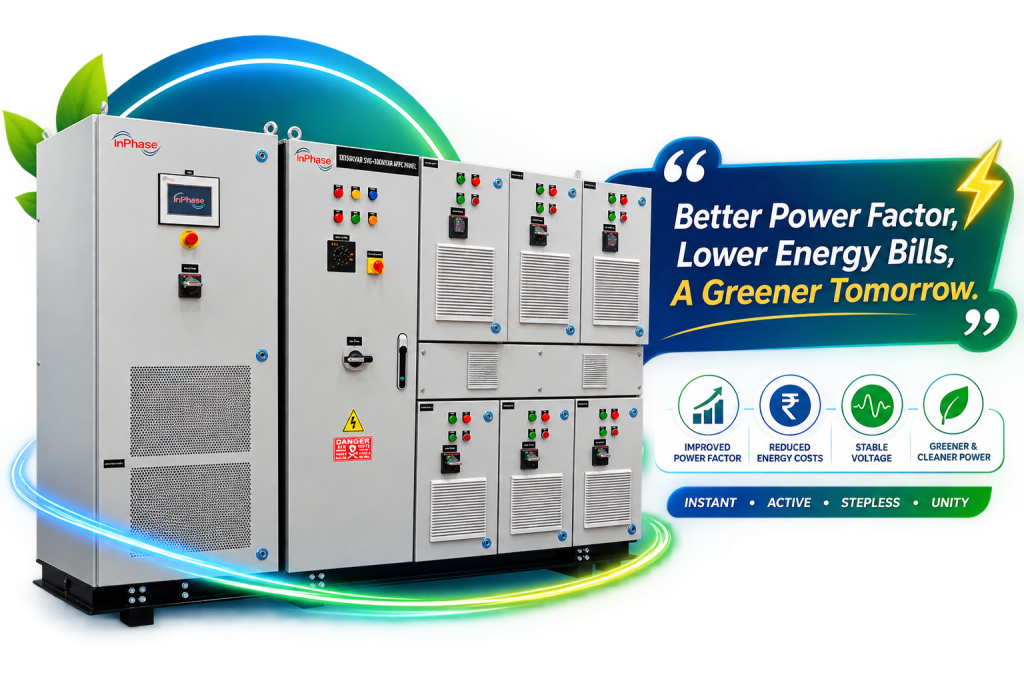
Methods on power factor correction play an important role in improving electrical efficiency, reducing unnecessary reactive power demand, and maintaining reliable operation in modern industrial facilities.
But what happens when an electrical system operates with poor power factor?
More current is required to deliver the same useful power, which can increase electrical losses, place additional loading on transformers and cables, and reduce the effective utilization of the electrical system.
For many industries, improving power factor may seem as simple as installing capacitor banks. But is that always enough?
Not necessarily.
Modern industries operate motors, pumps, compressors, and other electrical equipment with constantly changing load conditions. As these loads switch and vary, the reactive power requirement also changes. A correction system that works well under one operating condition may not perform equally well when the load changes.
Smarter Power Starts with Better Power Factor
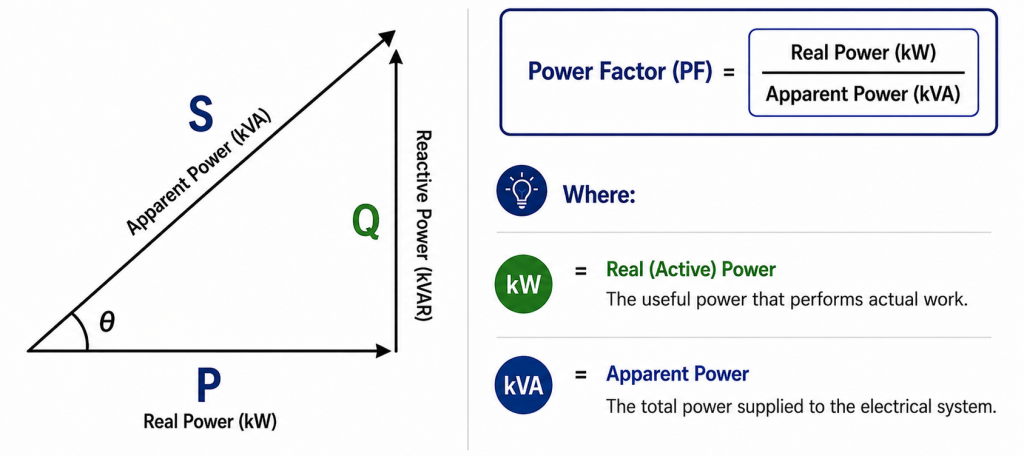
Power factor represents how effectively electrical power is being utilized by a system. A power factor closer to 1 indicates better utilization of the supplied electrical power.
In a three-phase system:
P = √3 × V × I × cos φ
Where:
- P = Active power
- V = Line voltage
- I = Line current
- cos φ = Power factor
Imagine an industrial plant operating several large induction motors.
The motors need active power to perform useful work, but it also requires reactive power to establish its magnetic field. Although reactive power does not perform useful mechanical work, it still flows through the electrical system.When the power factor is low, more current is required to deliver the same amount of active power.
A poor power factor can lead to :
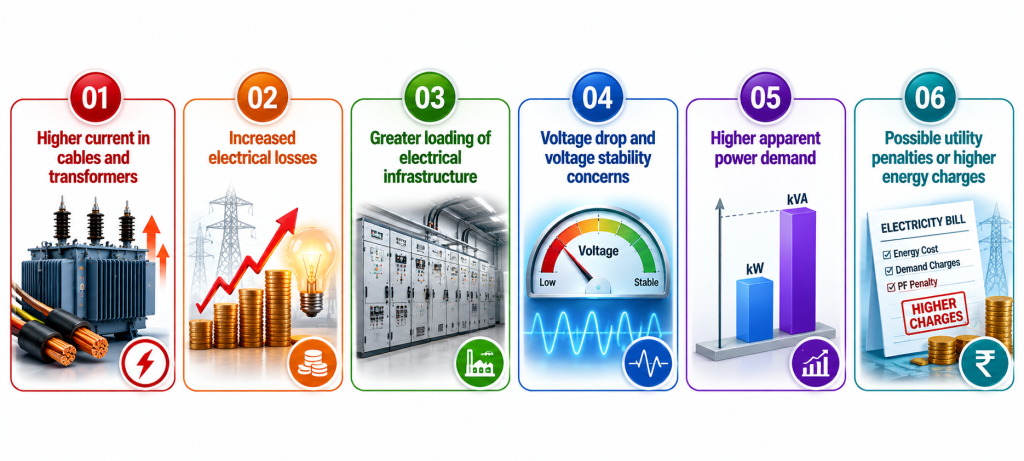
Therefore, improving power factor is an important part of efficient electrical system operation.
So,What are the different methods on power factor correction & which one is right for your industry?
Let’s understand.
What Are the Methods on Power Factor Correction?
Methods on Power Factor Correction vary depending on the type of electrical load, its operating pattern, and how frequently the reactive power demand changes. From conventional capacitor banks and automatic power factor correction panels to synchronous condensers, phase advancers, active power factor correction, Static VAR Generators, STATCOM based compensation, and hybrid systems, different methods on power factor correction are available for different applications. While conventional methods can work effectively for relatively stable loads, modern industries with rapidly changing loads may require a more responsive approach. Understanding these methods on power factor correction helps industries choose a solution that matches their actual electrical requirements.
The most common methods on power factor correction are :
- Capacitor banks.
- Automatic Power Factor Correction (APFC).
- Static VAR Generators (SVGs).
So, how do they differ?
1. Capacitor Banks
Capacitor banks are one of the simplest and most widely used methods on power factor correction. They supply reactive power locally to compensate for the reactive power consumed by inductive loads such as motors and transformers. They are economical and work well when the load remains relatively stable.
But there is a limitation.
When the load changes significantly, a fixed capacitor bank may provide too little or too much compensation.
That creates the need for a more flexible power factor correction method.
2. Automatic Power Factor Correction (APFC)
APFC provides a more flexible approach to power factor correction. It continuously monitors the system power factor and automatically switches capacitor stages based on the reactive power required by the system. This makes APFC suitable for many industrial applications where the load changes are fairly predictable.
However, when the reactive power demand changes rapidly, a capacitor-based system may not always be able to match the changing requirement closely enough.
So, what happens when the load keeps changing?
This is where dynamic power factor correction becomes important.
Modern industries use motors, pumps, compressors, automated machinery, and other equipment that can change operating conditions frequently. As these loads change, their reactive power requirements change as well.
For such applications, the correction system needs to respond quickly and adjust the compensation according to the actual load requirement.
This is where Static VAR Generator (SVG) technology offers a smarter approach.
3. Static VAR Generator (SVG)
A Static VAR Generator (SVG) provides a dynamic approach to power factor correction for applications where the reactive power requirement changes frequently.
Unlike conventional capacitor based methods on power factor correction, SVG uses power electronic technology to continuously monitor the electrical system and adjust reactive power compensation according to the changing load requirement.
”When the reactive power demand increases, the SVG increases its compensation. When the demand decreases, it reduces the compensation accordingly.”
This makes SVG particularly suitable for modern industrial applications with rapidly changing or highly variable loads, where a more responsive approach to power factor correction is required.
While choosing a suitable method on power factor correction, industries also need to consider overall electrical power quality. IEEE 519 provides recommended practices for maintaining power quality and limiting harmonic distortion in electrical systems. Following appropriate power quality practices helps industries achieve efficient and reliable electrical operation.
Why Is SVG a Preferred Choice for Dynamic Loads?
Among the different methods on power factor correction, SVG offers a more responsive approach when the reactive power requirement changes frequently. Its ability to continuously adapt the compensation to the changing load makes it particularly suitable for applications where conventional capacitor based methods may not respond closely enough.
So, when the load keeps changing, choosing the right method on power factor correction becomes important.
But choosing the right SVG solution matters too.
This is where InPhase SVG comes in.
Why Choose InPhase SVG?
Designed for dynamic reactive power compensation, InPhase SVG provides a practical solution for industries looking for a responsive and flexible approach to power factor correction.
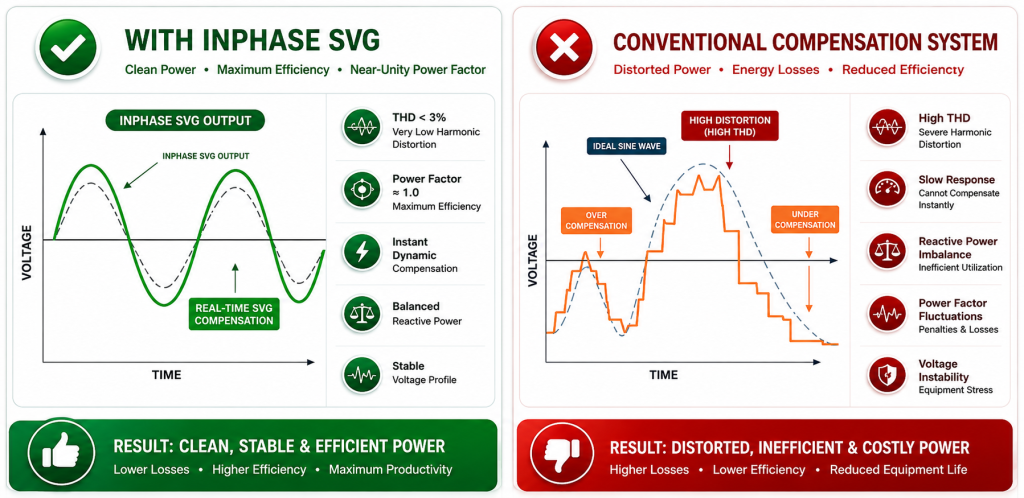
The figure above shows how InPhase SVG responds to changing reactive power demands compared with a conventional compensation system. While conventional systems may struggle to match rapidly changing loads, SVG provides dynamic compensation that follows the actual reactive power requirement. This helps avoid issues such as over compensation and under compensation while supporting better power factor, system efficiency, and voltage stability.
InPhase Power Technologies brings this dynamic approach to modern industrial applications through its advanced SVG solutions. Built with 3 Level IGBT technology, InPhase SVG delivers fast and accurate reactive power compensation, with over 98% efficiency, a response time of less than 0.1 ms, and a power factor above 0.99. These capabilities help industries reduce power factor related penalties, improve energy efficiency, and maintain reliable electrical performance.
With practical engineering expertise and a focus on real world power quality challenges, InPhase SVG provides a smarter way to manage changing reactive power demands and achieve efficient power factor correction.
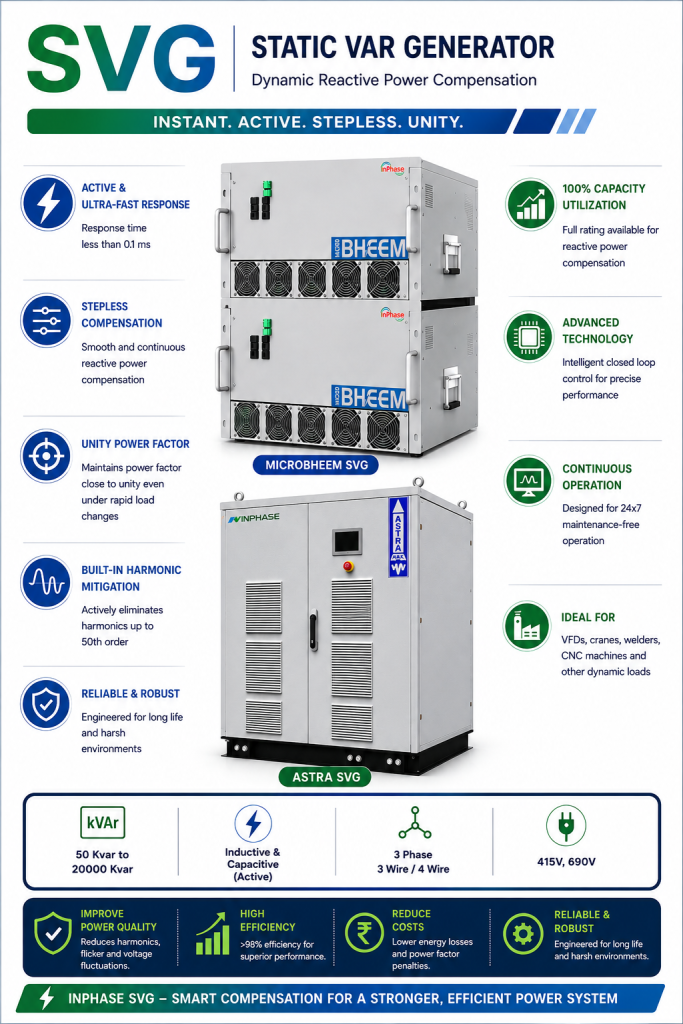
Learn more about our Static VAR Generator solutions at InPhase Power Technologies.