Electrical Resonance is one of the most overlooked power quality problems in modern industrial facilities, yet it can cause severe equipment failures, nuisance tripping, capacitor bank damage, and unexpected downtime.
Why do some facilities continue to experience equipment failures and nuisance tripping even after installing harmonic filters and power factor correction systems?
The answer often lies in electrical resonance—a hidden phenomenon that amplifies harmonic currents, overstresses transformers and capacitors, and increases operating costs. Unlike ordinary harmonic distortion, electrical resonance can magnify disturbances throughout the network, creating problems that conventional compensation systems may not eliminate.
This makes plant managers, maintenance engineers, and electrical consultants stop and ask: “Could electrical resonance be affecting my facility without me realizing it?”
Understanding and controlling electrical resonance is essential for maintaining reliable operation, protecting critical equipment, and achieving long-term power quality performance.
Modern industrial loads — variable frequency drives, robotics, UPS systems — are all power-hungry and non-linear. They draw current in bursts rather than smoothly, injecting distortions called harmonics into the electrical network.
Electrical resonance in harmonics occurs when the inductive and capacitive element of the system interact to amplify specific harmonic frequencies. This amplification creates massive circulating currents or high voltages, often leading to blown fuses, overheating, or catastrophic equipment failure
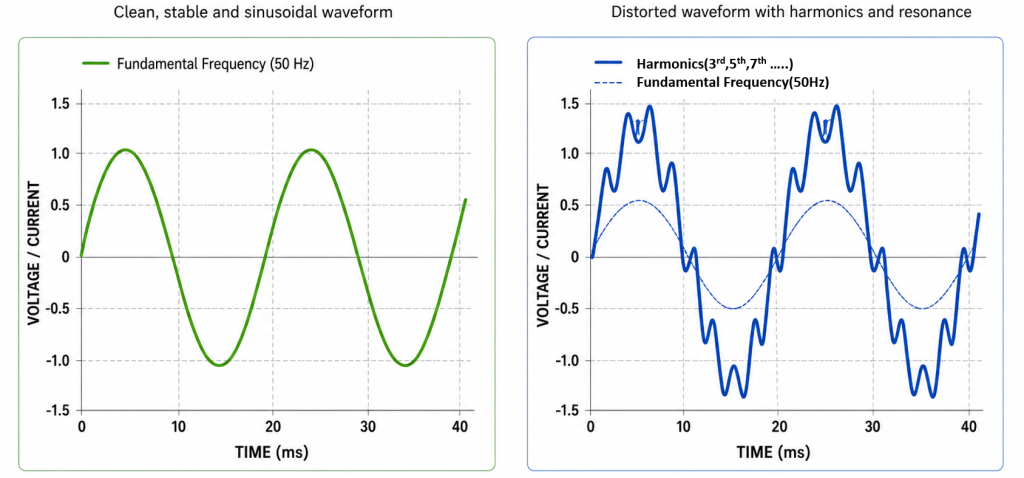
Think of it like sound. “When a singer hits the exact resonant frequency of a wine glass, the glass shatters — not because the sound was loud, but because the frequency matched“. Electrical resonance works the same way: at the wrong frequency, disturbances don’t just pass through the network. They get amplified.
Resonance isn’t limited to one sector. Any facility running heavy non-linear loads alongside power factor correction capacitors is a candidate. We see it most frequently in:
| 🏭 Cement Plants | 🧵 Textiles |
| ⚙️ Steel & Metals | 💊 Pharma |
| 🚗 Automotive | 📦 Packaging |
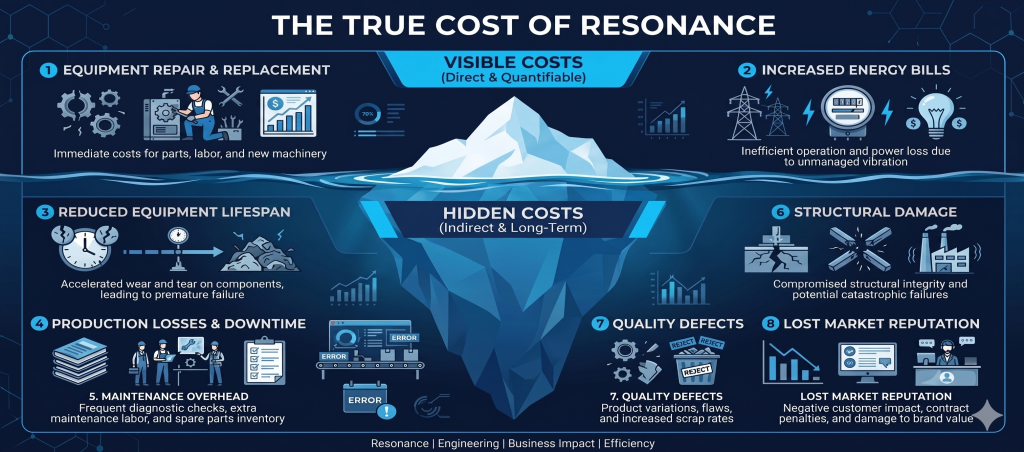
The financial impact of unmanaged resonance shows up in several ways — some obvious, some hidden:
|
🌡️ Overheating & Failure |
📉 Inflated Energy Bills |
|
⚡ Nuisance Tripping |
🔧 Unplanned Downtime |
Why Traditional Filters Aren’t Enough
While passive filters work well in stable environments, modern industrial networks have constantly shifting loads that can cause passive solutions to worsen electrical resonance. Today’s erratic loads require an active system that monitors, adapts, and compensates in real time.
The key distinction: harmonic compensation removes distortion that already exists. Resonance management prevents distortion from being amplified in the first place. Both are necessary — neither alone is sufficient in a modern industrial network.
How InPhase Addresses Resonance
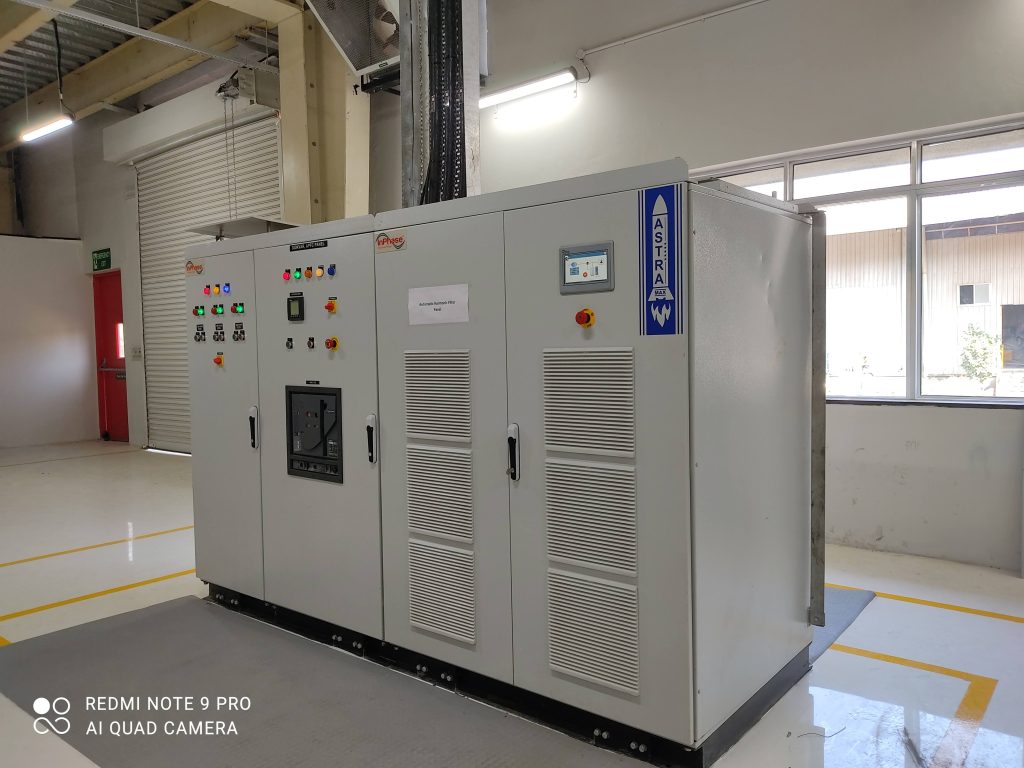
Our Active Harmonic Filter platforms — ASTRA and microBheem — are purpose-built for the complexity of modern industrial power networks. They go beyond harmonic mitigation to deliver active, intelligent resonance management.
| ⚡ Real-Time Response (0.1ms) Dual-core DSP processors respond in under a tenth of a millisecond, stopping resonance before it builds. | 📐Modular & Scalable Designed to grow with your facility; add modules without redesigning the system. |
| 🎯 Broad Harmonic Coverage Simultaneously mitigates up to the 61st harmonic order, covering the full spectrum of disturbances. | 🕰️ Long Operational Life Advanced thermal management extends operational lifespan up to 25 years. |

The Bottom Line: Proactive or Reactive?
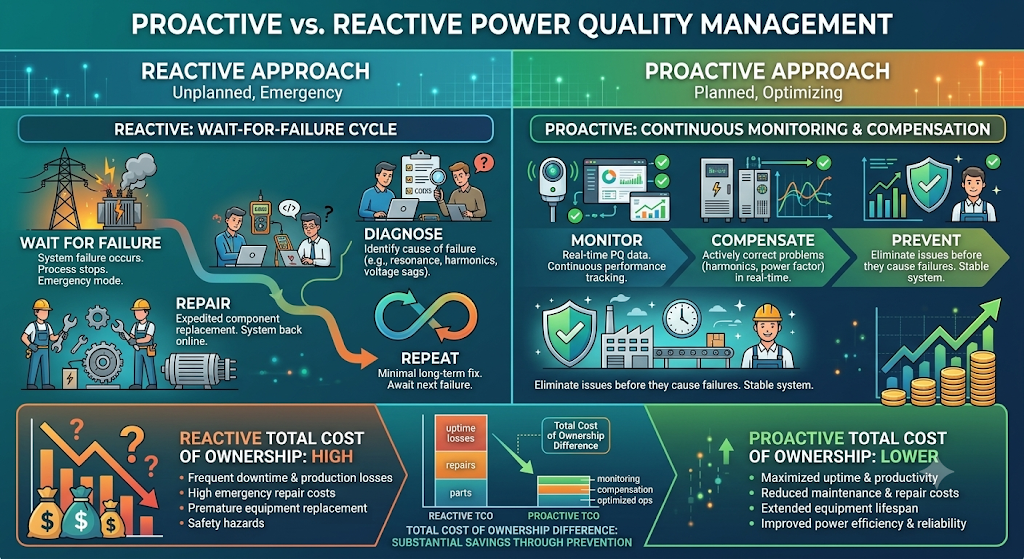
Resonance erodes performance gradually through mysterious trips, creeping energy bills, and premature equipment failure. Identifying the root cause usually happens after significant damage is done.
The best facilities treat power quality as infrastructure rather than a troubleshooting exercise. Deploying active harmonic management from the outset offers the best ROI, directly reducing kVAh billing by 2–10%—a figure that compounds significantly over a year for energy-intensive industries. Also it follows the electrical regulatory standards like IEEE519 , IEEE 1453, IEC, IEEE1159.