
Harmonics have become a growing concern in modern manufacturing plants, where maintaining power quality, protecting critical equipment, and ensuring uninterrupted operations are essential for productivity and profitability. In today’s manufacturing environment, every minute of downtime can result in production delays, missed deadlines, increased operational costs, and reduced profitability.
When equipment failures occur, common causes such as mechanical faults, overloads, or maintenance issues are often investigated first. However, one hidden electrical problem is frequently overlooked-harmonic distortion. Generated by non-linear loads such as VFDs, UPS systems, robotic systems, and automated production equipment, harmonics can silently degrade power quality throughout the electrical network.
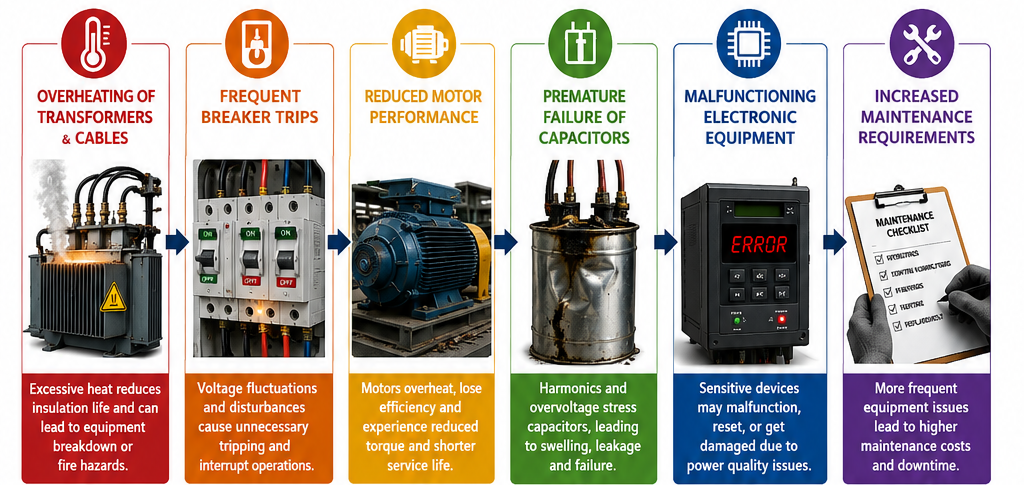
Left unaddressed, harmonic distortion can negatively impact equipment performance, increase electrical stress, cause overheating in transformers and cables, reduce motor efficiency, and contribute to premature equipment failures. Over time, these effects can lead to unexpected downtime, higher maintenance costs, and reduced operational reliability, making harmonic mitigation a critical aspect of modern manufacturing operations.
How Harmonics Lead to Downtime
Modern manufacturing plants rely heavily on power electronic equipment and automation systems to improve productivity, precision, and operational efficiency. While these technologies play a vital role in modern manufacturing, they also act as non-linear loads that draw current in an irregular manner. This creates harmonic distortion within the electrical network. Although harmonics may not cause immediate equipment failures, they gradually stress electrical components, leading to overheating, reduced efficiency, increased maintenance requirements, and a higher risk of unexpected downtime over time.
Common sources of harmonics include variable frequency drives (VFDs), programmable logic controllers (PLCs), robotic systems, uninterruptible power supplies (UPS), welding equipment, and other electronically controlled machinery. As harmonic levels increase, transformers, motors, cables, and switchgear are forced to operate under additional electrical stress. This can result in excessive heat generation, insulation degradation, nuisance tripping of circuit breakers, and premature equipment aging.
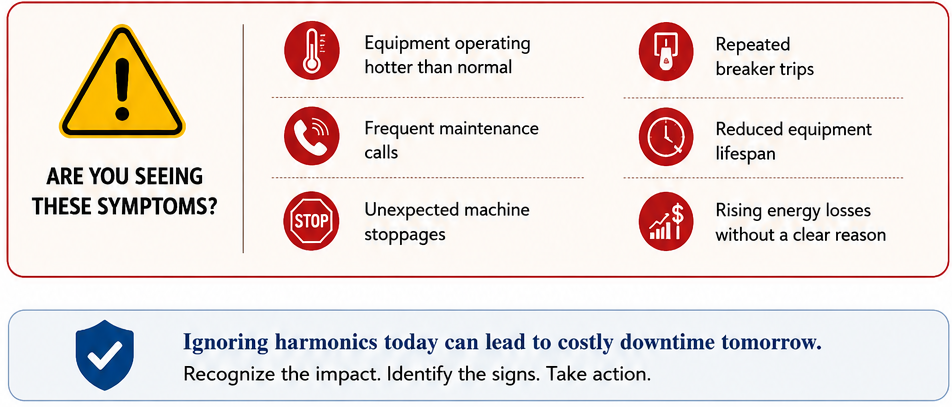
In addition to equipment-related issues, harmonics can contribute to hidden electrical losses that often go unnoticed. These losses reduce overall system efficiency, increase energy consumption, and raise operating costs. Sensitive automation and control systems may also experience communication errors, inaccurate measurements, or unexpected malfunctions due to poor power quality. Over time, these problems can disrupt production schedules, affect product quality, and reduce overall plant reliability. Identifying and mitigating harmonic distortion is therefore essential for maintaining efficient operations, protecting valuable assets, and minimizing costly downtime in modern manufacturing facilities.
Common effects include:
The Solution: Active Harmonic Filters (AHF)
The most effective way to address harmonic distortion is to eliminate it at the source.
Active Harmonic Filters continuously monitor the electrical network and detect unwanted harmonic currents. They then inject equal and opposite currents to cancel these harmonics in real time.This helps maintain a cleaner and more stable power supply throughout the facility.
Unlike conventional harmonic mitigation solutions that are designed for fixed operating conditions, Active Harmonic Filters (AHFs) provide harmonic mitigation by continuously monitoring the electrical network and automatically adapting to changing load conditions in real time. As manufacturing plants experience frequent variations in motor loads, drives, automation systems, and production equipment, harmonics can fluctuate throughout the day. Active Harmonic Filters dynamically respond to these changes by injecting compensating currents, helping reduce harmonics and ensuring effective harmonic mitigation under all operating conditions.
This ability to continuously control harmonics makes Active Harmonic Filters an ideal solution for modern manufacturing environments where electrical loads are constantly changing and maintaining consistent power quality is critical for reliable operation. By actively detecting and compensating for unwanted harmonic currents, AHFs help manage harmonics before they can negatively affect equipment performance and system reliability.
In addition to reducing harmonic distortion, Active Harmonic Filters help industries comply with recognized power quality standards such as IEEE 519, which provides recommended limits for harmonics in electrical systems. By maintaining harmonic levels within acceptable limits, Active Harmonic Filters help control harmonics, improve equipment reliability, reduce electrical stress, and support long-term system performance. Their ability to continuously provide harmonic mitigation ensures stable electrical operation while minimizing the risks associated with excessive harmonic distortion.
Industries often follow the IEEE 519 standard to control harmonic distortion and maintain better power quality. Learn more about the standard from the IEEE website.
Why Choose InPhase Active Harmonic Filters?
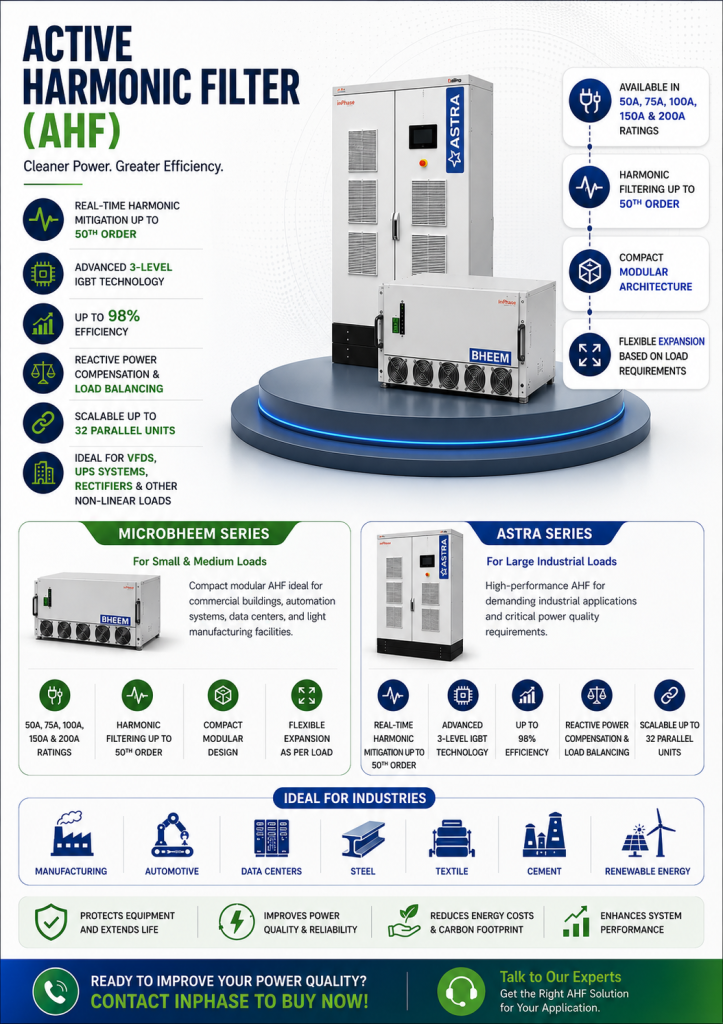
InPhase offers a complete range of Active Harmonic Filter (AHF) solutions to improve power quality and reduce costly downtime.
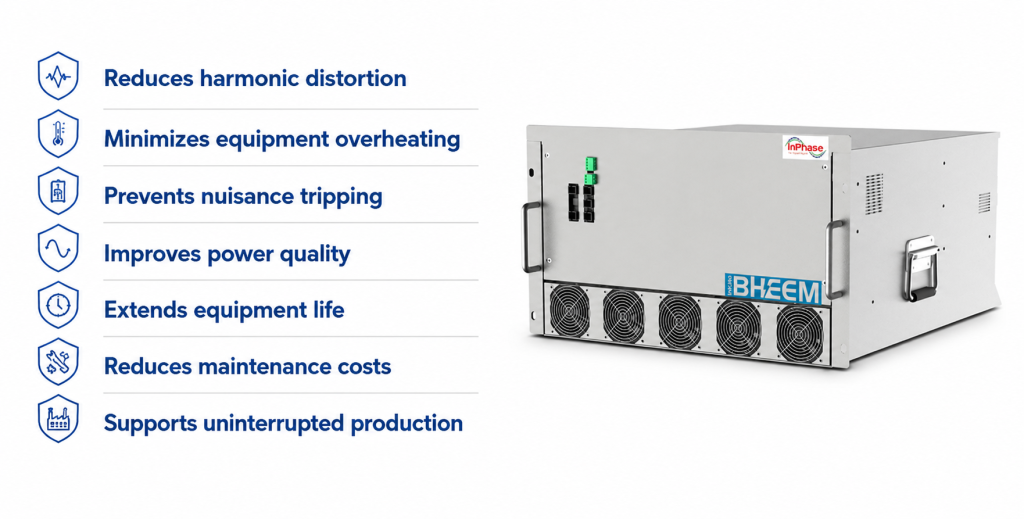
The MicroBheem Series is a compact, modular, and scalable solution designed for commercial buildings, data centers, hospitals, textile industries, renewable energy systems, and light manufacturing units. It helps ensure smooth operation and continuous productivity.
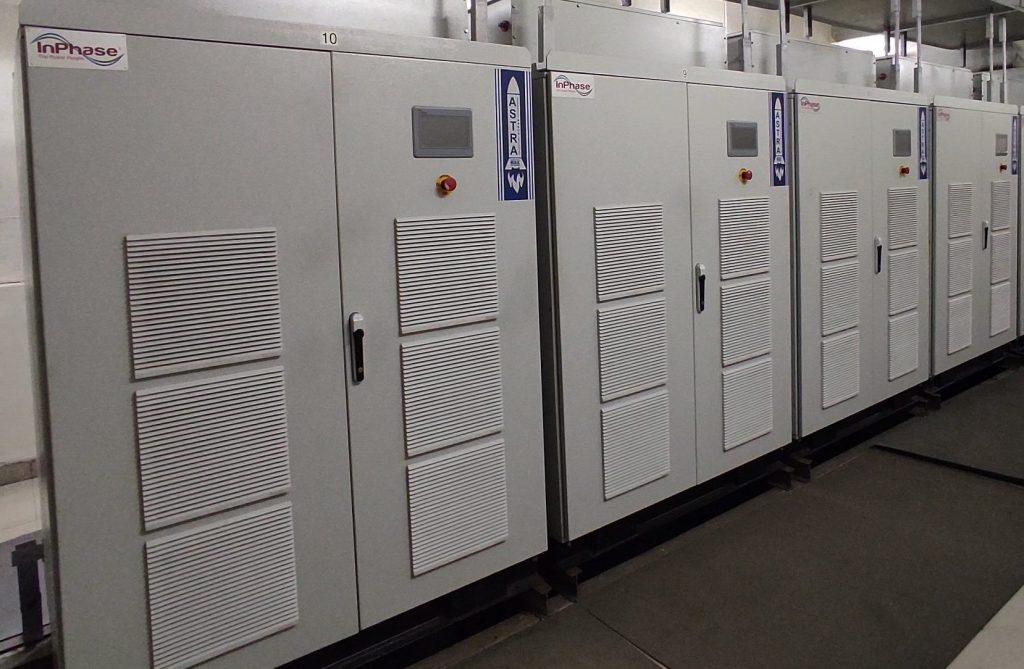
For larger and more demanding applications, the ASTRA Series provides advanced harmonic filtering and reactive power compensation. It is ideal for manufacturing plants, automotive industries, cement factories, steel plants, oil & gas facilities, marine sectors, and other heavy industries.
By reducing harmonic-related problems such as equipment overheating, unwanted breaker trips, electrical stress, and premature failures, InPhase AHFs help:
- Reduce downtime
- Lower maintenance costs
- Extend equipment life
- Improve energy efficiency
- Enhance overall system reliability
Whether for a small facility or a large industrial plant, InPhase delivers reliable solutions for cleaner, safer, and more efficient power systems.
Learn more about our Active Harmonic Filter solutions at InPhase Power Technologies.