Power Quality Management is becoming a critical requirement for modern industries. As industrial facilities adopt advanced automation, variable frequency drives, and sensitive electronic equipment, maintaining high power quality has become essential for reducing energy losses, improving reliability, and controlling operating costs.
For decades, Automatic Power Factor Correction (APFC) panels have helped industries improve power factor and avoid utility penalties. They were an effective solution when industrial electrical systems were relatively simple and predictable. But today’s industries are different. Today’s industrial loads are faster, smarter, and more dynamic. Unfortunately, traditional APFC systems often struggle to keep pace with the power quality demands created by modern equipment.
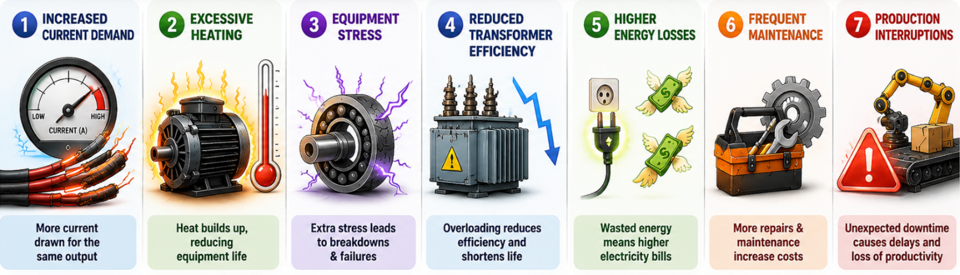
What Happens When Poor Power Quality Management Is Ignored?
Poor power quality can silently affect industrial operations long before obvious failures occur. Harmonic distortion, voltage fluctuations, and reactive power imbalances increase stress on transformers, motors, cables, and capacitor banks. As a result, equipment may consume more energy, generate excess heat, and require more frequent maintenance. These hidden electrical issues can lead to unplanned downtime, reduced productivity, and higher operating costs. Effective Power Quality Management helps industries detect and address these problems early, improving system reliability and protecting valuable electrical assets.
Why Power Factor Correction Alone Is No Longer Enough?
Traditional APFC panels improve power factor by switching capacitor banks. However, they were not designed to handle the harmonic distortion and dynamic load changes common in modern industrial facilities.Many industrial facilities experience electrical issues that are not visible during routine operations. Harmonic distortion, poor voltage regulation, reactive power fluctuations, and load imbalances can reduce overall system efficiency. Effective Power Quality Management helps identify these hidden problems and provides corrective measures that improve energy performance and equipment reliability.

The Hidden Cost of Poor Power Quality
Many industries believe that achieving a good power factor is enough to maintain an efficient electrical system. However, poor power quality can continue to create significant operational challenges even after power factor correction is implemented. Harmonic distortion generated by variable frequency drives, UPS systems, welding machines, and other non-linear loads can increase energy losses throughout the electrical network.
These harmonics can cause transformers, cables, and motors to operate at higher temperatures, reducing their efficiency and shortening their service life. In addition, sensitive equipment may experience unexpected shutdowns, communication errors, and reduced performance due to unstable electrical conditions. As industrial processes become increasingly automated, these power quality issues can directly affect productivity and profitability.
A comprehensive power quality strategy helps industries identify hidden electrical losses, improve system reliability, and reduce maintenance costs. By addressing both reactive power and harmonic distortion, facilities can achieve better energy efficiency while protecting critical assets from premature failure. This is one of the key reasons why modern industries are adopting advanced power quality solutions instead of relying solely on traditional APFC panels.
Why Modern Industries Need Advanced Power Quality Management Solutions
The electrical challenges facing industries today are very different from those of the past.
Facilities need solutions that can:
✔ Correct power factor
✔ Mitigate harmonics
✔ Improve power quality
✔ Reduce energy losses
✔ Protect critical equipment
✔ Support dynamic industrial loads
✔ Improve reliability
✔ Lower operating costs
This is why power quality management is becoming a strategic priority for industrial facilities worldwide.
Introducing InPhase SHAF: The Future of Intelligent Power Quality Management
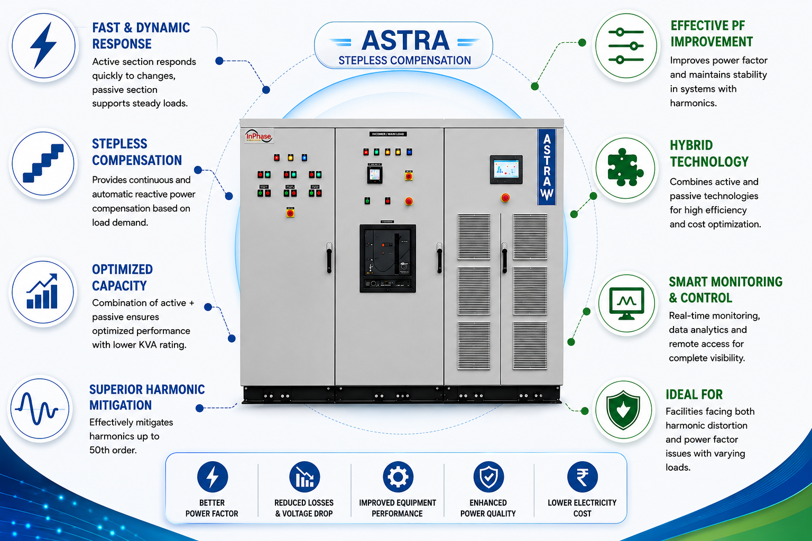
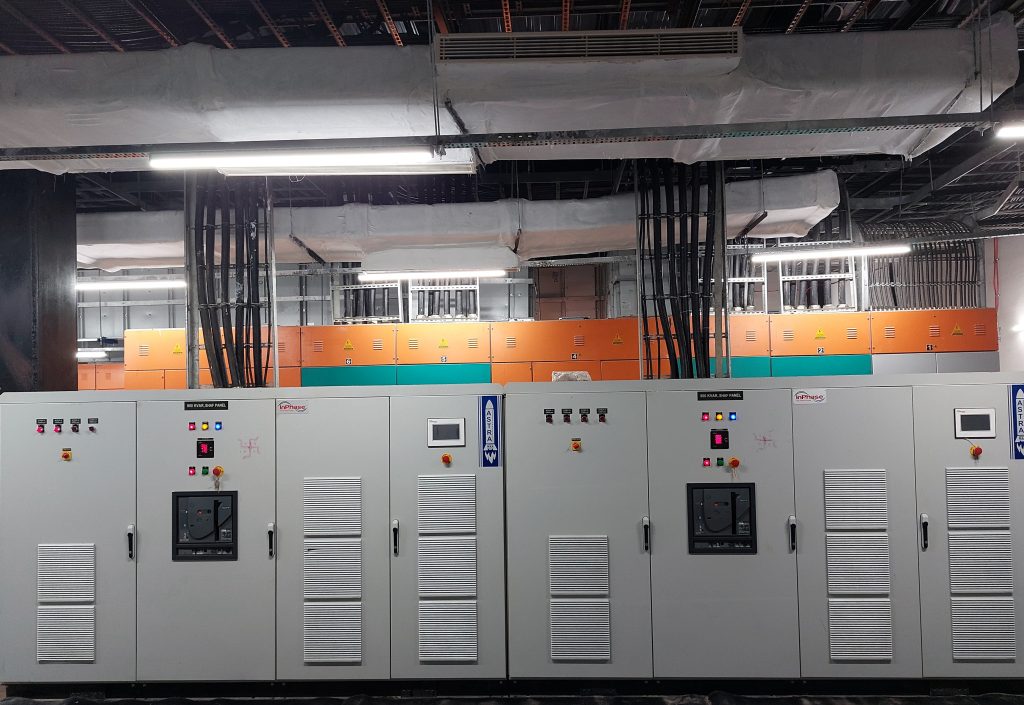
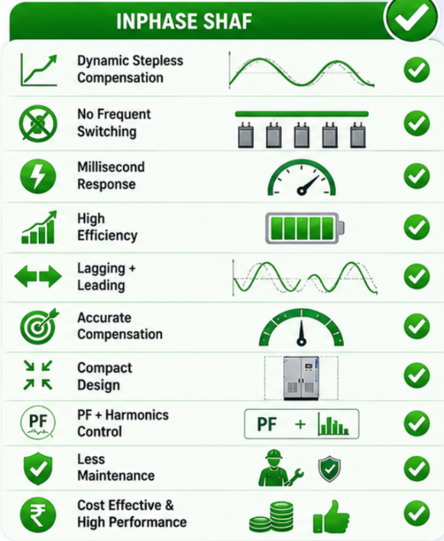
At InPhase Power Technologies Pvt. Ltd., we understand that modern power quality challenges require solutions that go beyond conventional capacitor-based correction. Our Smart Hybrid Active Filter (SHAF) solutions are designed to protect capacitor banks, mitigate harmonics, and provide dynamic reactive power compensation for today’s complex industrial environments.
By combining intelligent control, advanced filtering technology, and reliable compensation performance, InPhase SHAF solutions help industries improve power quality, extend equipment life, and achieve greater operational efficiency.https://inphase.in/smart-hybrid-active-filter/
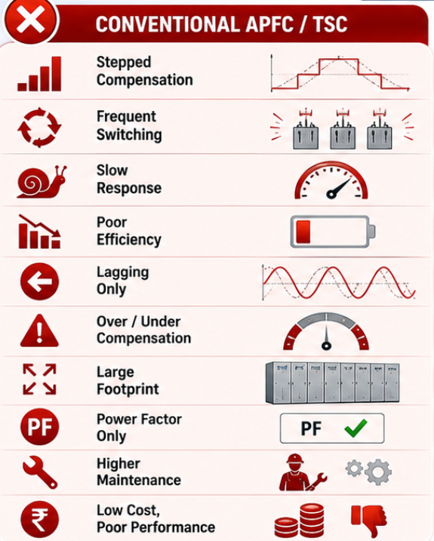
Unlike conventional APFC panels, InPhase SHAF provides a comprehensive Power Quality Management approach by combining harmonic mitigation, dynamic reactive power compensation, and intelligent system monitoring. This enables industries to maintain stable electrical performance even under rapidly changing load conditions. With improved Power Quality Management, facilities can reduce electrical losses, protect critical assets, and achieve greater energy efficiency while maintaining compliance with utility standards.
As energy costs continue to rise, industries are focusing on solutions that deliver both operational efficiency and long-term reliability. Effective Power Quality Management not only reduces electrical losses but also improves equipment performance, minimizes downtime, and supports sustainable industrial growth. Investing in advanced power quality solutions can provide measurable financial and operational benefits over the lifetime of a facility.