

Power Quality Study Using Krykard ALM-35 is an essential process for identifying electrical system issues such as harmonic distortion, poor power factor, voltage imbalance, voltage fluctuations, and excessive current loading. In modern industrial facilities, maintaining good power quality is critical for ensuring equipment reliability, energy efficiency, and compliance with IEEE 519 standards.
A properly executed Power Quality Study Using Krykard ALM-35 helps engineers identify hidden electrical problems before they impact productivity, equipment reliability, and energy efficiency.
The Krykard ALM-32, ALM-33, and ALM-35 Portable Power Quality Analyzers are powerful diagnostic tools that help engineers evaluate electrical system performance and identify the root causes of power quality problems. In this edition of the Dr. InPhase Edu Series, we explain the step-by-step procedure for conducting a comprehensive power quality study using these analyzers.
What is a Power Quality Study?
A power quality study involves monitoring and analyzing electrical parameters over a specified period to assess the health of an electrical distribution system. The study helps identify issues that may affect productivity, equipment life, and energy consumption.
Objectives of a Power Quality Study Using Krykard ALM-35
A typical power quality study aims to:
Measure voltage and current parameters
Analyze harmonic distortion levels
Evaluate power factor performance
Identify voltage sags and swells
Detect load imbalances
Assess transformer and cable loading
Verify IEEE 519 compliance
Recommend corrective actions
Why Use Krykard ALM-32/33/35 for Power Quality Studies?
The Krykard ALM series provides comprehensive power quality monitoring capabilities suitable for industrial and commercial applications.
The accuracy and portability of the analyzer make Power Quality Study Using Krykard ALM-35 a preferred approach for industrial audits and troubleshooting projects.
Key Features of Krykard ALM-32/33/35
True RMS measurements
Harmonic analysis up to high-order harmonics
Real-time waveform capture
Voltage sag and swell recording
Power factor monitoring
Energy consumption analysis
Data logging and report generation
Three-phase system monitoring
These capabilities make the analyzers ideal for troubleshooting power quality issues and planning harmonic mitigation solutions.
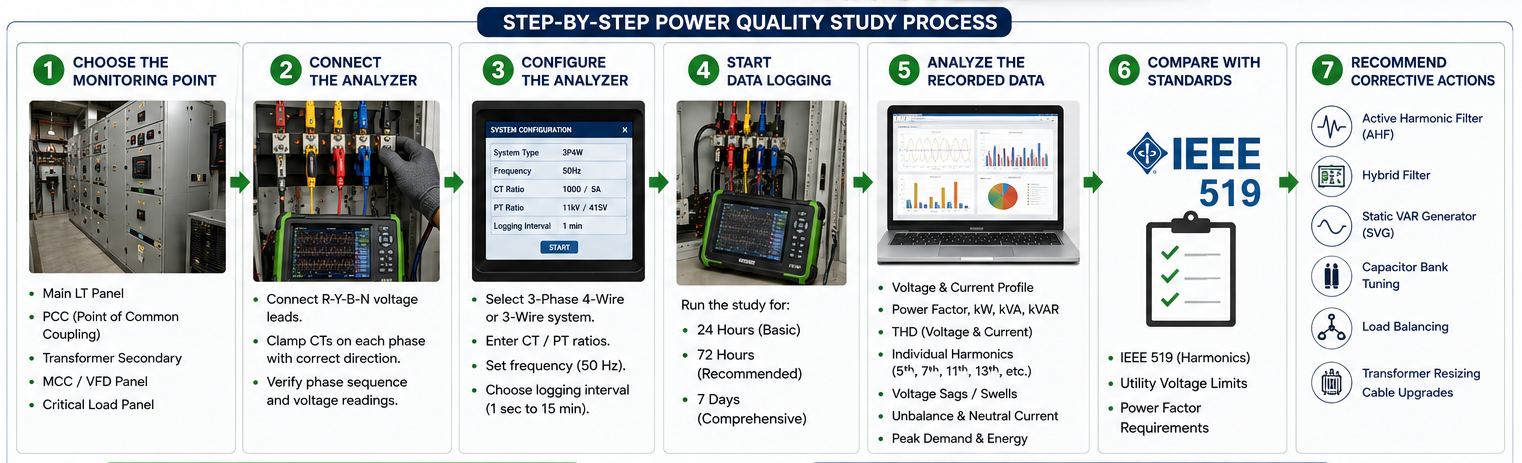
Step 1: Identify the Monitoring Location
Before connecting the analyzer, determine the most appropriate monitoring point.
Recommended Measurement Locations
Main LT Panel
PCC (Point of Common Coupling)
Transformer Secondary Side
Critical Load Panels
VFD Panels
Data Center Distribution Panels
Selecting the correct location ensures accurate identification of power quality issues.
Step 2: Connect Voltage Leads Safely
The next step in a Power Quality Study Using Krykard ALM-35 is connecting the voltage measurement leads.
Verify:
Correct phase sequence
Secure connections
Proper voltage ratings
Grounding integrity
Always follow plant safety procedures and lockout-tagout requirements where applicable.
Step 3: Install Current Transformers (CTs)
Proper CT installation is critical for accurate current measurements.
Best Practices for CT Installation
Verify CT orientation
Match phase identification correctly
Ensure secure placement
Confirm current rating compatibility
Avoid loose connections
Incorrect CT installation can result in inaccurate power quality data.
Step 4: Configure Analyzer Settings
After wiring is complete, configure the analyzer according to the system being monitored.
Typical settings include:
System voltage
Frequency (50 Hz or 60 Hz)
CT ratio
PT ratio (if applicable)
Logging interval
Recording duration
Accurate settings are essential for obtaining meaningful study results.
Step 5: Start Data Logging
Begin recording data for a suitable monitoring period.
Recommended Study Duration
24 Hours – Basic Assessment
72 Hours – Industrial Analysis
7 Days – Comprehensive Power Quality Study
30 Days – Utility and Critical Facility Monitoring
Longer monitoring periods provide a more accurate representation of system behavior.
Step 6: Analyze Harmonic Distortion
One of the most important aspects of a Power Quality Study Using Krykard ALM-35 is harmonic analysis.
Parameters to Review
Voltage THD
Current THD
Individual Harmonics
5th Harmonic
7th Harmonic
11th Harmonic
13th Harmonic
High harmonic levels often indicate the presence of non-linear loads such as VFDs, UPS systems, rectifiers, and LED lighting.
Step 7: Evaluate Power Factor Performance
Poor power factor increases electrical losses and utility penalties.
Review:
Displacement Power Factor
True Power Factor
Reactive Power Demand
Leading/Lagging Conditions
This analysis helps determine whether capacitor banks, SVGs, or power factor correction systems are required.
Step 8: Review Voltage Events
Voltage disturbances can affect sensitive equipment and production processes.
Critical Voltage Events
Voltage Sags
Voltage Swells
Short Interruptions
Flicker Events
Transients
The Krykard ALM analyzers automatically capture these events for detailed analysis.
Step 9: Generate and Interpret the Report
The final stage of the Power Quality Study Using Krykard ALM-35 is report generation and interpretation.
A comprehensive report should include:
Single Line Diagram
Measurement Location Details
Harmonic Analysis Results
Power Factor Analysis
Voltage Event Summary
Transformer Loading Assessment
IEEE 519 Compliance Evaluation
Recommended Corrective Actions
Common Findings During Power Quality Studies
Industrial facilities frequently encounter:
Excessive harmonic distortion
Capacitor bank failures
Transformer overheating
Poor power factor
Neutral current overloading
Voltage imbalance
Frequent voltage sags
High energy losses
Identifying these issues early helps prevent costly downtime and equipment failures.
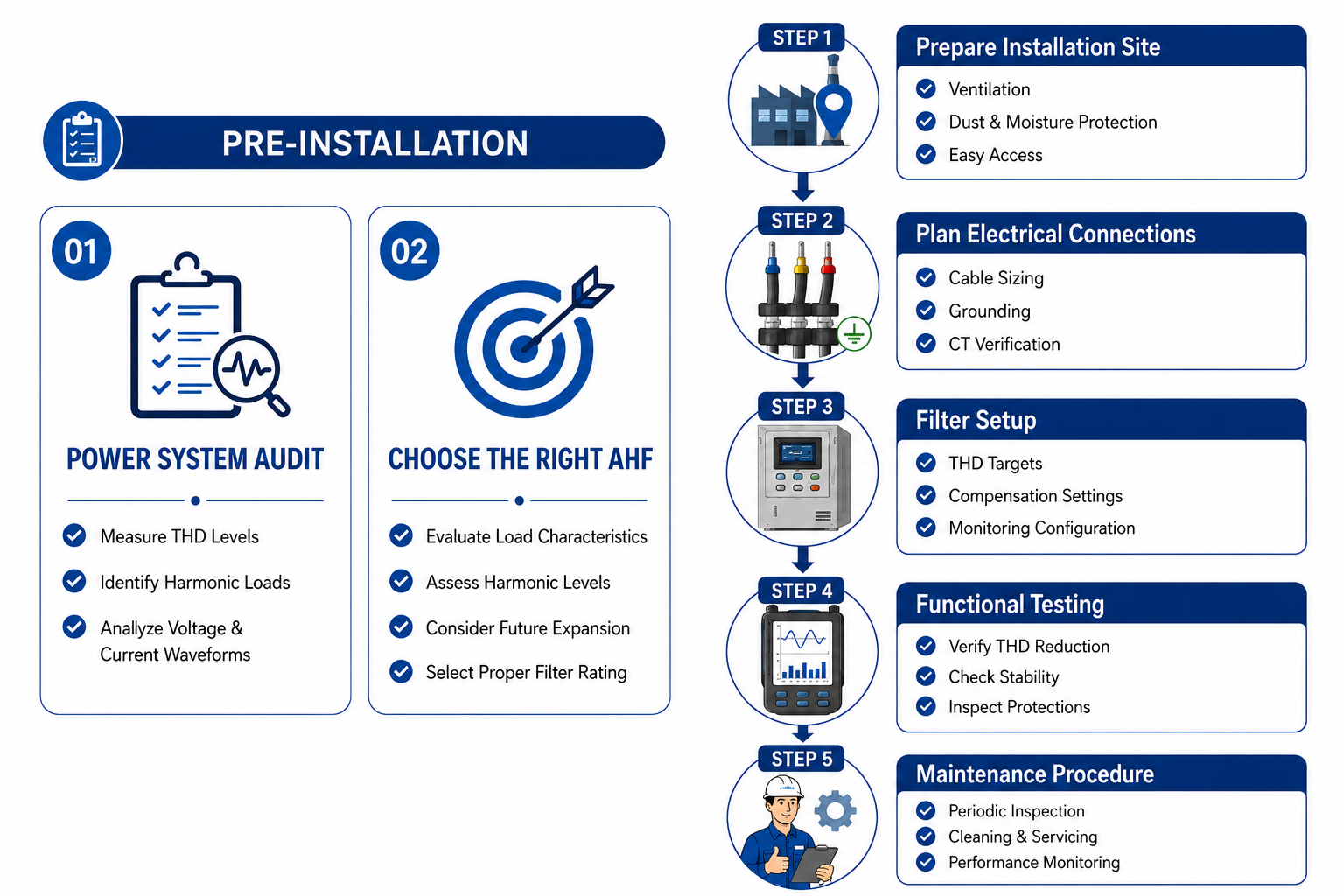
Recommended Solutions After a Power Quality Study
Based on study findings, corrective measures may include:
Active Harmonic Filters (AHF)
AHFs dynamically eliminate harmonic currents and help maintain IEEE 519 compliance.
Static VAR Generators (SVG)
SVGs provide dynamic reactive power compensation and improve power factor.
Hybrid Harmonic Filters
Hybrid solutions combine passive and active technologies for effective harmonic mitigation.
Power Quality Monitoring Systems
Continuous monitoring helps maintain long-term system performance.
Why InPhase Recommends Detailed Power Quality Studies
At InPhase Power Technologies, every successful harmonic mitigation project begins with a detailed power quality assessment. Our engineers use advanced analyzers and industry best practices to identify root causes and recommend the most effective solutions.
A professional power quality study enables facilities to:
Improve energy efficiency
Reduce downtime
Protect critical equipment
Achieve IEEE 519 compliance
Optimize electrical system performance
During a Power Quality Study Using Krykard ALM-35, engineers can accurately identify dominant harmonic orders and determine whether harmonic mitigation solutions are required.
A Power Quality Study Using Krykard ALM-35 provides valuable insights into the health and performance of industrial electrical systems. By following a structured approach using Krykard ALM-32, ALM-33, or ALM-35 analyzers, engineers can identify harmonic issues, power factor problems, voltage disturbances, and system inefficiencies.
The results of a well-executed power quality study form the foundation for implementing effective solutions such as Active Harmonic Filters, Static VAR Generators, and other advanced power quality technologies. Regular power quality assessments help industries improve reliability, reduce operating costs, and maintain compliance with IEEE 519 standards.