
Harmonic mitigation is essential for maintaining power quality, improving energy efficiency, and protecting electrical equipment in modern industrial facilities. As industries increasingly rely on non-linear loads such as variable frequency drives, computers, and LED lighting, harmonic distortion can create significant operational challenges that impact system reliability and performance.
What Happens When Your Network Fights Itself
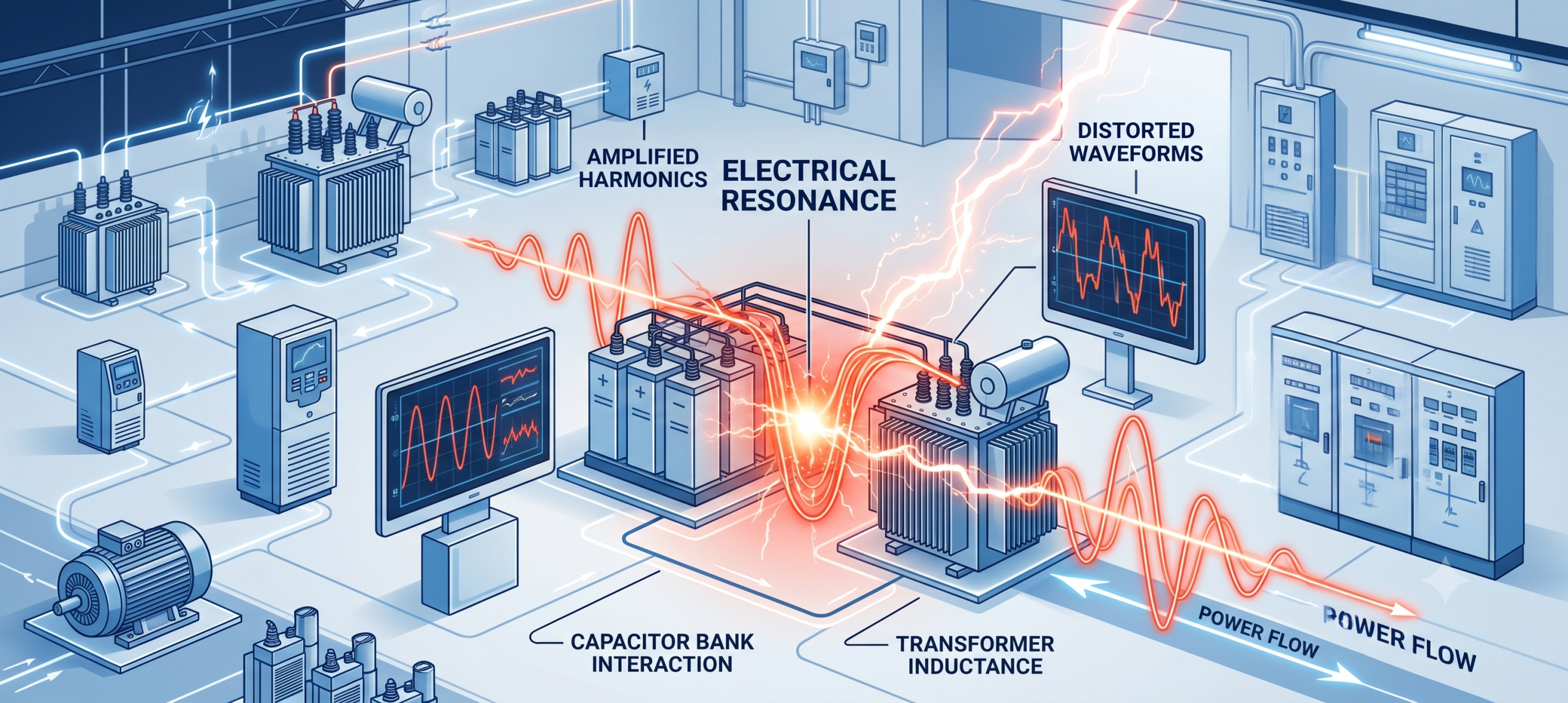
Think of it like sound. When a singer hits the exact resonant frequency of a wine glass, the glass shatters—not because the sound is loud, but because the frequency matches the natural frequency of the glass. Electrical systems behave in a similar way. When electrical resonance occurs, disturbances don’t simply pass through the network; they become amplified, creating potentially damaging conditions throughout the facility.
Modern industrial loads such as Variable Frequency Drives (VFDs), UPS systems, robotics, and high-speed motor drives are inherently non-linear. Instead of drawing current smoothly, they consume power in pulses, generating electrical distortions known as harmonics. When these harmonics interact with capacitors and inductive elements in the network, they can create conditions that lead to Electrical Resonance in Industrial Power Systems.
Why Electrical Resonance Occurs
Electrical resonance typically develops when power factor correction capacitors interact with the inductance of transformers, cables, and other system components. Under certain operating conditions, these elements create a resonant circuit that amplifies specific harmonic frequencies.
As industrial facilities continue to add automation equipment, renewable energy systems, and advanced motor controls, network conditions become increasingly complex. Industry standards such as IEEE 519 series provide valuable guidelines for harmonic control and power quality management in modern electrical systems. Without proper monitoring and mitigation, resonance can develop unexpectedly and remain undetected until equipment performance begins to deteriorate
Industries Most at Risk
Electrical Resonance in Industrial Power Systems is not limited to a single industry. Any facility operating large non-linear loads alongside capacitor banks is susceptible to resonance issues. Industries most frequently affected include:
 Cement Plants Cement Plants |
 Textiles Textiles |
 Steel & Metals Steel & Metals |
 Pharma Pharma |
 Automotive Automotive |
 Packaging Packaging |
What Resonance Actually Costs You
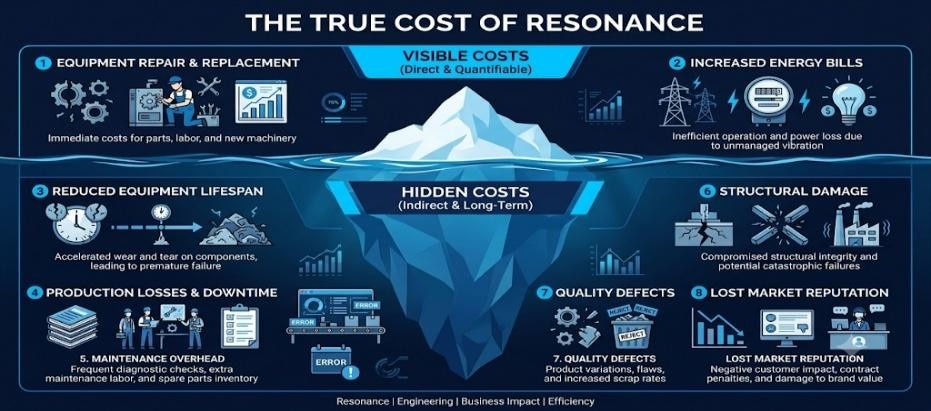
Electrical Resonance in Industrial Power Systems create financial impacts- up in several ways — some obvious, some hidden:
 Overheating & Failure Excess heat shortens the lifespan of transformers and cables, leading to early failure. Overheating & Failure Excess heat shortens the lifespan of transformers and cables, leading to early failure. |
 Inflated Energy Bills Harmonic losses degrade the power factor, directly increasing monthly kVAh costs. Inflated Energy Bills Harmonic losses degrade the power factor, directly increasing monthly kVAh costs. |
 Nuisance Tripping Breakers and relays trip unexpectedly, shutting down production lines without warning. Nuisance Tripping Breakers and relays trip unexpectedly, shutting down production lines without warning. |
 Unplanned Downtime Sudden resonance failures cause costly emergency repairs and lost production. Unplanned Downtime Sudden resonance failures cause costly emergency repairs and lost production. |
Why Traditional Filters Aren’t Enough
While passive filters work well in stable environments, modern industrial networks have constantly shifting loads that can cause passive solutions to worsen Electrical Resonance in Industrial Power Systems. Today’s erratic loads require an active system that monitors, adapts, and compensates in real time.
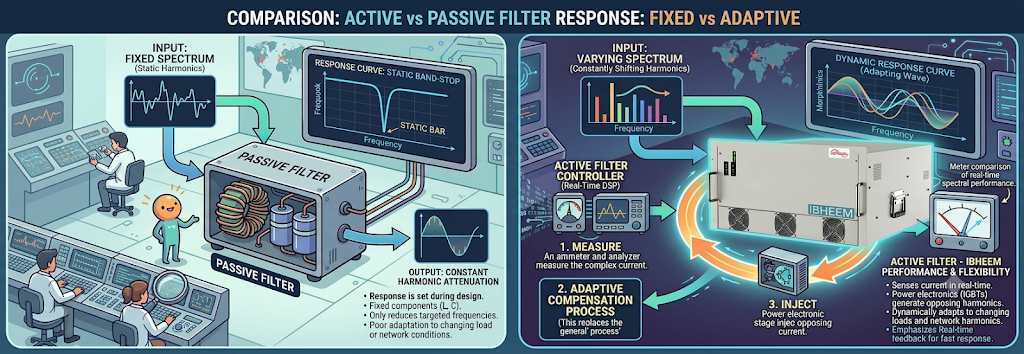
The key distinction: harmonic compensation removes distortion that already exists. Resonance management prevents distortion from being amplified in the first place. Both are necessary — neither alone is sufficient in a modern industrial network.
How InPhase Addresses Resonance
Our Active Harmonic Filter platforms — ASTRA and microBheem — are purpose-built for the complexity of modern industrial power networks. They go beyond harmonic mitigation to deliver active, intelligent resonance management.
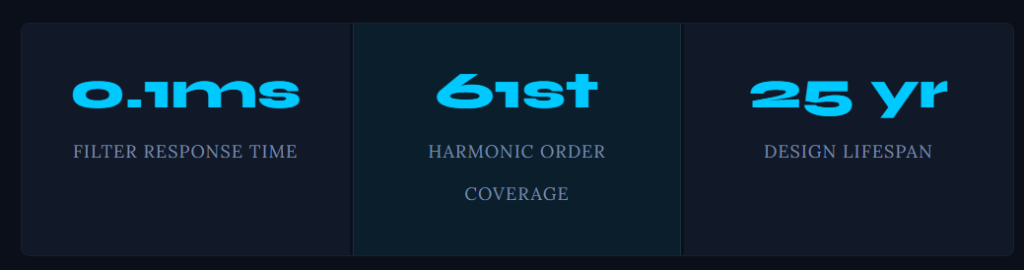
| Real-Time Response (0.1ms) Dual-core DSP processors respond in under a tenth of a millisecond, stopping resonance before it builds. |
 Modular & Scalable Designed to grow with your facility; add modules without redesigning the system. Modular & Scalable Designed to grow with your facility; add modules without redesigning the system. |
 Broad Harmonic Coverage Simultaneously mitigates up to the 61st harmonic order, covering the full spectrum of disturbances. Broad Harmonic Coverage Simultaneously mitigates up to the 61st harmonic order, covering the full spectrum of disturbances. |
 Long Operational Life Advanced thermal management extends operational lifespan up to 25 years. Long Operational Life Advanced thermal management extends operational lifespan up to 25 years. |
The Bottom Line: Proactive or Reactive?
Resonance erodes performance gradually through mysterious trips, creeping energy bills, and premature equipment failure. Identifying the root cause usually happens after significant damage is done.8
The best facilities treat power quality as infrastructure rather than a troubleshooting exercise. Deploying active harmonic management from the outset offers the best ROI, directly reducing kVAh billing by 2–10%—a figure that compounds significantly over a year for energy-intensive industries.